What Is Dynamic Pricing Strategy: Boost Co-living NOI
July 12, 2026
Dynamic pricing is a pricing strategy that automatically adjusts prices based on market conditions, and it's already mainstream enough that between 25% and 30% of retailers in the United Kingdom and Europe use it while the global dynamic pricing market reached USD 16.9 billion in 2024. For co-living, that means changing room prices based on real-time signals like demand, vacancy, seasonality, and nearby competitor rates so you can protect revenue without letting rooms sit empty.
If you run room-by-room rentals, you probably know the feeling. One room sits vacant longer than expected, so you wonder if the rent is too high. Another gets claimed fast, and you wonder if you priced it too low. Most hosts don't struggle because they don't know their market. They struggle because pricing changes faster than manual decisions do.
That's where a dynamic pricing strategy helps. Instead of setting one rent and hoping it still fits next week, you use rules and market inputs to adjust pricing as conditions change. In practice, a dynamic pricing strategy automatically adjusts room prices based on real-time market signals, like demand and competitor rates, to maximize revenue and keep rooms filled.
For small-to-mid-sized co-living hosts, the primary challenge isn't understanding the idea. It's applying it without a revenue management team, live data feeds, or a big tech stack. That's also where most generic articles fall short. They explain airlines and hotels, but they don't explain how a host with one house or a small portfolio should use dynamic rent pricing responsibly.
What Is Dynamic Pricing and How Does It Work
Dynamic pricing is a strategy where prices for co-living rooms adjust based on market conditions, instead of staying fixed for months at a time.
A practical example helps. A private room opens in early June, right as internship season and summer relocations pick up. If inquiries come in within hours and tours book fast, the asking rent may be below what the market will support. If the same room sits for ten days with weak inquiry volume, the price may be too ambitious for that week, even if it looked right when the listing went live.
That is how dynamic pricing works in practice. You set a starting rate, watch a defined set of signals, and adjust up or down based on what is happening now, not what was true last month. For room-by-room rentals, the goal is not constant movement for its own sake. The goal is to protect occupancy and improve NOI without creating avoidable vacancy.
The simple mechanics
For small-to-mid-sized hosts, dynamic pricing usually follows three parts:
- Collect current signals from your listings, your vacancy, and the local market
- Review those signals against pricing rules you already trust
- Adjust advertised rent when the market has clearly moved
The inputs are usually straightforward:
- Demand shifts tied to leasing season, local hiring, school calendars, or move-in timing
- Inventory pressure based on how many rooms are vacant in one home or across the portfolio
- Comparable listings from nearby furnished rooms competing for the same renter
- Lead quality and speed such as inquiry volume, tour requests, and days to application
For co-living operators, one detail matters more than generic pricing guides admit. Data is often late. Nearby listings can stay online after a room is filled. Asking rents do not show concessions. Inquiry volume can spike for a weekend and disappear by Tuesday. That means dynamic pricing should use fresh signals where possible, but it also needs operator judgment. A stale comp set can push rates in the wrong direction just as easily as a bad gut call.
What dynamic pricing means in residential leasing
In hotels, repricing can happen many times a day. In residential co-living, that pace is usually a mistake.
Room pricing works better with clear guardrails. Update rates when vacancy risk changes, when leasing velocity is meaningfully above or below target, or when the local comp set has plainly moved. Keep changes measured. Document the reason. Make sure the price still feels fair to the renter and supportable to your team.
Practical rule: The best dynamic pricing system finds the rent that fills the room at the right pace while preserving margin.
That balance matters because an empty bedroom affects more than top-line rent. It lowers occupancy, drags on NOI, and can create turnover pressure across the house. Used well, dynamic pricing helps hosts avoid two expensive mistakes at once. Leaving money on the table during strong demand, and letting a room sit because the asking rent no longer matches the market.
Four Common Dynamic Pricing Models Explained
A seven-bed co-living house has two rooms open in January. One host keeps every room at the same rate they used in August and waits for the market to come back. Another host adjusts pricing based on season, live demand, nearby alternatives, and current vacancy inside the home. The second host usually fills faster and protects NOI with fewer long vacancy gaps.
That is the practical difference between static pricing and dynamic pricing for shared housing. If you want a clearer breakdown of fixed pricing vs dynamic pricing for rental operators, start there. For this section, the useful question is simpler. Which pricing model should trigger a rent change, and when?
Comparison of Dynamic Pricing Models
| Model Type | Primary Trigger | Example for Co-Living |
|---|---|---|
| Time-Based Pricing | Season or calendar timing | Higher room rates during summer leasing season |
| Demand-Based Pricing | Sudden increase or drop in renter demand | Temporary price increase when a local employer opens hiring |
| Competitor-Based Pricing | Nearby listing changes | Adjusting your advertised room rent after similar rooms nearby drop rates |
| Occupancy-Based Pricing | Current vacancy level | Lowering rates when several rooms are open in the same property |
Time-based pricing
Time-based pricing follows patterns you already know are likely to repeat. In co-living, that usually means stronger pricing during summer moves, university turnover, relocation cycles, and slower winter leasing windows.
Small-to-mid-sized hosts often start here because it works even when market data is late. You do not need a perfect live feed to know that June behaves differently than December.
- Best use case: Markets with clear seasonal rhythms
- Simple example: A furnished room rents for more during a high-mobility leasing period than during a slower winter stretch
- Why it works: It is easy to manage and does not depend on constant data collection
The trade-off is blunt. Calendar patterns help, but they can miss sudden shifts in local demand.
Demand-based pricing
Demand-based pricing reacts to renter activity. Inquiry volume, tour requests, application starts, and speed to lease are the main signals.
This model is useful when your inbound data is fresh enough to trust. If three qualified leads arrive within 48 hours for the same room, holding price may make sense. If a listing gets views but no tours for a week, the asking rent may be ahead of the market.
Demand-based pricing only works if your signals are clean. Spam leads, duplicate inquiries, and slow CRM updates can push rates the wrong way.
For co-living operators, discipline matters. A short burst of inquiries does not always mean true pricing power. Sometimes it means your listing photo changed, a roommate referral hit at once, or a broker blasted the room to a mailing list.
Competitor-based pricing
Competitor-based pricing uses nearby listings as reference points. It is common in dense neighborhoods where renters compare a small set of furnished rooms in the same budget band.
Used well, this keeps your pricing credible. If your room is priced above similar options, you need a clear reason such as private bath, better furnishings, cleaner common areas, or shorter commute access. If you do not have that difference, response rates usually soften fast.
- Useful inputs: Similar furnished rooms, nearby co-living inventory, private room listings, and shared housing offers
- Best use case: Urban submarkets with lots of visible alternatives
- Main risk: Copying weak competitors and sliding into unnecessary discounting
This model has a known co-living problem. Comp data is often stale. Listings stay up after lease signing, concessions are hidden, and advertised rent may not reflect what the renter pays. That is why competitor pricing should inform your decision, not make it for you.
Occupancy-based pricing
Occupancy-based pricing uses your own vacancy as the trigger. For many operators, this is the most practical model because it ties pricing to the cost they feel immediately. Empty rooms.
If one room is open in an otherwise full house, you can usually hold rate longer. If three rooms are vacant in the same property, the priority often shifts to lease-up speed, house stability, and protecting monthly cash flow. In practice, that may mean a modest price cut, a shorter minimum stay, or a bundled offer that gets a qualified renter over the line without resetting every room in the building.
For residential rent, this model also needs guardrails. Price changes should stay measured, documented, and consistent with fair housing rules and your own standards for resident trust. In co-living, the best model is rarely just one of these. Operators usually combine them, with occupancy and demand as the main triggers, and seasonality and comps as a check on whether the rate still makes sense.
Why Dynamic Pricing Boosts Co-Living Revenue
For room-by-room rentals, revenue doesn't improve just because you ask more. Revenue improves when you charge the right amount for the next room at the right time. That distinction matters.
In hospitality and shared housing, the pricing goal is usually to improve NOI and reduce vacancy drag, not to maximize headline rent on a listing. A room that sits empty too long is usually more expensive than a moderate rent adjustment that fills it faster.
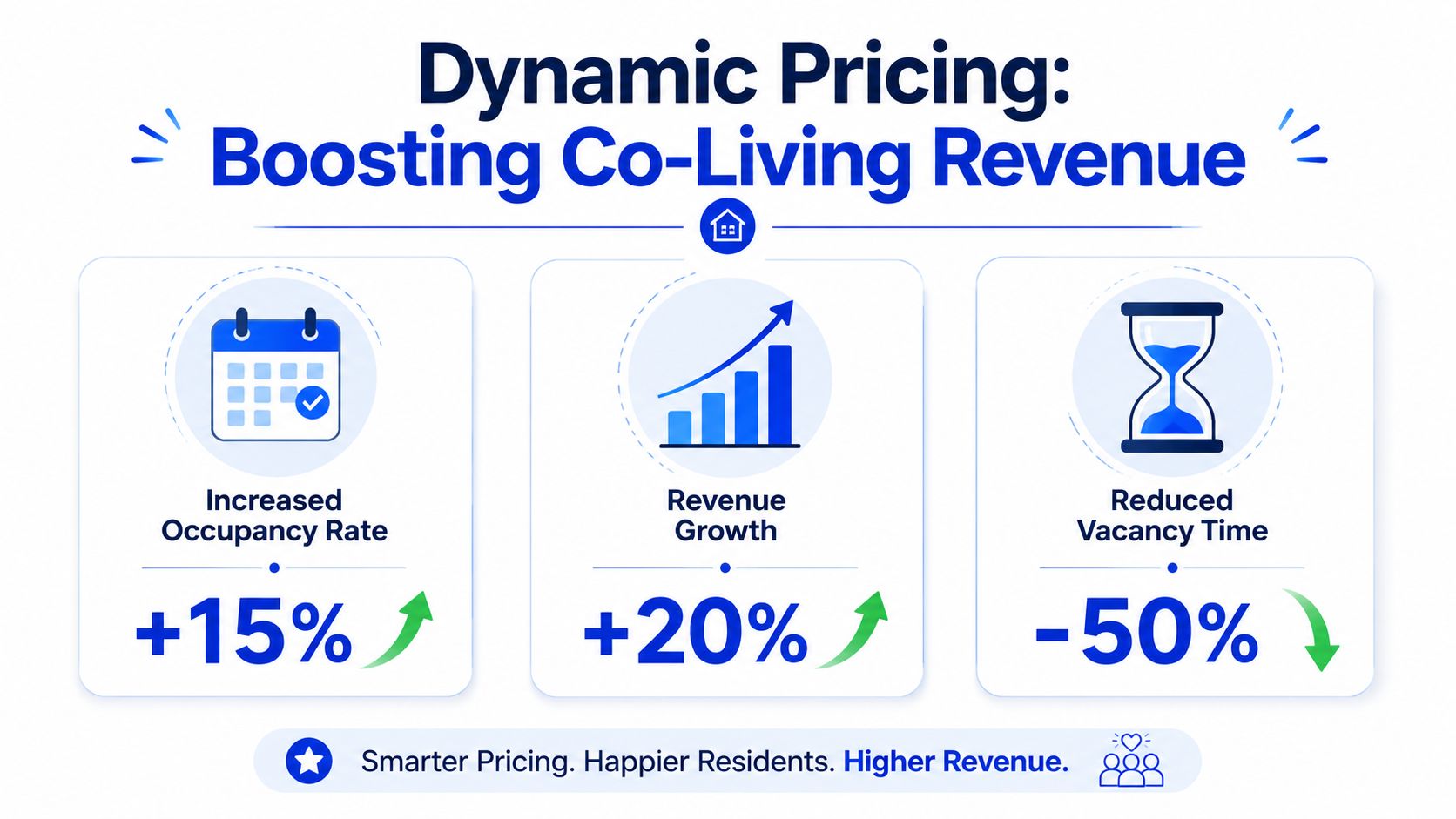
The value comes from balancing occupancy and rate
Algorithm-driven dynamic pricing in shared housing can increase NOI by 12–18% compared to static pricing by reducing vacancy gaps during low-demand windows and capturing higher pricing during peak demand, according to Simon-Kucher on dynamic pricing in shared housing and hospitality.
That number matters because it reflects what operators care about. Not abstract pricing sophistication. Better operating income.
Here's how that usually shows up in co-living:
- Vacant rooms get priced to move sooner instead of aging on the market
- High-demand room types capture stronger rates when the market supports them
- Portfolio pricing gets more consistent because rules replace guesswork
- Managers stop using blanket discounts across every room regardless of demand
Static pricing leaves money on both sides
Fixed pricing creates two common mistakes.
First, hosts keep prices too high during soft demand and absorb unnecessary vacancy. Second, they leave prices unchanged when demand strengthens and miss legitimate upside on new leases. A good breakdown of that trade-off appears in this comparison of fixed pricing vs dynamic pricing.
In co-living, the expensive mistake usually isn't one rent set slightly too low. It's a room sitting empty because nobody adjusted fast enough.
Why this works better for room-by-room rentals
Co-living has more pricing flexibility than a traditional whole-home lease because each room is its own product. A larger room, an en-suite, a quieter room, or a room available for immediate move-in can all justify different pricing logic.
That's why dynamic pricing tends to fit the model so well. Operators aren't just setting one house rent. They're managing a mini inventory system inside each property. When pricing reflects that reality, occupancy and NOI usually improve together.
How to Implement a Dynamic Pricing Strategy
The best implementation for most small operators is a rules-based system. You don't need a data science team. You need a repeatable process, clean listing discipline, and a few sensible triggers.
Start with the data you can maintain. Rules-based pricing for room-by-room rentals requires three guardrails: data ingestion scope, trigger conditions, and adjustment magnitude, as outlined in Nimbleway's framework for dynamic pricing strategy.
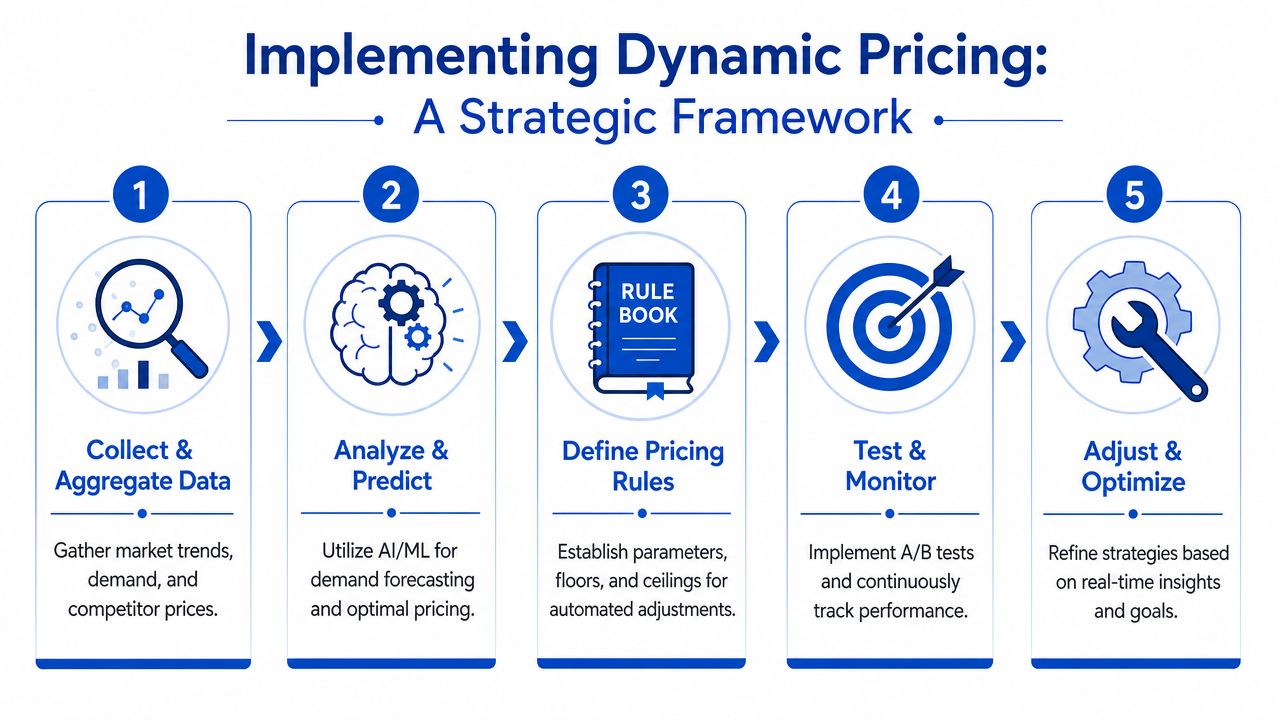
Start with a minimum viable data set
If you manage a small portfolio, don't wait for perfect feeds. Build around the inputs that are most actionable.
- Competitor prices nearby: Nimbleway notes that a room-by-room framework should cover competitor prices, current inventory, and seasonal demand. For co-living, nearby means the listings a renter would realistically compare against.
- Your own inventory: Track how many rooms are available now, which houses are underperforming, and which room types lease fastest.
- Seasonal demand cues: School cycles, employer hiring periods, weather shifts, and local event calendars often matter more than hosts think.
A practical way to think about this is simple. If you can't measure everything in real time, measure the things that change renter choices most often.
For a deeper baseline on setting room rents before layering in automation, this guide on how to price rooms for rent is a good companion read.
Set trigger conditions before you touch price
Don't manually “feel out” pricing changes. Predefine them.
Nimbleway's framework includes trigger conditions such as occupancy below 65% as an example for when pricing action should occur in room-by-room rentals. The point isn't to copy one threshold blindly. It's to choose thresholds in advance so pricing stays disciplined.
Examples of practical trigger logic:
- If a room gets weak response for an extended listing period, reduce asking rent modestly.
- If a house has multiple open rooms, allow more aggressive repricing than you would for a single vacancy.
- If comparable nearby listings rise consistently, test an increase on the next available room.
- If a premium room type leases immediately, review whether future availability is underpriced.
Operator note: Small hosts usually get better results from scheduled reviews and rule triggers than from trying to mimic real-time airline pricing.
A short explainer on automated pricing can help make that workflow more concrete:
Cap the size of every adjustment
Many hosts make avoidable mistakes, changing prices too much, too often, with no floor or ceiling.
Nimbleway's guidance also stresses that adjustment magnitude should be capped by margin targets. In plain terms, never cut rent so far that you damage unit economics, and never push pricing so high that response collapses or fairness concerns flare up.
A workable setup for smaller operators usually includes:
- A price floor below which you won't lease
- A price ceiling for each room type
- A review cadence so you're not reacting to noise
- A written rule set that anyone on the team can follow
Navigating the Risks and Ethics of Dynamic Rent
Dynamic pricing makes immediate sense in flights, hotels, and event tickets because those are short-term transactions. Housing is different. A room isn't just inventory. It's where someone lives.
That changes the ethical standard. In co-living, a pricing strategy can be mathematically sound and still be a bad business decision if tenants see it as arbitrary or exploitative.

The fairness issue is real
Dynamic pricing can create customer backlash and dissatisfaction if people see it as unfair, and that risk is amplified in co-living where tenants live together, as noted in InFlow Inventory's discussion of dynamic pricing fairness.
That last part matters more than many operators realize. In a shared home, residents talk. If one person believes another got a much better deal for a nearly identical room without a clear reason, trust can erode inside the house and toward management.
Ethical guardrails that work in practice
The safest approach is to limit dynamic pricing to new availability and keep existing resident pricing stable unless your lease structure clearly allows otherwise.
Here are the guardrails I'd treat as essential:
- Use transparent room differences: If one room is larger, quieter, furnished differently, or available immediately, make the pricing reason visible.
- Avoid wild swings: Large unexplained changes make rent feel arbitrary, even when demand supports them.
- Document your rules: If a regulator, partner, or resident asks how pricing works, you should have a clear answer.
- Review local compliance: Housing rules vary. What's acceptable in one market may be restricted in another.
- Protect renewal trust: Frequent repricing on renewals can damage retention faster than it helps revenue.
Housing pricing should optimize for both revenue and stability. If your pricing model harms house cohesion, it's not working.
Don't copy travel pricing into residential housing
A common mistake is borrowing hotel logic too directly. Hotels can reprice rooms hourly because guests are transient. Co-living operators are building longer occupancy and lower churn.
That means your dynamic pricing strategy should be slower, narrower, and more transparent than hospitality pricing. In most cases, that leads to better tenant perception and fewer operational headaches.
The Right Tools for Automated Dynamic Pricing
Manual dynamic pricing breaks down fast. Someone has to check nearby listings, review vacancy, compare inquiry quality, decide whether to move rent, update channels, and remember not to overshoot. That's manageable for one or two rooms. It gets messy across a portfolio.
That's why software matters. A good tool handles data collection, rule execution, and pricing consistency without forcing the operator to babysit every listing.
What the right platform should actually do
For co-living, the useful features aren't flashy. They're practical.
- Market data ingestion: Pull comparable room pricing and demand signals into one view
- Rule-based automation: Let operators define floors, ceilings, triggers, and review logic
- Portfolio visibility: Show which rooms are overpriced, underpriced, or underperforming
- Operational fit: Work with room-by-room inventory, not just whole-unit multifamily logic

Automation matters because timing matters
The case for automation isn't just convenience. It's responsiveness.
A widely cited benchmark is Amazon, which reportedly increased profits by 25% through dynamic pricing, according to FT Strategies on lessons from dynamic pricing adoption. Co-living isn't Amazon, of course, but the underlying lesson still applies. When pricing can respond to changing conditions faster than humans can, operators usually make better revenue decisions.
For small and mid-sized hosts, that doesn't mean copying enterprise retail systems. It means using tools designed for room-based operations and practical rule automation. If you want to see what that looks like in a purpose-built setup, review this overview of a dynamic pricing tool for co-living operators.
Software should reduce pricing guesswork, not hide it. If you can't explain why the tool changed a room's price, the system needs better controls.
The best platforms don't just automate price changes. They make pricing understandable, auditable, and aligned with the operating realities of shared housing.
PadPulse is building toward that kind of workflow for PadSplit hosts and co-living operators. If you want a simpler way to automate repricing, track market comps, improve occupancy, and protect NOI across room-by-room rentals, join the PadPulse interest list for early updates and beta access.