10 Technology Innovation Examples: Transform Your Business
June 12, 2026
Juggling pricing spreadsheets, late-night tenant inquiries, and chasing rent payments can feel like three separate jobs. For co-living operators and room-by-room landlords, the daily grind usually isn't strategy. It's coordination, follow-up, and patching gaps between tools that don't talk to each other.
That's why the best technology innovation examples aren't flashy demos. They're systems that remove repetitive work, tighten operations, and help you protect NOI without adding headcount. If you run shared housing, affordable rentals, or a growing co-living portfolio, the useful question isn't "What's the newest tech?" It's "What can I deploy without creating more complexity?"
That distinction matters. WIPO notes that 5G reached about 38% of the world's population in 2023, while at least 3G coverage now reaches 95% of the world population, a reminder that innovation often scales when infrastructure becomes widely usable, not just when something new is invented (WIPO global innovation tracker). For property operators, the same rule applies. A tool only matters if staff and residents can use it consistently in real conditions.
Below are ten technology innovation examples that are practical, proven in adjacent industries, and highly relevant to property operations. Each one includes the trade-offs that matter when you're managing rooms, tenants, maintenance, and margins at the same time.
1. Dynamic Pricing Algorithms
Dynamic pricing is one of the clearest examples of software turning manual judgment into a repeatable operating system. Instead of setting rents once and revisiting them only when a room sits vacant, operators use software to adjust pricing based on demand, seasonality, occupancy, local competition, and pacing.
For co-living, this matters because room-by-room inventory behaves differently from a traditional apartment portfolio. One empty room can drag revenue while the rest of the house stays occupied. Static pricing often misses those shifts.
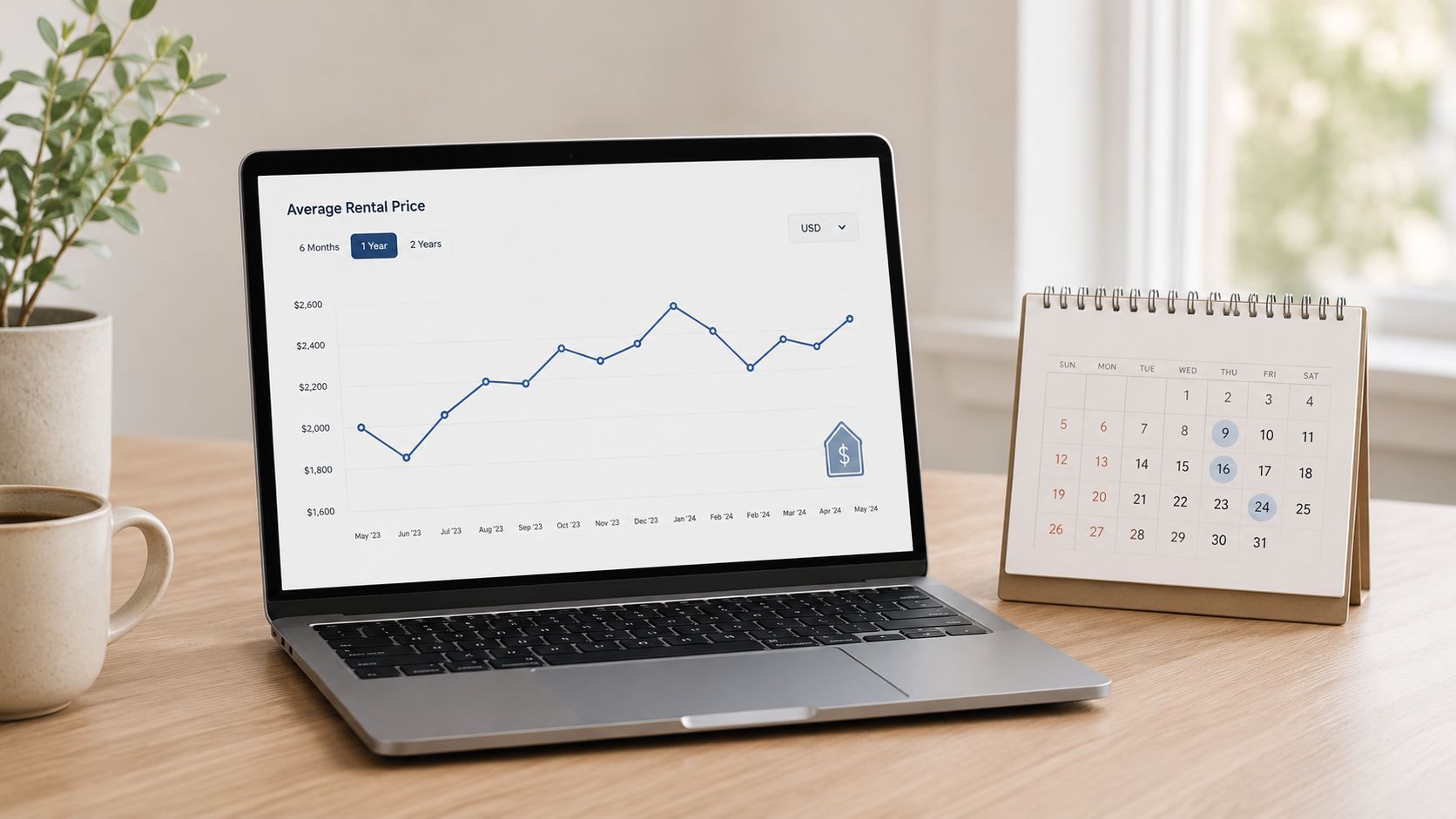
Airbnb made this approach familiar by adjusting nightly rates around demand signals. Hotels have long used revenue management platforms such as IDeaS and Rainmaker. In housing, the same logic works when you apply it carefully to leases, renewals, and room-level vacancies.
What works in practice
Start smaller than you think. A pilot on a few properties is usually better than rolling it out across your whole portfolio before you've cleaned up your data or set pricing guardrails.
- Use your own history first: Pull occupancy, lead volume, days vacant, and achieved rent from your existing properties.
- Set a floor price: Protect brand positioning and avoid training the market to wait for discounts.
- Check local comps manually: Algorithms drift if the comp set is weak or outdated.
- Review exceptions weekly: A human should still catch unusual events, neighborhood changes, or seasonality shifts.
A good pricing engine doesn't replace operator judgment. It gives that judgment better timing and more consistency.
Practical rule: Automate the adjustment, not the strategy.
If you're exploring this category, PadPulse's guide to how dynamic pricing works is a useful place to think through the mechanics before you automate lease decisions.
2. AI-Powered Chatbots and Messaging Workflows
Most leasing teams don't lose time on hard questions. They lose time answering the same easy ones over and over. Availability, move-in timing, parking, pets, Wi-Fi, utility setup, lockouts, payment reminders. That's where AI messaging earns its keep.
This is one of the most practical technology innovation examples because it addresses a bottleneck every operator feels. Speed matters in leasing, but so does consistency. A chatbot or workflow layer can answer common questions, book tours, route maintenance requests, and escalate edge cases without forcing staff to babysit inboxes all day.
The win isn't novelty. It's response discipline.
Where AI helps and where it doesn't
McKinsey's 2024 global survey found that 65% of organizations were regularly using generative AI, but many were still early in integrating it into core workflows rather than scaling it across the enterprise (Care Innovations summary referencing McKinsey). That's a useful signal for property operators. AI is valuable, but only when it's attached to clear workflows.
In practice, chatbots work well for:
- Lead qualification: Asking move-in date, budget, and preferred location before staff step in
- Policy questions: Pulling approved answers on pets, guests, parking, and house rules
- Status updates: Confirming received payments, applications, or maintenance intake
- After-hours coverage: Keeping prospects engaged when your team is offline
They work badly when operators skip setup. If the bot doesn't know your lease terms, code policies, escalation triggers, or communication tone, it creates more cleanup than savings.
Use AI for the first response and the repeatable response. Keep humans on the exception path.
For co-living, messaging quality matters because residents often need fast answers outside standard office hours. That makes this category especially useful when paired with clear operating rules and strong handoff logic.
3. Smart Lock and Keyless Access Technology
Keyless entry solves an operational problem that every growing landlord eventually hits. Physical keys don't scale well. They get copied, lost, handed to the wrong person, or forgotten during turnovers. Smart locks replace that mess with time-bound access, remote control, and audit trails.
For co-living houses, smart locks are often one of the earliest upgrades worth making because the access flow is more complex than a single-family rental. Prospects, cleaners, maintenance vendors, house managers, and incoming residents may all need different access windows.
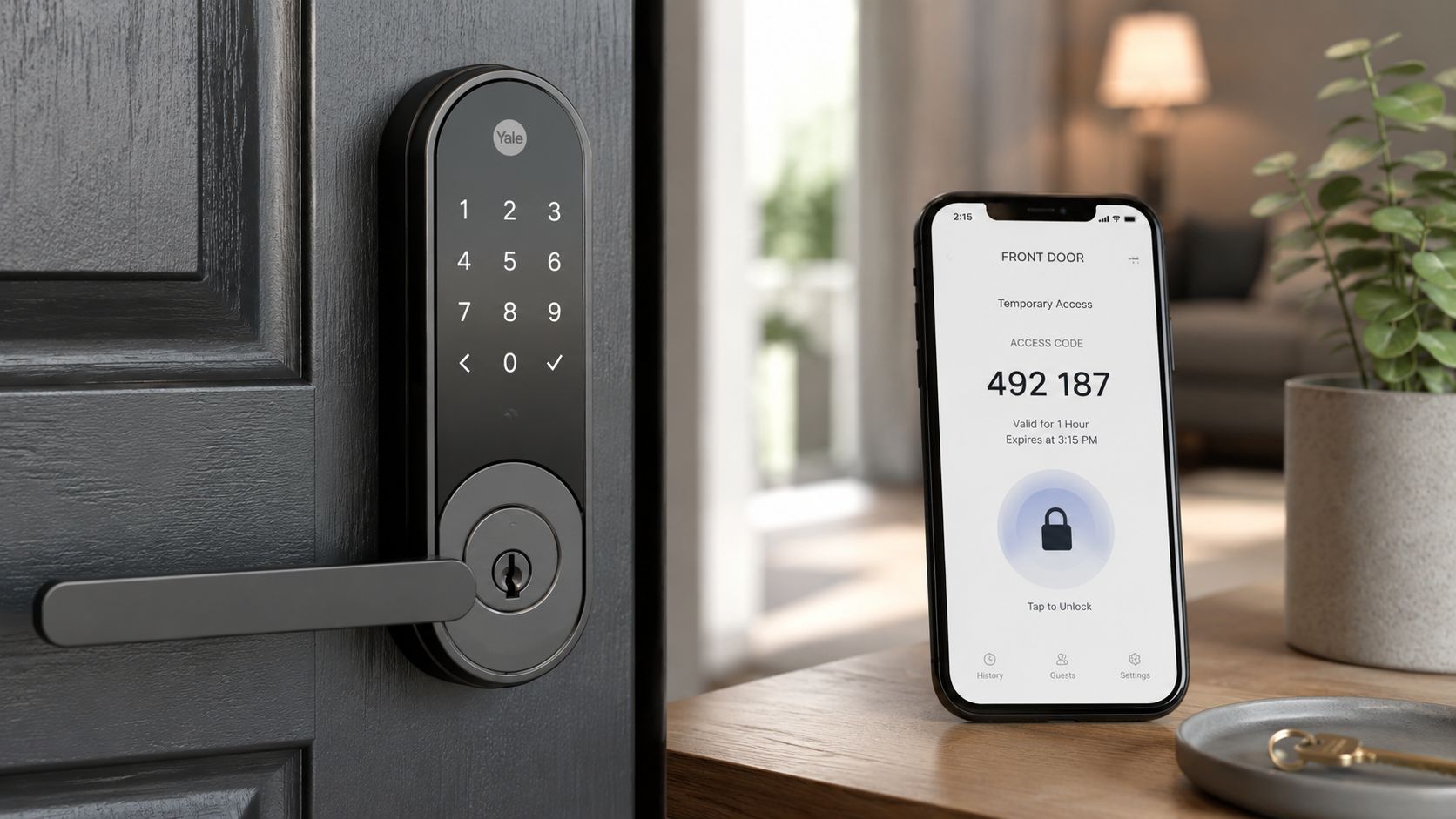
Operators commonly evaluate products like August Smart Lock, Level Lock, Schlage Encode, Nuki, and Yale Assure 2. The right choice depends less on branding and more on how well the lock fits your doors, connectivity, turnover workflow, and support process.
The trade-offs most buyers miss
The best smart lock isn't always the most feature-rich. It's the one your team can reliably deploy and support.
- Offline fallback matters: If Wi-Fi drops, residents still need a predictable way in.
- Battery planning matters: Dead batteries create emergency support calls.
- Code lifecycle matters: Contractor, cleaner, and resident codes should expire automatically.
- Integration matters: If access changes don't connect to your tenant records, staff end up managing two systems.
A lot of operators underestimate resident onboarding too. If entry instructions are unclear, your first impression becomes a lockout.
For setup considerations, PadPulse's smart lock setup guide covers the practical side of making these systems operational, not just installed.
This short demo helps show how keyless access changes day-to-day operations.
4. Smart Thermostat and HVAC Monitoring Systems
Most landlords think about thermostats as a utility issue. Strong operators treat them as a control layer for comfort, maintenance, and expense management.
Smart thermostats such as Nest, Ecobee, Honeywell Home T9, Johnson Controls, and Tado let operators monitor temperatures, adjust settings remotely, and spot HVAC issues before a resident files a complaint. In shared housing, that's especially useful because disagreements about common-area temperature can become recurring friction.
The appeal is obvious. Fewer manual adjustments, better visibility, and fewer surprises. But thermostat tech only works when policy and permissions are clear.
Best fit for shared housing
Co-living operators should define what residents can and can't control before devices go live. If residents believe they have full control and your team keeps overriding settings remotely, trust drops fast.
A better structure is simple:
- Set agreed ranges: Allow comfort within a defined band.
- Use alerts, not constant intervention: Investigate unusual temperature patterns instead of micromanaging them.
- Tie data to maintenance: Repeated anomalies often point to filter, airflow, or equipment problems.
- Explain the benefit: Residents are more cooperative when they understand the system is there to keep rooms comfortable and prevent outages.
Walmart's digital transformation offers a useful parallel. After expanding mobile and web shopping touchpoints, it used behavioral data to support new operating models, and in 2024 it introduced an AI-powered logistics product called Route Optimization to shorten driving routes, improve trailer packing, and reduce miles traveled (Amplitude's Walmart example). Property operators can apply the same mindset. The thermostat isn't just a device. It's a data source that improves downstream decisions.
5. Property Management System Integrations and APIs
Most operational pain doesn't come from missing software. It comes from disconnected software.
A leasing tool has lead data. Accounting has payment data. Screening sits somewhere else. Maintenance lives in another app. Staff end up copying information between systems, fixing sync issues, and reconciling records manually. That's why integrations and APIs belong on any serious list of technology innovation examples.
Platforms like AppFolio, Stripe, Twilio, Zillow partnerships, and middleware tools such as Zapier all point toward the same operational model. One action in one system should trigger the next step somewhere else.
Where integration actually pays off
The most valuable integrations are usually boring. They remove duplicate entry and reduce missed handoffs.
For a co-living operator, high-value connections often include:
- Lead to messaging: New inquiries trigger immediate follow-up
- Application to screening: Applicant data flows without rekeying
- Lease to access control: Move-in and move-out dates update permissions
- Payment to accounting: Collections reconcile without manual matching
- Maintenance intake to communications: Residents receive status updates automatically
This category is less about buying a new product and more about designing your operating flow. If your process is messy, an API just moves the mess faster.
Clean the workflow before you connect the tools.
The trade-off is vendor dependence. Once several systems are linked, one weak integration can disrupt multiple tasks. That means you need basic documentation, test environments when possible, and someone on the team who owns the logic of how data moves.
6. Predictive Analytics and Machine Learning for Demand Forecasting
Forecasting demand sounds advanced, but the practical version is straightforward. You're trying to answer a short list of questions early enough to act on them. When will rooms likely turn? When should pricing tighten or loosen? Which neighborhoods need more marketing attention? Where is demand softening before occupancy slips?
Predictive analytics becomes useful. Tools in this category combine historical occupancy, lead flow, seasonality, local patterns, and market signals to help operators plan pricing and marketing with more confidence.
Real estate already uses this mindset. Zillow's Zestimate familiarized many owners with predictive pricing logic. Market intelligence providers and booking platforms use similar techniques for demand forecasting, even if the user sees only a recommended rate or a heat map.
Use simple forecasting before fancy forecasting
Many landlords jump too quickly into machine learning language without having reliable operating data. That's backwards. A weak dataset doesn't become smart because you add a model.
The strongest rollout usually looks like this:
- Start with seasonality: Identify recurring busy and slow periods by property
- Track forecast versus actual: Review where your assumptions were wrong
- Add external signals carefully: Local employers, school calendars, and neighborhood changes can matter
- Keep human review in place: Forecasts are advisory, not self-executing
According to the U.S. National Center for Science and Engineering Statistics, 17% of firms introduced a new product or process from 2014 to 2016, and innovation was notably higher in manufacturing at 33% of firms compared with 15% in nonmanufacturing sectors (NCSES innovation indicators). The lesson for operators is simple. Innovation often spreads through process improvement, not just breakthrough technology. Demand forecasting fits that pattern exactly.
If you're thinking about this capability for room-by-room rentals, PadPulse's overview of demand forecasting software is a practical starting point.
7. Automated Tenant Screening and Risk Assessment
Screening technology can speed up approvals, but it's one of the categories where speed creates legal and reputational risk if you get sloppy. Tools from Zillow, Checkr, Experian Resident Screening, SmartMove, and similar providers can help organize background checks, credit signals, income verification, and applicant review. They shouldn't become a black box that makes final decisions on your behalf.
For co-living operators, screening is often more nuanced than a standard apartment lease. You may be evaluating shorter stays, nontraditional income, shared-house fit, or applicants with limited credit history. That means rigid automation can exclude viable residents if you don't design the process carefully.
The right way to use these tools
Think of screening software as a structure for consistency. Not as a substitute for policy.
A strong approach includes:
- Written approval criteria: Staff need objective standards before applications arrive
- Manual review path: Applicants should have a way to explain or dispute findings
- Fair housing awareness: Audit outcomes regularly for patterns you didn't intend
- Alternative documentation: Some applicants can pay reliably without a conventional credit file
This is also where real-world constraints matter. WIPO's examples of practical innovation include the Foldscope, a paper microscope costing less than one U.S. dollar, along with solar light bulbs and low-cost water-quality mapping apps. The point isn't novelty. It's fit for constrained environments (WIPO examples of practical innovations). Screening tools should be judged the same way. The best one isn't the most complex. It's the one that helps you make defensible, repeatable decisions in the applicant realities you face.
8. Portfolio Analytics and Real Estate Business Intelligence Dashboards
Once you manage multiple properties, intuition stops scaling. You need a dashboard.
Portfolio analytics tools pull financial and operating data into one view so you can see occupancy, rent collected, delinquency, maintenance patterns, and overall performance without opening five systems. Platforms such as AppFolio, CoStar-style analytics environments, and investor dashboards have made this more common, but the principle matters more than the brand. You need one trusted picture of the business.
For co-living, dashboards are even more useful because room-level economics create more moving parts than one lease per unit. If one house is full but underpriced and another is expensive but leaking occupancy, you need to see both conditions quickly.
What to put on the first dashboard
Don't try to build a command center on day one. Start with the numbers and signals you use in decisions.
- Occupancy by property and by room type: This shows where vacancy is structural versus temporary.
- Collected rent versus expected rent: This exposes cash flow gaps early.
- Turnover and days vacant: This helps identify operational drag.
- Operating expenses by property: This catches houses that are eroding margin.
- Lead flow and conversion by channel: This tells you whether a vacancy is a pricing problem or a marketing problem.
A dashboard should shorten meetings, not create new ones.
The trap is overbuilding. If staff don't trust the data or can't see how metrics connect to action, the dashboard becomes decoration. Make every metric answer a real operator question.
9. Automated Rent Collection and Payment Processing
Rent collection is one of the easiest places to remove friction. Digital payment systems can automate due-date reminders, recurring payments, late fee workflows, and reconciliation with accounting records. For small landlords and growing co-living operators, that means less chasing, fewer excuses, and cleaner books.
Tools in this category include Stripe-based payment flows, AppFolio payments, Square, PayPal for Business, and bank-linked rent collection products. The brand matters less than the payment behavior you want to encourage.
If residents can pay in a few taps and receive a clear confirmation, on-time collections get easier to manage. If the process feels clunky, confusing, or inconsistent, support tickets multiply.
Design the payment experience, not just the payment rail
Many operators focus on transaction processing and ignore the resident experience around it. That's a mistake.
A better setup includes:
- Clear reminders: Send notices before due dates and after failed attempts
- Preferred payment method: Make one option the default and easiest path
- Automatic reconciliation: Reduce manual bookkeeping wherever possible
- Visible ledger access: Residents should be able to confirm what they paid and what remains due
This is one of those technology innovation examples where convenience and discipline reinforce each other. Residents get simplicity. Operators get predictability.
The main trade-off is fee structure and exception handling. You still need a process for failed payments, partial payments, and residents who need a human conversation before an automated penalty sequence kicks in.
10. Vacancy Prevention and Predictive Tenant Retention
The cheapest vacancy to fill is the one you prevent.
Retention technology focuses on identifying renewal risk before a resident gives notice. In practice, that can mean flagging patterns such as unresolved maintenance issues, declining engagement, repeated complaints, missed payments, or lease milestones that should trigger outreach. Some operators use communication tools, CRM logic, or workflow automation to turn those signals into renewal campaigns.
This matters in co-living because turnover has more hidden cost than many owners expect. It's not just lost rent. It's cleaning, repairs, showings, staff time, access resets, and the risk of a mismatch if you rush the next placement.
What actually improves retention
Most retention success comes from process, not predictive magic. The software helps you see the moment to act. The relationship and service quality still determine whether the resident stays.
Strong retention systems usually include:
- Renewal outreach before friction peaks: Don't wait until the final month
- Segmented messaging: A long-term resident and a recent move-in need different conversations
- Maintenance follow-through: Residents often leave because small issues felt ignored
- Offer discipline: Incentives should be targeted, not automatic
Hospitality has long used demand and yield logic to reduce empty inventory. Housing can borrow that discipline, but with a more human lens. If a resident is likely to leave, the right move isn't always a discount. Sometimes it's faster maintenance, cleaner common spaces, better communication, or a lease option that matches how they live.
Top 10 Property-Tech Innovation Comparison
| Solution | Implementation Complexity 🔄 | Resource Requirements 💡 | Expected Outcomes 📊 | Ideal Use Cases ⚡ | Key Advantages ⭐ |
|---|---|---|---|---|---|
| Dynamic Pricing Algorithms | High, ML models and realtime integrations required. | Significant historical data, ML engineers, pricing analysts, integration effort. | Increases RevPAR, reduces vacancies, improves NOI when well-tuned. | Multi-unit portfolios in variable-demand markets and seasonal/event-driven areas. | Automated revenue optimization and rapid market responsiveness. |
| AI-Powered Chatbots and Messaging Workflows | Medium, NLP training plus platform integrations. | Training data, integration with CRM/PMS, periodic human oversight. | Faster response times, higher lead-to-showing conversion, lower labor cost. | High inquiry volume properties, 24/7 support needs, lead qualification. | Scalable tenant communication and staff time savings. |
| Smart Lock and Keyless Access Technology | Low–Medium, hardware deployment and system hookups. | Per-door hardware cost, connectivity (WiFi/Bluetooth/cellular), maintenance. | Fewer locksmith calls, faster turnovers, auditable access logs. | Frequent turnover, self check-in, room-by-room rentals and co-living. | Secure, auditable access control and improved tenant convenience. |
| Smart Thermostat and HVAC Monitoring Systems | Medium, device install and HVAC/system integrations. | Thermostats per unit, installation labor, connectivity, integration with utilities. | Energy savings (≈10–20%), fewer HVAC emergencies, improved comfort. | Properties with high energy bills, shared HVAC or sustainability targets. | Reduced energy costs, preventive maintenance signals, tenant comfort. |
| Property Management System Integrations and APIs | High, API architecture, security and error handling. | Developer resources, middleware or vendors, ongoing maintenance and SLAs. | Eliminates duplicate entry, speeds workflows, improves data consistency. | Operators using multiple best‑of‑breed tools or scaling portfolios. | Automation across systems, data consistency, operational scalability. |
| Predictive Analytics & ML for Demand Forecasting | High, advanced modeling and continuous retraining. | 2+ years historical data, data scientists, feature engineering and monitoring. | Better pricing/marketing timing, optimized inventory and ROI on campaigns. | Supporting dynamic pricing, marketing budget allocation, portfolio planning. | Proactive market insights and improved forecast-driven decisions. |
| Automated Tenant Screening & Risk Assessment | Medium, vendor integrations and compliance controls. | Screening vendors, legal/compliance oversight, integration with leasing flow. | Faster approvals, lower default/eviction risk, scalable applicant handling. | High applicant volumes, risk‑sensitive portfolios, rapid leasing needs. | Objective, consistent screening and faster applicant throughput. |
| Portfolio Analytics & Real Estate BI Dashboards | Medium–High, data aggregation, governance and visualization. | BI tooling, data integrations, data governance, analyst time. | Real-time P&L visibility, identify underperformers, informed decisions. | Multi-property investors, executive reporting, operational benchmarking. | Centralized financial visibility and actionable portfolio insights. |
| Automated Rent Collection & Payment Processing | Low–Medium, payment rails and reconciliation setup. | Payment processor fees, integrations with accounting, tenant onboarding. | More predictable cash flow, reduced delinquencies, less manual work. | Properties with many recurring tenants and accounting integration needs. | Improved cashflow predictability and reduced administrative burden. |
| Vacancy Prevention & Predictive Tenant Retention | Medium, churn models and CRM/workflow integration. | Historical tenant behavior data, CRM/messaging, targeted incentive budget. | Lower turnover, reduced rehabbing/marketing costs, higher tenant LTV. | Co‑living and multi‑room properties where churn is costly and preventable. | Targeted retention actions that preserve occupancy and reduce costs. |
From Innovation to Implementation Your Next Steps
These technology innovation examples point in the same direction. The future of property operations isn't just digital. It's coordinated. The winners won't be the operators with the most apps. They'll be the ones who turn pricing, messaging, access, payments, climate control, and reporting into one coherent operating model.
That's especially important in co-living and room-by-room rentals. This niche has more moving parts than conventional leasing. You have more tenant touchpoints, more room-level pricing decisions, more shared-space maintenance issues, and more coordination between systems. That makes operational drag expensive. It also makes good technology unusually valuable.
The big mistake is adopting tools based on trendiness instead of fit. A chatbot that isn't trained on your rules will frustrate prospects. A smart lock without a backup entry plan will generate emergency calls. A dashboard built on bad data will create false confidence. In practice, what works is usually less glamorous. Start with the task that consumes the most team time or creates the most repeatable revenue loss. Fix that first.
If you're a beginner, don't try to implement all ten categories at once. Pick a sequence. Many operators start with rent collection and messaging because the gains are visible quickly. Others start with access control or pricing because those categories solve obvious operational pain. Either approach can work if the rollout is disciplined.
A good implementation plan usually follows four steps:
- Choose one high-friction problem: Late responses, vacancies, key management, payment chasing, or utility control
- Set one operational goal: Faster leasing, fewer lockouts, cleaner collections, or better renewal timing
- Pilot before scaling: Use a limited property set and document what breaks
- Measure behavior change: Don't just ask whether the software works. Ask whether staff and residents use it properly
For PadSplit hosts and co-living operators, the long-term opportunity is centralization. Separate point solutions can help, but they also create more tabs, more logins, and more reconciliation. That's why we're building PadPulse. The goal is to bring dynamic pricing, AI messaging, smart-home controls, and portfolio analytics into one platform built around rent-by-the-room operations.
PadPulse is in development for operators who need practical advantage, not another disconnected tool. If you want early access to a platform designed for higher occupancy, smoother operations, and stronger NOI, joining the interest list is the simplest next step.
PadPulse is building an all-in-one platform for PadSplit hosts and co-living operators who want fewer manual tasks and better control over pricing, messaging, smart access, HVAC, and portfolio performance. Join the PadPulse interest list to get updates, early beta access opportunities, and a first look at tools designed specifically for room-by-room rental operations.