How to Pay Rent with ACH: A Simple Guide for 2026
May 18, 2026
Rent used to be easy to understand and annoying to execute. Tenants had to remember the due date, find the checkbook, add a stamp, and hope nothing got lost. Landlords had to open envelopes, log payments by hand, chase stragglers, and figure out what had cleared.
That system still exists, but it's fading fast. If you want to pay rent with ACH, you're using the same bank-to-bank network behind direct deposit and online bill pay. For tenants, that means less friction. For landlords and co-living operators, it means fewer manual tasks and cleaner payment records.
Why ACH Is Replacing the Rent Check
Checks create work on both sides of the lease. A tenant can mail rent on time and still worry about delivery. A property manager can receive a stack of envelopes and still not know which funds are deposited.
ACH solves a lot of that because it moves rent directly between bank accounts through a standard U.S. banking network. It isn't a niche payment method or a startup-only tool. It's mainstream infrastructure.
According to Nacha ACH Network volume and value statistics, ACH Network volume rose nearly 4.9% from 2024 to 35.2 billion payments in 2025, averaging about 141 million payments per day. For rent collection, that scale matters. It shows tenants and operators are relying on a payment rail that's already embedded in everyday banking.
Why that matters in rentals
When people hear “ACH,” they sometimes assume it's technical or risky. In practice, most tenants have already used it without thinking about it. Payroll, utility bills, subscription debits, and many online transfers all ride on the same system.
For rental housing, the appeal is simple:
- No paper handling: Nobody needs to print, sign, deliver, or deposit a physical check.
- Cleaner records: Digital payment history is easier to track than handwritten notes or bank slips.
- Better routine: Recurring rent fits naturally into an automated monthly workflow.
Checks depend on memory and timing. ACH depends on setup.
That difference becomes even more important in room-by-room rentals and co-living homes, where one property can generate many separate monthly transactions. Operators managing shared housing often need a more consistent process than paper can provide. If you're thinking about portfolio systems, this overview of co-living property management workflows shows why digital payments are becoming part of the standard operating model.
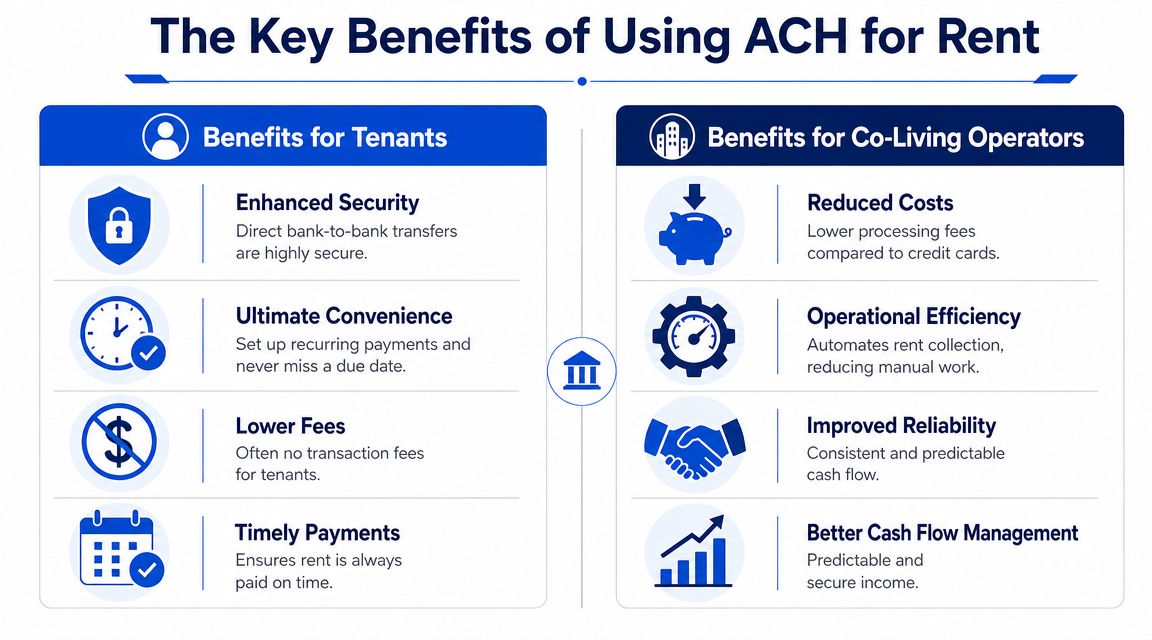
The Key Benefits of Using ACH for Rent
The best reason to pay rent with ACH is that it removes avoidable friction. That helps tenants stay current and helps operators run a tighter collection process.
What tenants gain
For tenants, ACH is mostly about convenience and predictability.
- Recurring payments reduce mental load: Once autopay is set, rent doesn't depend on remembering the first of the month.
- No trip to the office or mailbox: Payment happens from a bank account, usually through an online portal.
- Less chance of a basic mistake: No missing check, wrong envelope, or forgotten stamp.
- Clear confirmation trail: Most portals show scheduled payments, payment history, or email confirmations.
That last point matters more than people think. Tenants want proof that payment was authorized, submitted, and completed. A good ACH workflow gives them that visibility.
What operators gain
Operators usually notice the backend benefits first.
A Rentec Direct white paper on automatic rent payments found that renters with automated ACH payments scheduled were 14% less likely to be charged a late fee than renters with ACH enabled but not scheduled. In the same analysis, 33% of renters with ACH enabled and scheduled monthly payments were charged a late fee, compared with 47% of renters with ACH enabled but not scheduled.
That doesn't mean ACH fixes every collection issue. It does show something practical: automation changes payment behavior.
Side-by-side view
| Audience | Main benefit | Operational effect |
|---|---|---|
| Tenants | Simpler monthly payment routine | Fewer missed due dates caused by forgetfulness |
| Landlords | Less manual collection work | Fewer reminders, fewer payment-handling tasks |
| Co-living operators | More consistent payment flow across many residents | Better rent-roll visibility and easier follow-up |
Practical rule: ACH works best when it's scheduled, visible to the tenant, and monitored by staff. Just offering ACH as an option isn't the same as building a payment routine around it.
One common mistake is assuming “online payments available” equals “problem solved.” It doesn't. Operators get the biggest payoff when tenants enroll in recurring payments and the team uses the payment data inside a consistent rent collection process.
For Tenants How to Pay Your Rent with ACH
If your landlord or property manager offers ACH, setup is usually straightforward. You don't need to understand the banking network. You just need to follow the steps carefully and confirm what you authorized.

What the setup usually looks like
Most tenants start inside a resident portal or payment page. The payment option may be labeled “bank account,” “ACH,” or “eCheck.”
You'll usually be asked to:
- Log in to your rent portal and choose the bank payment option.
- Link your bank account using the platform's secure flow.
- Review the amount and schedule so you know whether it's a one-time payment or recurring rent autopay.
- Authorize the debit before submitting.
The authorization step matters. A tenant must explicitly consent to recurring debits through an ACH authorization that specifies the payment amount, frequency, and start date, as explained in PayRent's guide to ACH authorization and recurring debits.
Why the authorization matters
Some tenants click through this part too quickly. Don't.
That authorization is what tells the platform and the banking system that you agreed to let rent be pulled from your account on the stated schedule. It protects both sides by making the payment terms clear.
Look for these details before you submit:
- Payment amount: Is it only base rent, or does it include utilities or fees?
- Frequency: One-time, monthly, or another recurring schedule.
- Start date: The first date the debit can happen.
- Bank account used: Make sure the correct account is connected.
If the amount or date looks wrong, stop and fix it before authorizing. ACH is convenient because it's automated. That's also why setup accuracy matters.
How to confirm you're fully set up
After setup, don't assume it worked. Verify it.
A reliable tenant workflow includes a visible confirmation. That might be a portal message, a scheduled payment entry, or an email receipt.
This quick explainer may also help if you're new to digital rent payments:
A few smart habits make ACH easier to manage:
- Check your first scheduled withdrawal: Make sure the payment appears in your portal before the due date.
- Keep enough funds available: Even with autopay, the bank account still needs to cover the rent.
- Update bank details early: If you switch accounts, change them before the next withdrawal date.
- Save confirmations: If there's ever a dispute, your email or portal history helps.
For most tenants, once ACH is set up correctly, monthly rent becomes a background task instead of a recurring errand.
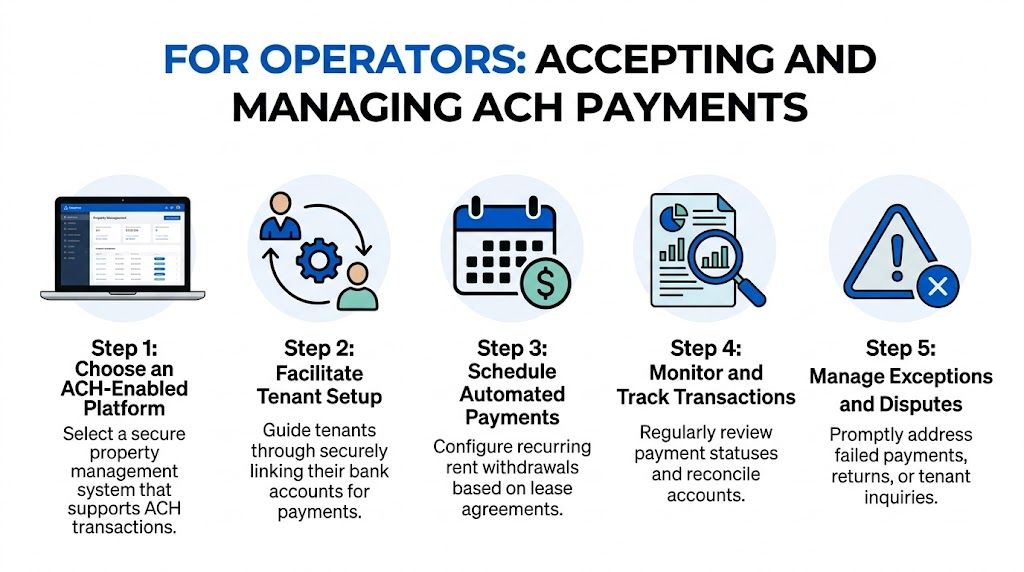
For Operators Accepting and Managing ACH Payments
Accepting ACH is the easy part. Managing it well is where operators separate themselves.
A basic setup lets tenants pay online. A good setup handles authorization, payment status, ledger updates, exceptions, and staff visibility without constant manual cleanup.
What a workable ACH operation needs
For landlords with one unit, a simple rent portal may be enough. For co-living operators, the requirements are stricter because there are more residents, more move-ins and move-outs, and more chances for payment timing issues.
A practical ACH workflow usually includes:
- Tenant onboarding tools: Digital invitations, secure bank linking, and stored authorizations.
- Recurring payment settings: Rent scheduled according to lease or house rules.
- Payment-status tracking: Staff need to distinguish scheduled, pending, settled, and failed payments.
- Rent-roll reporting: One dashboard should show what's been paid, what's in flight, and what needs follow-up.
- Exception handling: Failed debits, account changes, and tenant questions can't live in scattered inboxes.
Settlement timing changes your process
ACH isn't the same as a card swipe. Standard ACH transfers typically take 1 to 3 business days to settle, according to AeroPay's overview of ACH rent payment timing and reconciliation.
That single fact affects several operator decisions:
| Operator task | What works | What causes problems |
|---|---|---|
| Late-fee timing | Base policies on settlement workflow and clear cutoff rules | Charging late fees as if every initiated payment is instantly funded |
| Cash planning | Forecast around bank funding windows | Treating the click date as cash in the bank |
| Team follow-up | Monitor payment status before escalating | Assuming every pending debit is complete |
A resident can submit rent today and still be inside a normal bank-processing window tomorrow. Staff need to know the difference between unpaid and unsettled.
How to avoid common ACH mistakes
Operators run into trouble when they bolt ACH onto an old manual process instead of redesigning the workflow around it.
Three issues show up often:
Weak reconciliation habits
If accounting only checks deposits in the bank account, it's easy to miss whether a payment is pending, returned, or still processing.Poor communication with residents
Residents need clear messaging about withdrawal timing, failed payments, and what status labels mean in the portal.Fragmented systems
If payment data sits in one tool and accounting lives somewhere else, month-end gets messy fast.
For operators comparing systems, this guide to accounting software for rental properties is useful because ACH collection only works smoothly when reconciliation and reporting are built into the same process.
A better operating rhythm
The teams that handle ACH well usually keep the workflow simple:
- Before rent day: send reminders and confirm recurring schedules
- During processing: monitor pending and in-flight payments
- After settlement: reconcile deposits to tenant ledgers
- For exceptions: contact residents quickly and log the outcome in one system
That structure matters even more in co-living, where one property manager may be handling many room-level payments instead of one household payment per unit.
Understanding ACH Security Compliance and Fees
The two questions people ask most are simple. Is ACH safe, and what does it cost?
Security in plain language
ACH is governed by network rules, and the important part for everyday users is this: reputable payment platforms build the authorization, data handling, and transfer process into the product so landlords and tenants don't have to improvise it themselves.
For tenants, that means you should expect a secure online flow, not loose bank details passed around by email or text. For operators, it means your process should rely on established payment software, documented consent, and controlled access to financial data.
Good ACH security starts with process discipline. The problem usually isn't the network. It's sloppy setup, weak permissions, or collecting bank information the wrong way.
If you're evaluating a platform, pay attention to how it handles authorization records, user permissions, and privacy disclosures. A public privacy page like PadPulse's privacy policy is a useful example of the kind of transparency operators should look for when assessing any software vendor.
How ACH pricing compares
ACH is often attractive because rent is a large payment, and percentage-based card fees can get expensive quickly.
One recent comparison notes that ACH direct debit can be priced as low as 0.8% with a $5.00 cap through providers using Stripe infrastructure, according to Simpli Management's breakdown of ACH rent payment pricing. For higher rent amounts, that capped structure can be much easier to absorb than standard card-style pricing.
What to ask before choosing a provider
Don't stop at the headline fee. Ask practical questions:
- Who pays the fee: the operator, the tenant, or either depending on settings?
- What happens on failed payments: is there a retry flow, a return notice, or manual work for staff?
- How visible is payment status: can your team see pending, settled, and exception states clearly?
- How easy is tenant setup: a cheaper fee doesn't help if residents struggle to enroll
The cheapest option on paper isn't always the best operational choice. In rent collection, usability and reconciliation often matter as much as the posted transaction rate.
The Future of Rent Payments for Co-Living
Co-living operators don't just need a way to collect money. They need a system that fits shared homes, room-by-room billing, frequent turnover, and constant resident communication.
ACH is a strong foundation for that. It gives tenants a familiar way to pay rent digitally and gives operators a more controlled collection process than paper checks or ad hoc transfers. That foundation matters because every other part of the operation depends on payment clarity. Leasing, move-ins, delinquency follow-up, owner reporting, and staffing all run better when rent collection is consistent.

Where operators are headed
The next step isn't just “offer online payments.” It's connecting payments to the rest of the operating stack.
That means:
- Messaging tied to payment status
- Reporting that updates with actual settlement activity
- Access and move-in workflows connected to resident accounts
- Portfolio visibility across many rooms and homes
For tenants, the future looks simpler. One account, one portal, clear records, and fewer payment surprises. For operators, the future looks more integrated. ACH becomes one layer inside a broader system for revenue, occupancy, and resident operations.
The practical takeaway is straightforward. If you still rely heavily on checks, switching to ACH is one of the clearest operational upgrades you can make. If you already accept ACH, the next improvement is tightening the workflow around authorization, timing, reporting, and exception handling.
PadPulse is building an all-in-one platform for PadSplit hosts and co-living operators who want tighter control over room-by-room operations. If you want updates on its Winter 2026 launch, beta access opportunities, and tools designed to centralize pricing, communications, smart access, and financial visibility, join the PadPulse interest list.