A Co-Living Operator's Lead Qualification Process Guide
July 26, 2026
Your inbox is probably full of people who want a room, ask a few vague questions, and then disappear when you ask about move-in date, house rules, or income. Meanwhile, you're still replying, still screening, and still losing time to leads who were never a fit for shared living in the first place.
A strong lead qualification process fixes that. In co-living, it's not enough to know whether someone can pay rent. You also need to know whether they'll respect the home, adapt to the house rhythm, use your tech without friction, and move fast enough to fill the vacancy before it drags on your NOI.
Why Your Old Lead Process Is Costing You Money
The old model is easy to recognize. A prospect fills out a form, you trade messages for a day or two, and only then do you find out they want a private apartment, won't move for six weeks, or need conditions your house can't support. That back-and-forth feels harmless in the moment, but it drains the one thing a co-living operator never gets back, time.
A modern lead qualification process treats every inquiry like a triage moment. Sales guidance now centers on fit, intent, budget, authority, timing, and buying signals rather than gut feel, and that shift matters just as much in room-by-room rentals as it does in B2B. The point is to screen early, route fast, and keep your attention on the people most likely to become stable residents. The earlier you make that call, the less time you lose on poor-fit inquiries, and the faster you can move serious prospects into the next step.
That's the difference between a manual inbox and a working system. Manual follow-up asks you to remember every lead, guess which ones matter, and react whenever you happen to check messages. A structured process gives every inquiry the same first pass, the same rules, and the same next action.
Practical rule: if a lead can't meet your basic resident criteria quickly, don't let the conversation sprawl. Qualify early, then move on.
This matters even more because lead volume gets filtered hard before sales ever steps in. A widely used benchmark in 2026 lead-generation reporting says only about 13% of leads become qualified opportunities, while average website visitor-to-lead conversion sits around 2.5% to 3%. That gap is exactly why a shared-housing operator has to protect attention and move with discipline rather than hope the right resident will sort themselves out. For teams that want to tighten the process further, workflow improvements are worth studying alongside the basics, including the ideas in workflow optimization.
Defining Your Ideal Resident Profile
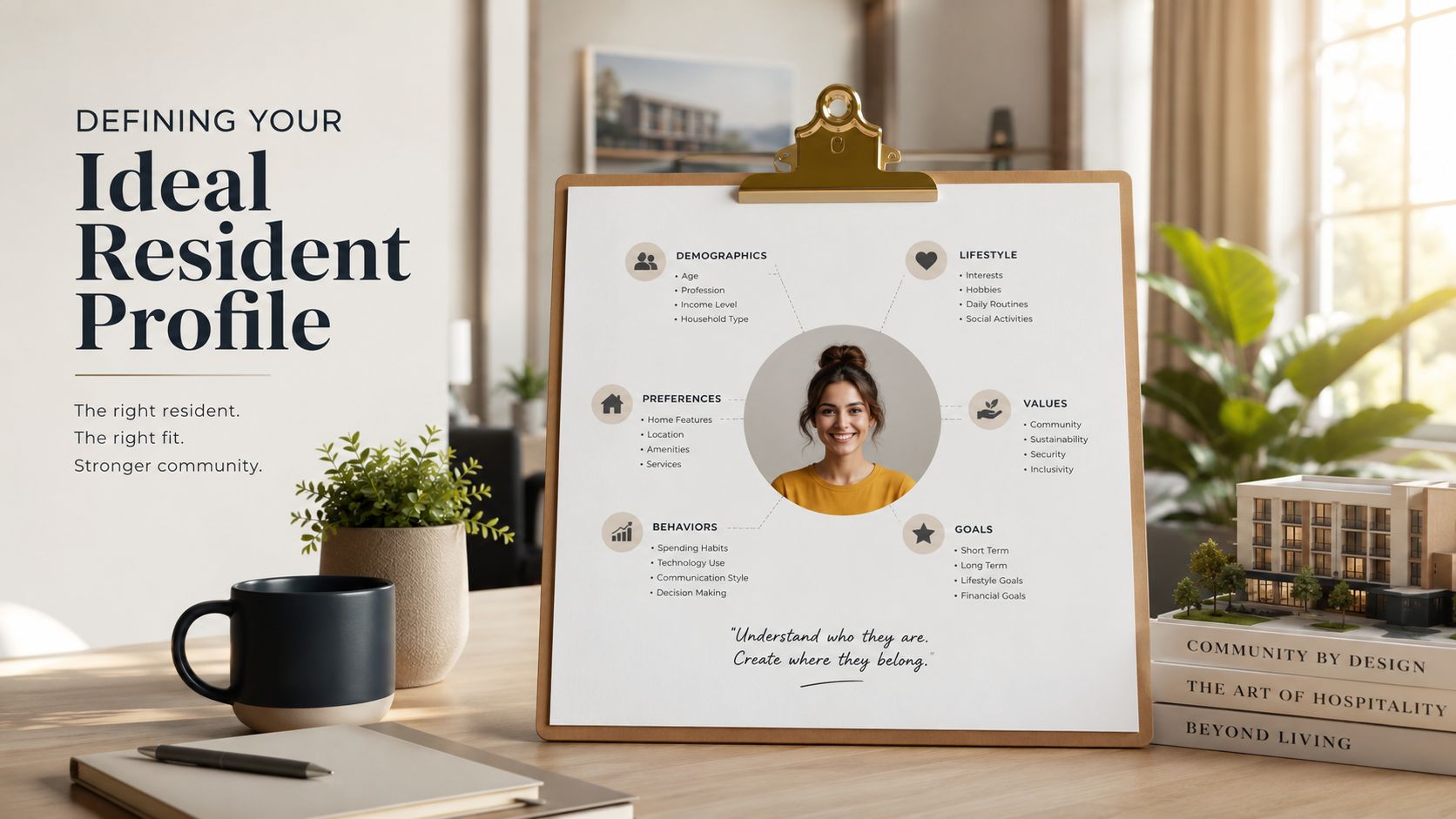
Before you can qualify leads, you need a clear Ideal Resident Profile, not just a vague sense of “good tenants.” Co-living is a compatibility business as much as it's a housing business. The right resident pays on time, yes, but they also communicate clearly, follow house rules, and make shared space easier for everyone else.
Start with the non-negotiables
Begin with the basics that keep occupancy stable. Salesforce describes lead qualification as checking whether the offering can meet the lead's needs and whether the lead can afford it, plus whether they're interested, can buy now or later, have authority, and have a problem the offering can solve. In co-living terms, that translates to rent ability, move-in timing, and whether the person's housing need matches your property's setup. Adobe's lead-qualification guidance also frames the process as a multistep flow that begins with contact capture and ends with fit review against an established profile, which is the right mental model for operators too. Salesforce's lead qualification checklist and Adobe's lead qualification guide both reflect that structure.
Your resident profile should document:
- Financial fit: Rent range, deposit readiness, and whether the candidate's income or savings level supports your terms.
- Move-in readiness: How soon they can move, not when they'd like to maybe start looking again.
- Household behavior: Cleanliness, noise tolerance, guest habits, and general respect for shared space.
- Communication style: Whether they answer clearly, respond promptly, and handle logistics without drama.
- Rule alignment: Willingness to accept house policies, screening requirements, and shared standards.
Add the co-living-specific filters
Generic landlord screening usually falls short. In a shared home, you're not only screening for payment risk, you're screening for friction risk. A person may be financially qualified and still be a bad fit if they work overnight shifts, can't handle shared chores, or want a social environment you don't offer.
A simple way to build the profile is to compare your best past residents with your worst-fit inquiries. Look for patterns. The best residents usually don't just meet the money threshold, they also behave predictably, communicate early, and settle into the home without constant follow-up. Those are the traits your profile should capture in writing.
Useful test: if a trait would make housemates more comfortable, it belongs in the resident profile.
Keep the profile short enough to use, not so broad that it becomes wallpaper. Once it's written, every inquiry gets measured against the same standard, which removes mood-based decisions and makes your screening more consistent. If a lead misses on one of the core factors, you can decide quickly whether to disqualify, nurture, or refer them elsewhere.
Building a Practical Lead Scoring Model
A good scoring model turns your resident profile into something you can use without overthinking every inquiry. Instead of trying to “feel out” every lead, you assign points to the signals that matter most in a co-living context. That gives you a fast way to tell who deserves a call now, who needs more nurturing, and who should be moved out of the main pipeline.
Score what predicts a smooth move
Outfunnel recommends using an ICP, explicit qualification criteria, and numerical values tied to fit and engagement signals such as job title, company size, visits, opens, and downloads. The same logic works here, but your inputs should match room-by-room housing, not B2B software. Outfunnel's process guide is useful because it shows the scoring principle clearly, even if your criteria are different.
For co-living, a workable scoring model might look like this:
| Criterion | Points |
|---|---|
| Move-in date within your target window | 25 |
| Clear budget fit | 20 |
| Responds quickly and answers questions directly | 15 |
| Accepts house rules without hesitation | 15 |
| Has prior shared-housing experience | 10 |
| Strong communication and professionalism | 10 |
| Needs special exceptions or exceptions negotiation | -10 |
| Unclear timeline or vague housing need | -15 |
Keep the point system simple enough that anyone on your team can use it. If your first screening question is “When are you looking to move?” and the answer is fuzzy, that should lower the score immediately. If the lead is ready now and fits the home, the score should rise fast.
Set a threshold that drives action
One benchmark cited in 2026 guidance is an MQL threshold of 60 to 80 points, intended to isolate roughly the top 20% of leads. That exact number won't map perfectly to every co-living business, but the principle holds, use a threshold that separates serious residents from casual browsers. Prospeo's lead-qualification best practices makes that benchmark explicit.
A practical setup is this:
- Above threshold: Immediate call or tour invite.
- Near threshold: Ask one or two clarifying questions.
- Below threshold: Nurture or archive.
If a lead scores high on fit but low on readiness, keep them warm without spending a full hour on back-and-forth. If they score low on fit, don't keep selling the house to someone who's already telling you it won't work.
For background on how screening and background checks can support the scoring workflow, see background check integration. The point isn't to add friction for its own sake. The point is to make sure your time goes to the leads most likely to become calm, dependable residents.
The cleanest scoring models are the ones your team uses. If it's too complicated, people stop trusting it and go back to instinct. If it's clear, repeatable, and tied to resident outcomes, it becomes part of your operating rhythm.
Automating Your Workflow with Smart Messaging
The best leads go cold fast if you make them wait. A 2026 lead-qualification guide says inbound leads followed up within 5 minutes are 21 times more likely to enter the sales cycle. That finding has made fast routing a serious operating standard, and it matters just as much for co-living inquiries as it does for revenue teams. Prospeo's lead-qualification guide puts the speed problem in plain terms.
Treat every inquiry like a timed handoff
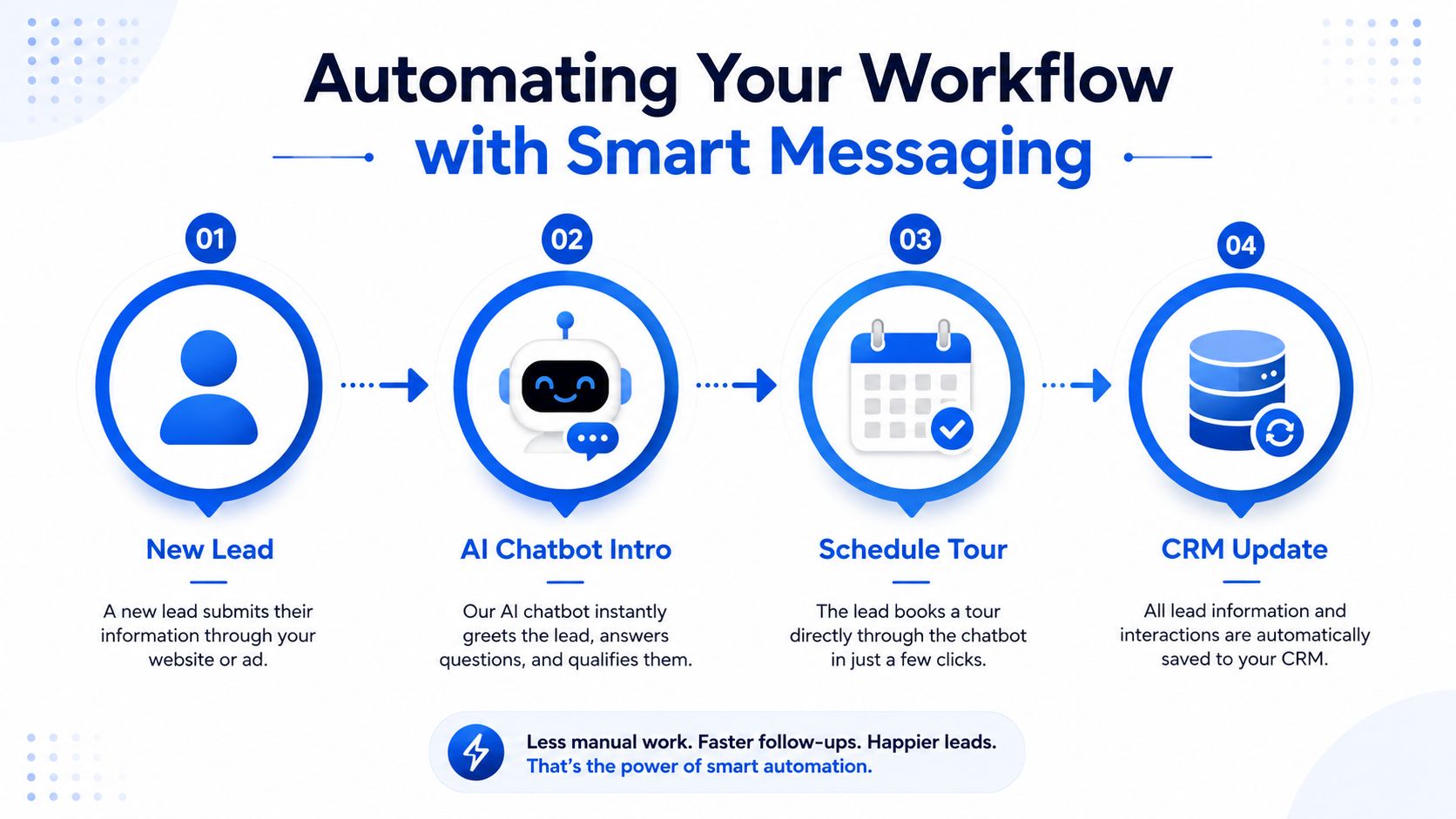
The workflow should start the second the inquiry arrives. A lead submits a form, gets an instant acknowledgment, receives a short pre-screening message, and is then guided to the next best action based on score. High-scoring leads get a tour link or direct reply. Low-scoring leads get a polite, useful response that keeps the door open without burning staff time.
That's where automation earns its keep. It handles the repetitive pieces without making the process feel robotic if you write the messages well. The first reply can confirm availability, ask two or three qualifying questions, and set expectations about timing. If the answers come back strong, the system can hand the lead to a human immediately.
Use automation to support judgment, not replace it
Highspot's 2026 guidance notes that strong qualification starts from behavior and intent signals, then routes leads within seconds rather than hours. It also points out that qualification has moved from a sales-call checklist into a real-time workflow built around fit, intent, and automation. Highspot's lead qualification overview captures that shift well. For co-living operators, the lesson is simple, the software should do the triage so you can do the human part.
A clean automation sequence might look like this:
- New lead comes in. The inquiry is logged instantly.
- Instant response goes out. The prospect gets a friendly acknowledgment and screening link.
- Score updates automatically. Answers and behavior change the lead's status.
- Best leads get routed fast. Qualified prospects move to tour scheduling or direct follow-up.
If you're building this out, make sure the follow-up matches the lead's temperature. An enthusiastic applicant wants a tour link. A hesitant one needs a brief clarification, not a long sales pitch. The goal is to make good leads feel seen while keeping your team from manually chasing every form fill.
The strongest systems also keep records clean. When the workflow updates the CRM automatically, you avoid duplicate notes, missed follow-ups, and the classic “Who was supposed to call this person?” problem. For implementation ideas that fit this style of routing and message flow, follow-up automation is a useful companion topic.
Tracking Metrics to Optimize Performance
A lead qualification process should earn its keep in the numbers, not just in the inbox. Industry guidance now commonly recommends tracking MQL-to-SQL conversion rate, lead response time, lead-to-opportunity rate, and cost per qualified lead, because qualification is a measurable operational process, not a subjective opinion. Cubeo's lead qualification metrics guide puts that shift in measurable terms.
Watch the metrics that expose friction
For a co-living operator, the most useful metrics are the ones that reveal where leads stall. If many prospects engage but few schedule tours, your first-screen questions may be too heavy. If tours happen but applications lag, your home may not be matching the expectations set in the listing or the first call.
Track these signals in plain language:
- Inquiry to tour: Shows whether your first response is clear enough to move people forward.
- Tour to application: Shows whether the home, pricing, or rules are creating hesitation.
- Application to move-in: Shows whether your final steps are smooth or unnecessarily slow.
- Time to first human response: Shows whether you're catching high-intent leads while interest is fresh.
Response speed deserves special attention because it's one of the clearest milestones in the whole process. The moment an inquiry sits unanswered, the chance to convert it drops. That's why routing, auto-replies, and assignment rules should be treated as core operating tools, not nice-to-haves.
Use closed wins to recalibrate the score
UserGems recommends defining clear MQL and SQL benchmarks, scoring both demographic or firmographic data and engagement behavior, and keeping sales and marketing aligned on handoff and feedback loops. That advice is still useful even if you're running a housing business rather than a sales team, because the core idea is the same, define what good looks like and keep adjusting against actual outcomes. UserGems' lead qualification guide is especially helpful on consistency.
The best practice is to look back at your best residents and ask what they had in common before they signed. Were they fast to respond? Did they ask direct questions? Did they accept the house standards without negotiation? Those patterns should influence your score more than assumptions about age, job title, or where the lead came from.
Operational truth: if your best residents keep looking different from your scoring assumptions, the score is wrong, not the residents.
That feedback loop is where qualification turns into a business advantage. You stop guessing, your team stops debating every inquiry, and your pipeline starts reflecting the residents who stay, pay, and live well with others.
Common Pitfalls and Next-Level Tactics
The most common mistake is applying a generic BANT script to a co-living inquiry and calling it a process. BANT, CHAMP, and MEDDIC all have value in the right setting, but they were built for sales motions where the buyer is evaluating a product, not a home. In shared housing, the questions are more practical, more personal, and often more urgent than standard B2B discovery.
Don't let old frameworks do the wrong job
The old model asks about budget, authority, need, and timeline. Those still matter, but they don't tell you whether a resident can live well with others, handle a move fast, or adapt to the operational reality of a shared property. Salesforce's checklist, Adobe's multistep view, and Outfunnel's scoring ideas all point toward structure, but the criteria have to match your market. In co-living, that means screening for vacancy tolerance, tech readiness, community fit, and house-rule alignment instead of relying on generic buyer labels.
That's also why “signal-driven” qualification works better here than waiting for a complete form. Highspot's guidance emphasizes acting on behavioral and intent signals before sales outreach deepens, and that's exactly what strong operators do when they notice a lead asking focused questions, responding quickly, and signaling readiness. The lead is telling you how serious they are before they ever sign anything.
Re-qualify when circumstances change
A lead is not permanently qualified or unqualified. If the timing changes, the budget changes, or the person's living situation changes, the score should change with it. That's especially important in co-living, where move-in timing and flexibility can shift quickly and can't be treated like fixed corporate procurement cycles.
A practical refinement checklist looks like this:
- Review your top residents: Find the behaviors that predict a smooth stay.
- Cut vague fields from your intake: If a question never helps you decide, remove it.
- Shorten your first response: Give the lead one clear next step.
- Track disqualification reasons: Patterns will show you what your listing is attracting.
- Tune the score regularly: Revisit your criteria when your occupancy, house type, or audience changes.
The goal is not to collect more information. The goal is to make better decisions faster, with less staff friction. When your process is tight, the right people move through it quickly, the wrong ones filter out early, and your rooms fill with less stress.
If you want a better system for room-by-room operations, start by tightening how inquiries are routed, scored, and followed up. PadPulse is building tools around that exact problem, from faster messaging to operational visibility, and you can join the interest list at PadPulse to stay close to the launch.