How to Maximize Rental Property Income in 2026
September 4, 2026
A 7.3% U.S. rental vacancy rate in Q2 2026 is a better starting point for rental-income strategy than another generic rent-raise recommendation. The U.S. Census Bureau housing vacancy data puts that figure alongside 7.2% in Q4 2025 and 7.0% in Q2 2025. Realtor.com also reported that vacancy across the 50 largest U.S. metros reached 7.6% in 2025, up from 7.2% in 2024, with 44 of those metros renter-friendly or balanced.
For a co-living operator managing more than 80 rooms, the lesson is practical: a room that sits empty can erase the gain from a higher asking price. The central question isn't “How do I charge the most?” It's how to maximize rental property income after vacancy, turnover, concessions, operating costs, and resident churn. The strongest operators manage occupancy, effective rent, room-level yield, ancillary revenue, and repeatable operations as one system.
Why Most Rental Income Advice Falls Short in 2026
A higher asking rent can reduce rental income if it leaves a room vacant. The right operating measure is net effective rent per available room night, because an unoccupied room earns nothing while the listing waits for a better applicant or a higher offer.
Many landlord guides still recommend raising rent first and screening harder second. That advice treats advertised rent as the result. For a room-by-room operator managing more than 80 rooms, the result is cash flow after vacancy, turnover, concessions, operating costs, and resident churn. Boston-Cambridge-Newton recorded 3.2% vacancy in 2025, while Buffalo reached 12.5% and Houston reached 11.4%, according to the Realtor.com rental vacancy analysis. A tight market can support firmer pricing. A softer market usually rewards occupancy protection, targeted concessions, and faster leasing.
A 5% rent bump that triggers a 7-day vacancy costs more than it returns in the operating experience of co-living operators running 80-plus rooms. Treat that as a warning, not a universal formula. Before approving any increase, calculate the revenue lost during the expected vacancy period.
The four levers that drive NOI
Room performance comes from four connected operating decisions. Track them at the room level, not only at the property level.
| Lever | Weekly operating decision | Common mistake |
|---|---|---|
| Occupancy | Review every vacant room daily and assign a reason code, such as price, condition, slow response, weak photos, or applicant quality. Reduce the gap between move-out and move-in. | Leaving “available” as a passive status while the room loses revenue |
| Average daily or effective room rate | Set a price floor, ceiling, and documented vacancy cost. Compare each room with nearby options offering similar privacy, furnishings, utilities, and house quality. | Copying a whole-house rate onto rooms with different appeal |
| Ancillary capture | Price resident-requested services, including parking, laundry, pets, and selected resident services, when they provide visible value. | Adding fees that create complaints, collection work, or move-outs |
| Controllable expense ratio | Review utilities, maintenance, cleaning, supplies, and vendor invoices by property. Protect preventative work that avoids emergency repairs and poor resident experience. | Cutting maintenance or ignoring vendor and utility leakage |
Occupancy and rate must be managed together. A room priced above its local demand may produce a better headline number and a worse monthly result. A modest concession that fills the room quickly can outperform a higher rate followed by lost days, extra marketing, and another turnover cycle.
Tenant length of stay adds another layer. A resident who renews avoids listing work, showings, cleaning, repairs, screening, and vacancy exposure. Retention does not replace pricing discipline. It makes each occupied month more valuable and reduces the number of times the property must pay to refill the same room.
A room-level operating scorecard
Use the following benchmarks to expose weak rooms and weak processes. They are operating targets, not guarantees.
| Income Lever | Target Range | Common Failure Mode |
|---|---|---|
| Rolling occupancy | Above 92% | Waiting too long to adjust price or listing quality |
| Room pricing | Floor to documented market ceiling | Chasing the highest comparable without measuring vacancy cost |
| Ancillary revenue | Property-specific, value-led | Layering on fees that create resident friction |
| Controllable expenses | Around 30% of gross or lower | Ignoring vendor creep and utility leakage |
| Length of stay | Stable and improving | Treating renewal as an administrative afterthought |
A 2026 fact-checked rental summary reported that average U.S. rental yield, defined as annual rent divided by property value, rose to 4.2% in 2023 from 3.8% in 2022. The rental yield and market metrics summary also explains why operators track Average Daily Rate, occupancy, and RevPAR together. Co-living properties use different time commitments and room economics, yet the operating principle holds: price and utilization must be managed together.
Start with the room, not the headline rent. Calculate its daily burn, record its vacancy reason, and approve every price change against the revenue the room can produce.
Dynamic Pricing and Yield Management for Co-Living
Dynamic pricing works differently in co-living than it does in a hotel. Your inventory is usually a private room with a fixed weekly or monthly commitment, not a hotel night, but the underlying decision remains similar: adjust price as demand and occupancy change.
Set three boundaries before you reprice:
- Price floor: Base it on operating cost plus the margin you require. The floor prevents a rushed lease from falling below break-even.
- Price ceiling: Anchor it to comparable rooms and properties within a practical local search area, such as a 10-minute drive.
- Base-rate reset: Review the base rate every 14 days using a rolling 30-day occupancy signal.
A simple rule set can keep decisions consistent:
- Drop the price by $15 if occupancy stays below 88% for 7 days.
- Hold the rate between 88% and 94% occupancy.
- Push the price by $25 only after 21 consecutive days at 95% or higher occupancy.
These thresholds aren't universal truths. They're a disciplined starting framework that keeps emotion out of repricing. The operator still needs to check room condition, lead quality, seasonality, and competing supply before accepting an automated recommendation.
This guide to dynamic pricing strategy provides useful context for applying the concept beyond short-term rentals.
A documented study of 541 listings across 34 countries found that moving from static to dynamic pricing increased revenue by 36% on average, while another study found a statistically significant annual income increase of more than $1,000, with p < 0.05. Those findings are summarized in the dynamic pricing comparison for Airbnb operators. The important interpretation is not “raise rates automatically.” The lift comes from protecting occupancy during weak demand and capturing stronger rates when demand supports them.
Screening and Retention That Protect Monthly Cash Flow
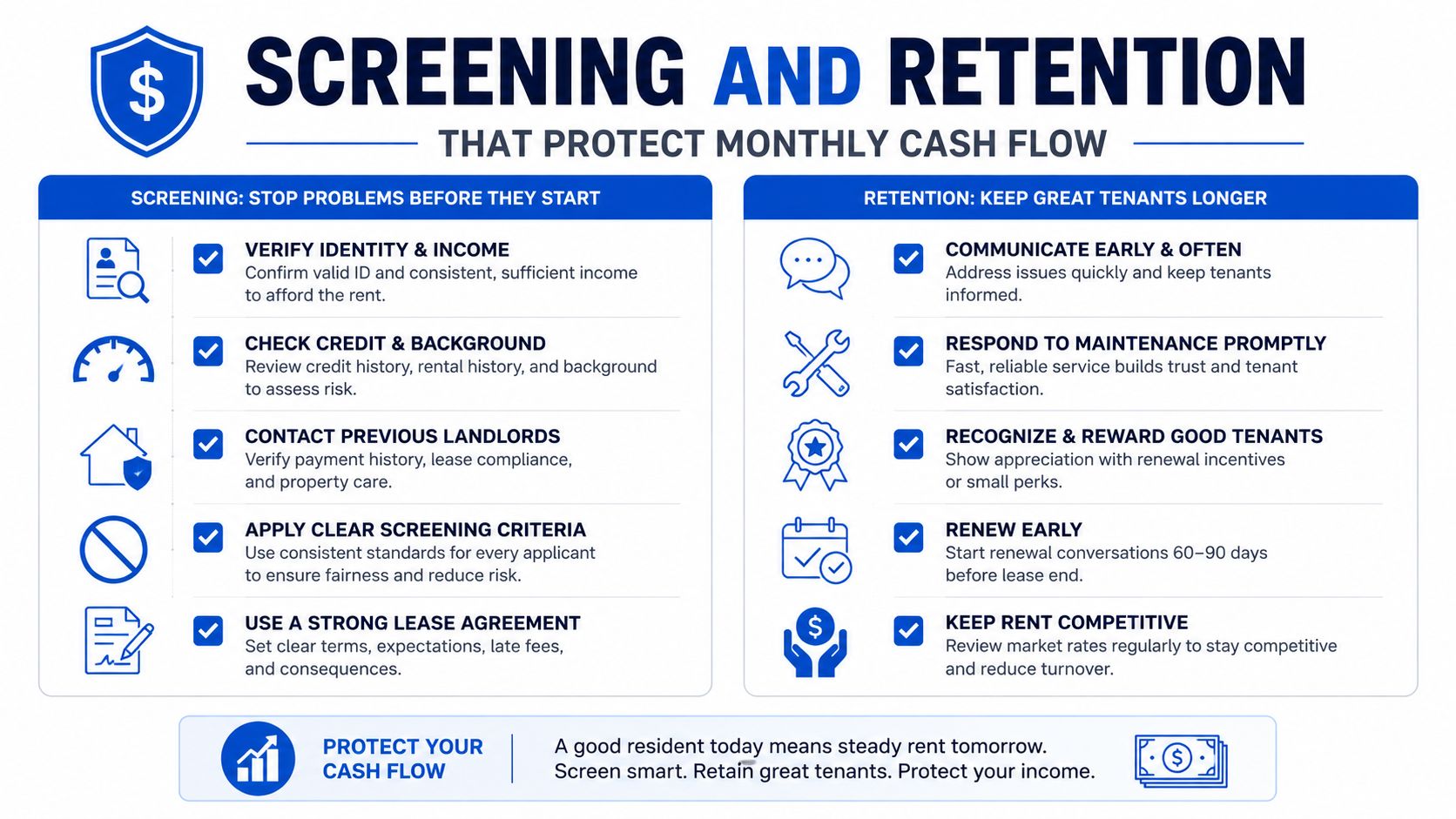
Screening is a revenue function in shared housing. One resident who stops paying or creates conflict can trigger collection work, damage, conflict among housemates, and a long vacancy. A consistent process protects cash flow better than an informal judgment made during a rushed showing.
Use a repeatable five-step screen
Verify income at 2x rent using documented pay stubs or equivalent records. If the applicant can't verify the stated income, don't make an exception because the room is empty.
Run a soft-credit pull and look specifically for prior evictions and collections. Credit isn't the whole decision, but unexplained payment history deserves a documented follow-up.
Call two previous landlords. Ask specific behavioral questions: Did the resident pay on time? Did they respect shared areas? Did they give proper notice? Would you rent to them again?
Check the sex offender registry and national criminal database consistently and in accordance with applicable law and fair-housing requirements.
Confirm the applicant saw the actual room. A resident who hasn't viewed the room may have misunderstood the layout, privacy level, house rules, or shared amenities.
For teams that need a more consistent document trail, automated income verification can reduce manual follow-up while keeping verification within a defined process.
Retention starts before renewal
A resident in month nine who renews saves roughly $1,200 in turnover costs in the operating model described here. Treat that saving as income protection, not a soft customer-service benefit.
Use a simple renewal playbook:
- Hold a 60-day check-in to surface maintenance or roommate complaints.
- Offer a 30-day rent incentive for early renewal when the economics make sense.
- Cap the renewal increase at 4%, while pricing a true turnover at the current market rate.
- Keep maintenance responses under 24 hours, even when the repair itself takes longer.
Refused background checks, unverifiable income, and pressure to move in the same day are red flags. Don't let a vacant room pressure you into accepting an applicant who fails your process.
Ancillary Revenue Streams Worth the Effort
Ancillary fees can add NOI without changing base rent, but only when residents understand the value. My rule is simple: if a fee creates more complaint work than revenue, it isn't income. It's a management liability.
| Stream | Monthly Lift Per Door | Setup Effort | Complaint Risk |
|---|---|---|---|
| Parking | $50 to $150 per spot | Low if the lot already exists | Low |
| App or coin laundry | $30 to $60 per machine | Moderate | Low to moderate |
| Pet rent and pet fees | $25 to $50 per pet | Low with screening | Moderate |
| Smart-home or amenity fee | Property-specific | Moderate | Moderate to high |
| Trash valet or pest surcharge | Property-specific | Moderate to high | High |
Parking ranks first when spaces already exist. It requires little ongoing work, residents understand the benefit, and the charge remains separate from the room rate. Laundry is another strong option, especially when the equipment already serves the house and payment collection is automated.
Pet rent and pet fees can work well when paired with clear screening, cleaning expectations, and house rules. They also broaden the usable applicant pool. Don't add a pet charge without confirming that the property can handle the animal policy and that the fee complies with local requirements.
Smart-home charges need more care. A smart lock or thermostat fee makes sense when it replaces an existing cost or provides a service residents use. It doesn't make sense as a surprise add-on for a feature that primarily benefits the owner.
Trash valet and pest-control surcharges usually create more friction than they're worth. Skip any stream with high complaint risk unless the lift exceeds $75 per door and the operational process is already reliable.
Before launching a new fee, plan the move-in and move-out process. A clear move in and move out cleaning guide can help standardize turnover expectations and reduce disputes around cleanliness.
Operations Automation That Saves Real Time
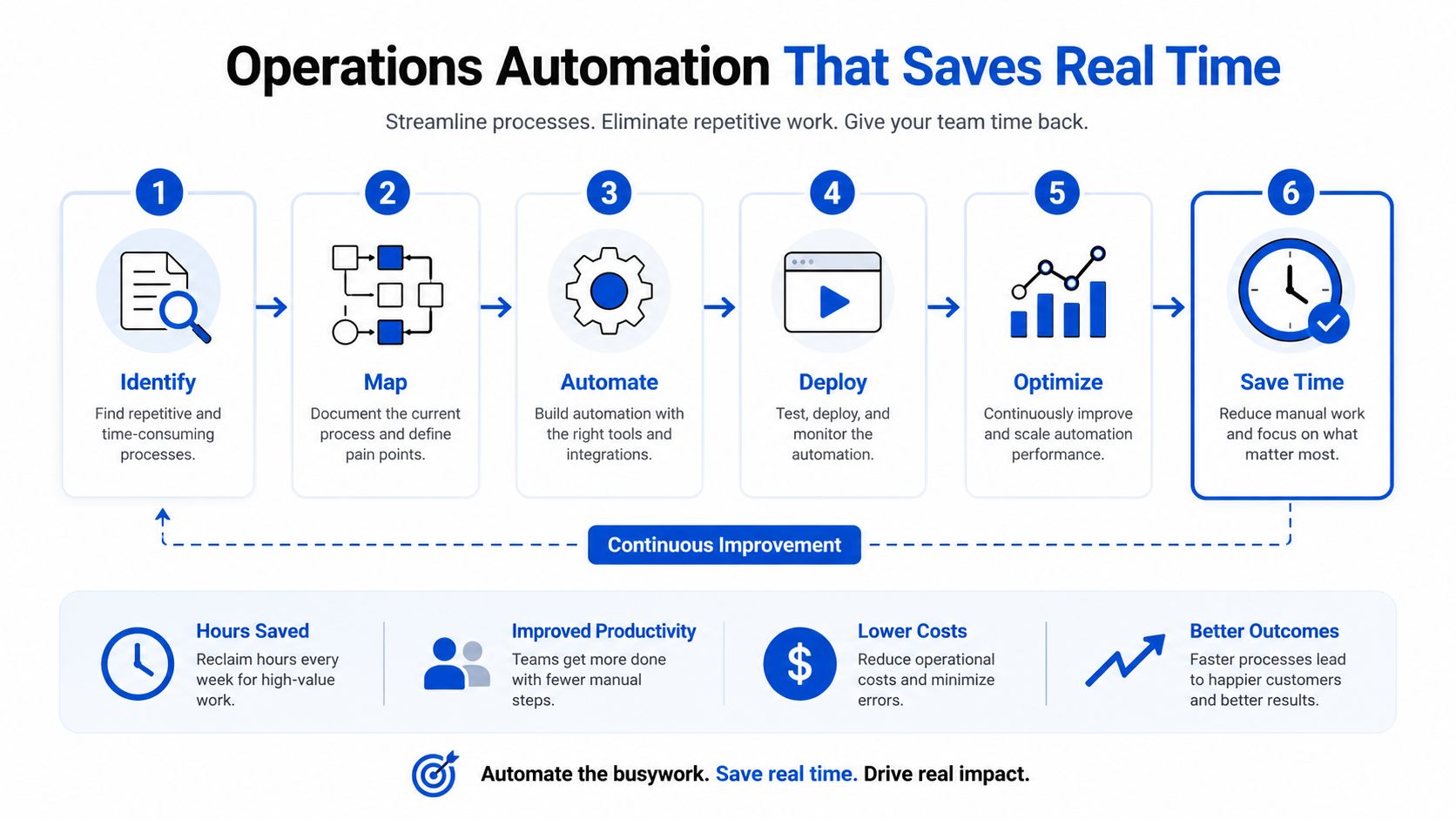
Automation should remove repetitive work, not turn a small rental business into a software-management project. In a 10-room house, the priority is killing the tasks that consume more than 10 hours a week, starting with money collection and resident communication.
Build the stack in this order
Rent collection through ACH with late-fee automation. This is the most impactful tool. It removes repeated payment reminders and can recover 4 to 6 hours each month in follow-up work.
Maintenance ticketing with a resident-facing app. Require a description and photo at submission. Better intake cuts phone tag and gives vendors usable information before they arrive.
Listing syndication from one source. Push accurate room details to PadSplit, Zillow, Facebook, and Craigslist without rewriting the same listing repeatedly.
Utility billing and split-EER calculations. Shared houses need a consistent allocation method. Replace the spreadsheet that breaks when a resident moves in or out mid-cycle.
Integrated background and income screening. Use predefined adjudication rules so every applicant receives the same process and the operator can audit decisions.
A well-built stack should return 15 to 20 hours per week at the 10-room level. That figure is an operating benchmark, not a guaranteed result, and it depends on how much manual work the operator currently performs.
Don't buy a voice AI receptionist before automating rent collection. Don't automate lease renewals without human review. And don't pay more than 2% of rent for an “AI rent optimizer” that can't explain its pricing logic. Co-living pricing software remains immature, and many products repackage short-term rental data that doesn't fit room-by-room leasing.
A workflow tool can be useful when it connects tasks rather than adding another dashboard. Review workflow automation for property operations with one question: which manual handoff disappears after implementation?
The KPI Dashboard Every Co-Living Operator Should Watch
A rent roll can look healthy while a house loses money through slow turns, excessive utilities, maintenance leakage, or resident churn. Track five operating metrics that connect directly to NOI, then use secondary metrics to diagnose the cause.
| KPI | Target Range | Why It Matters | Trigger Action |
|---|---|---|---|
| Physical occupancy | 90% or higher | Shows how much inventory earns rent | Review price, listing, response speed, and room condition |
| Effective rent per available room | Within 3% to 5% of asking | Captures concessions and vacancy impact | Recalculate the rent-occupancy tradeoff |
| Vacancy days between turns | Under 7 days | Limits revenue loss during turnover | Pre-market, schedule cleaning early, and assign vendors |
| Tenant churn over 90 days | Under 15% | Exposes avoidable turnover | Call departing residents and fix recurring complaints |
| Utility and maintenance cost per occupied room night | Property-specific downward trend | Shows whether occupancy produces healthy NOI | Audit leaks, usage, work orders, and vendor pricing |
The dashboard becomes useful when each metric has an owner. Lead-to-lease conversion explains whether marketing and response speed work. Collection rate shows whether rent collection is reliable. Work-order response time reveals whether maintenance threatens retention. Those secondary measures should point back to one of the five core numbers.
Use a property income tracking spreadsheet if you don't yet have a property management system. A spreadsheet is sufficient when the operator updates it consistently and records the reason behind each change.
Weekly operating rule: Pull the data Monday morning, flag the two weakest metrics, and assign one person to each fix.
Review property management metrics with the same discipline you use for rent collection. Don't fill the dashboard with vanity figures. If a metric doesn't change a decision, remove it.
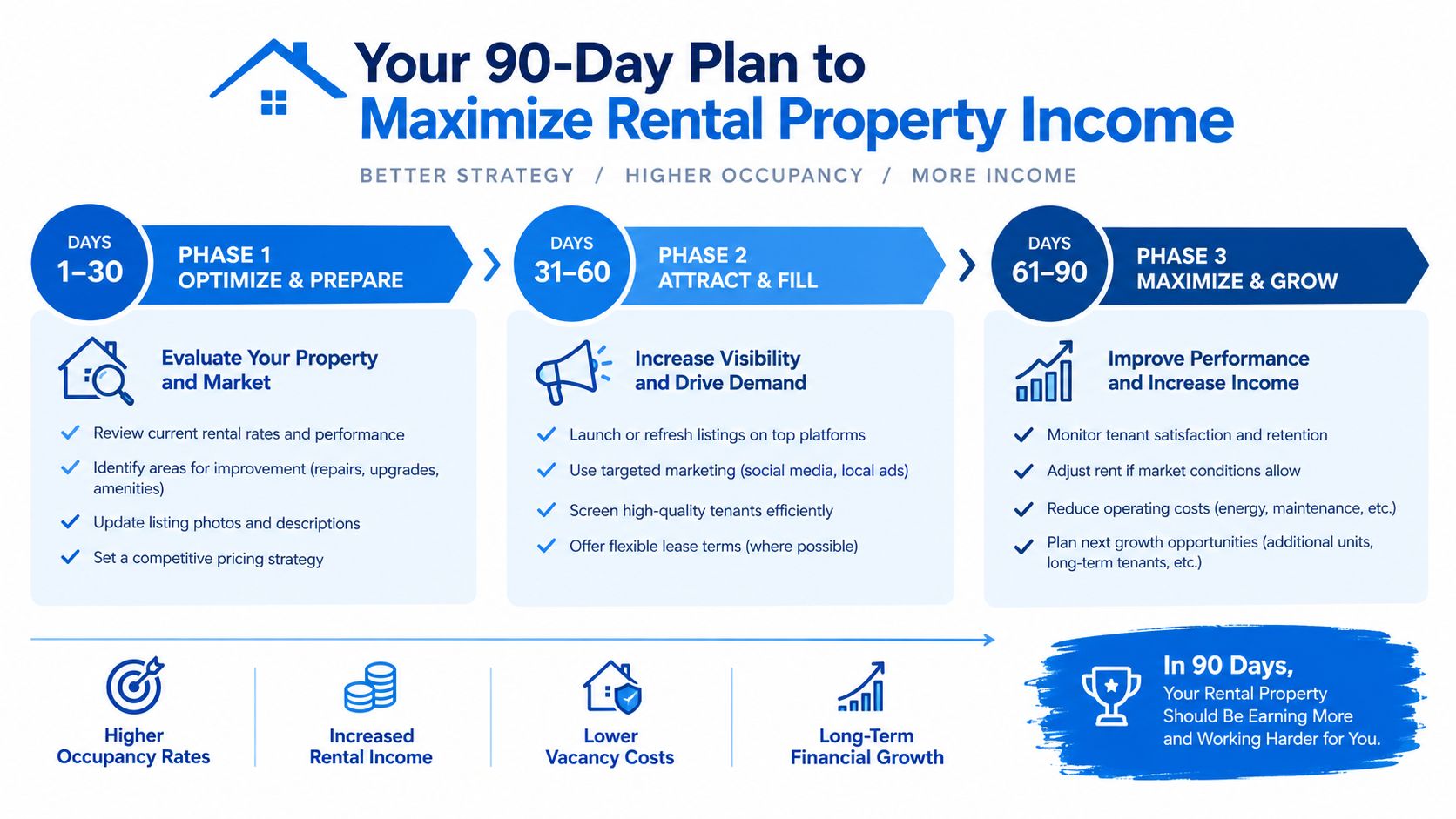
Your 90-Day Plan to Maximize Rental Property Income
You don't need to rebuild the business in one weekend. Sequence the work so the first changes improve visibility and cash collection, while later changes strengthen retention and cost control.
Week one quick wins
Start with the current portfolio, not a new tool.
- Audit rent against nearby comps. Identify rooms listed below 5% of comparable market pricing, then verify condition and demand before making a change.
- Tighten screening criteria. Write the requirements down and apply them consistently.
- Create a weekly KPI sheet. Track occupancy, effective rent, turn vacancy, churn, and utility plus maintenance cost per occupied room night.
- Log every vacant room by reason. You can't fix a vacancy pattern you don't classify.
These tasks require little setup and expose the largest leaks. If the data isn't clean, pricing software won't save the operation.
Days 8 through 30
Add repeatable controls after the baseline is clear.
- Set dynamic pricing rules with a documented floor and ceiling.
- Rewrite listings with room-specific photos, accurate availability, and clear house expectations.
- Launch two ancillary streams that fit the property, usually laundry and parking.
- Automate rent collection and enforce late-fee rules consistently.
- Create a turn calendar so cleaning, repairs, and showings start before the room becomes available.
Use one decision log for every rate change, concession, and vacancy exception. That record prevents the team from confusing a temporary occupancy problem with a permanent pricing strategy.
Days 31 through 90
Focus on residents, systems, and recurring costs.
- Retention: Send a welcome packet, run quarterly check-ins, and offer a renewal incentive when early commitment protects NOI.
- Property intelligence: Connect an IoT thermostat and leak-sensor stack where the savings and risk reduction justify installation.
- Vendor control: Renegotiate the top three vendor contracts and compare service quality with total cost.
- Management rhythm: Hold a monthly KPI review with one owner assigned to each underperforming metric.
What to prioritize when time is limited
| Task | Expected NOI Impact | Time Requirement | Keep or Skip |
|---|---|---|---|
| Vacancy and rent audit | High | Low | Keep |
| ACH rent collection | High | Low to moderate | Keep |
| Screening consistency | High | Moderate | Keep |
| Room-level listing updates | High | Moderate | Keep |
| Laundry or parking launch | Moderate | Moderate | Keep if demand exists |
| IoT monitoring | Moderate | Moderate | Add after basics |
| Decorative upgrades without pricing evidence | Unclear | High | Skip |
| Complex software with no integrations | Low | High | Skip |
The order matters. Protect occupied room nights first, improve effective pricing second, add resident-fit revenue third, and automate whatever still consumes operator attention. That's how to maximize rental property income without mistaking a higher asking rent for higher NOI.
PadPulse is being built for PadSplit hosts and co-living operators who need room-level pricing, vacancy visibility, automated workflows, and clearer P&L reporting in one place. Visit PadPulse to join the early-access interest list and follow the Winter 2026 launch updates.