Top 10 Free Landlord Accounting Software for 2026
May 16, 2026
Stop Drowning in Spreadsheets: Your Guide to Free Accounting
Juggling rent receipts, tracking maintenance costs, and getting ready for tax season can turn a small rental into a part-time bookkeeping job. A lot of landlords start with a spreadsheet, a bank statement, and a pile of receipts. That setup works right up until it doesn't. One missed expense category or one messy tenant ledger later, the whole system starts to feel fragile.
The good news is you don't need expensive software to get organized. Free landlord accounting software has grown from basic rent trackers into real platforms with reporting, payment tools, and cleaner records. In the U.S., that matters because small landlords can now start with automation and tax-ready workflows without taking on another monthly subscription right away.
This list gets to the point. These are the tools worth looking at if you want to replace spreadsheet chaos with something you can run rentals on.
1. PadPulse
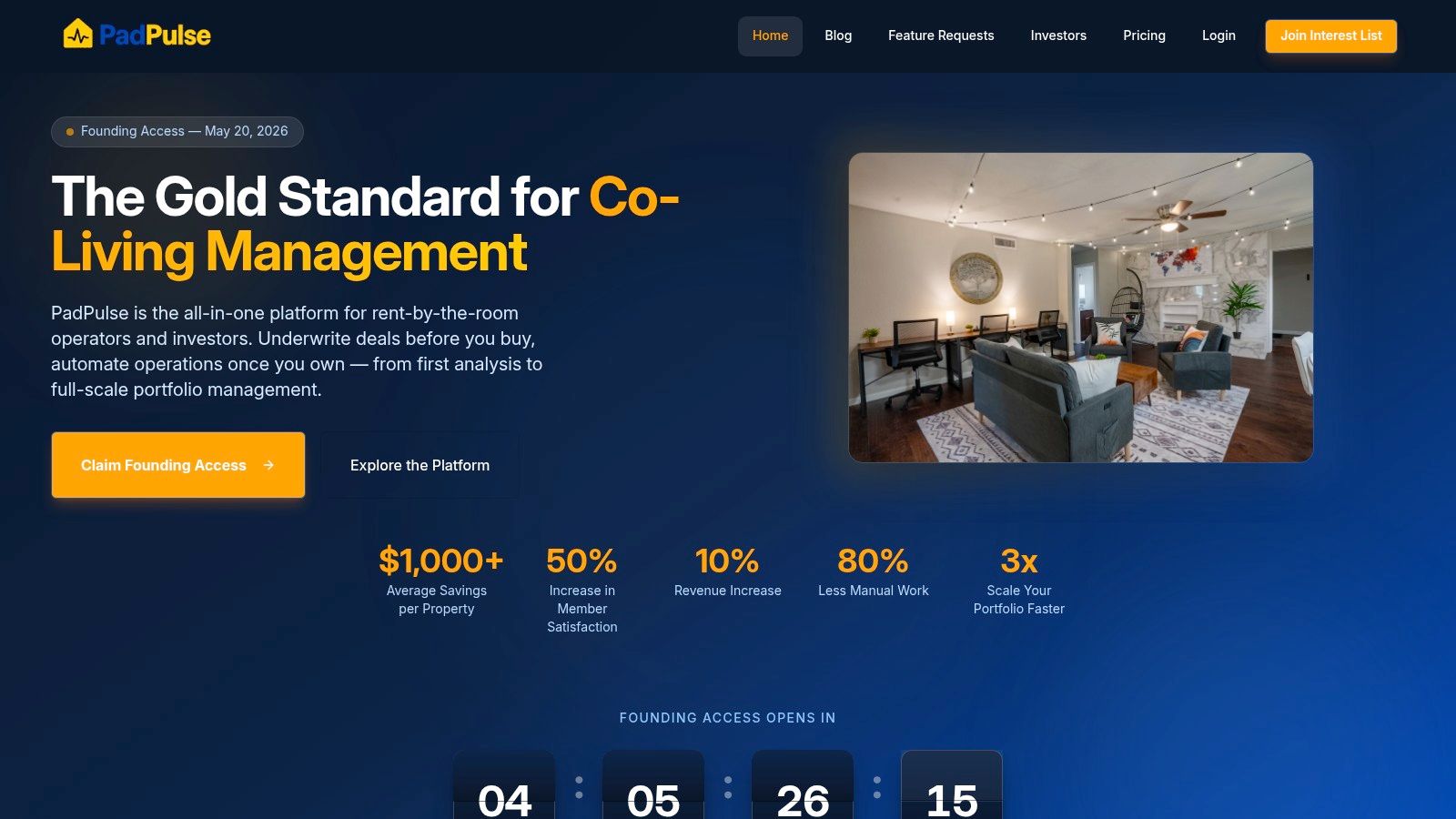
PadPulse is the only option on this list built around the room-by-room operator, not the traditional one-lease-per-unit landlord. That distinction matters. If you run co-living, PadSplit-style housing, or any shared home with frequent turnover, standard landlord software usually makes you fight the system.
PadPulse is being developed as an all-in-one platform for hosts and co-living operators. The free angle is especially interesting for small operators because the platform is positioned as an entry point for owners who need immediate bookkeeping and rent collection value before moving into more advanced portfolio analytics, a model that fits the wider market trend toward free and low-cost adoption for smaller operators, as noted by Mordor Intelligence on property management software growth.
Why it stands out for room-by-room rentals
Most free landlord accounting software assumes one tenant, one lease, one payment stream. That's not how co-living works. You may have multiple members in one house, staggered move-ins, and a much heavier communication load around pricing, access, and vacancy turns.
PadPulse is trying to solve that operational mess in one place. Instead of bolting accounting onto a generic management tool, it ties financial visibility to pricing, messaging, access control, and portfolio reporting. If you want the broader accounting picture first, PadPulse also has a guide on best accounting software for rental properties.
Practical rule: If your biggest headache is roommate turnover, not bookkeeping entries, pick software that treats operations and accounting as one workflow.
What works and what to watch
What looks promising here is the scope. PadPulse is designed to cover underwriting before purchase, then launch, leasing, communication, reporting, and smart-device coordination after acquisition. For co-living operators, that's more useful than a tool that only gives you an expense log and a rent ledger.
The trade-off is straightforward. It's still in development, so you should treat it as an emerging platform rather than a mature, fully proven enterprise system. If you need something battle-tested for a conventional rental today, another tool on this list may be safer. If you run rent-by-the-room housing and keep duct-taping together spreadsheets, messaging apps, pricing notes, and lock access tools, PadPulse is one of the few products aiming at your actual workflow.
A small landlord with one duplex doesn't need this level of specialization. A PadSplit host probably does.
2. Stessa
Friday night, rent hit most units, two expenses landed on the wrong property, and your bookkeeper texted asking which charge belongs to which LLC. Stessa is built for that kind of cleanup. It works best for landlords who want property-level books that make sense without building a spreadsheet from scratch every month.
Its real advantage is focus. Stessa organizes reporting around rental ownership, so you can review income, expenses, cash flow, and tenant activity by property without forcing a generic small-business accounting system to behave like real estate software. For a landlord with a few long-term rentals, that usually matters more than having a long feature list.
Best fit
Stessa makes the most sense if your main question is financial clarity.
- What did each property produce
- Which charges are recurring and which ones were one-time repairs
- What records can go to a CPA with minimal cleanup
That setup is especially useful for owners who hold traditional rentals in separate entities or track performance one property at a time.
The trade-off
Here's the deal. “Free” works well if reporting is the job. It works less well if you expect one system to run leasing, maintenance, resident communication, and room-by-room turnover.
That distinction matters for co-living and PadSplit-style operators. If one house has frequent move-ins, shared utility allocations, and income tied to individual rooms instead of one lease, you should test whether the workflow matches how you operate. A property-level dashboard can still be useful, but it will not solve every operational wrinkle that comes with by-the-room housing.
For standard buy-and-hold landlords, Stessa is often one of the easier starting points. For growing operators, the right question is not whether the free tier exists. The right question is whether its limits show up before your portfolio gets more complex.
3. Azibo
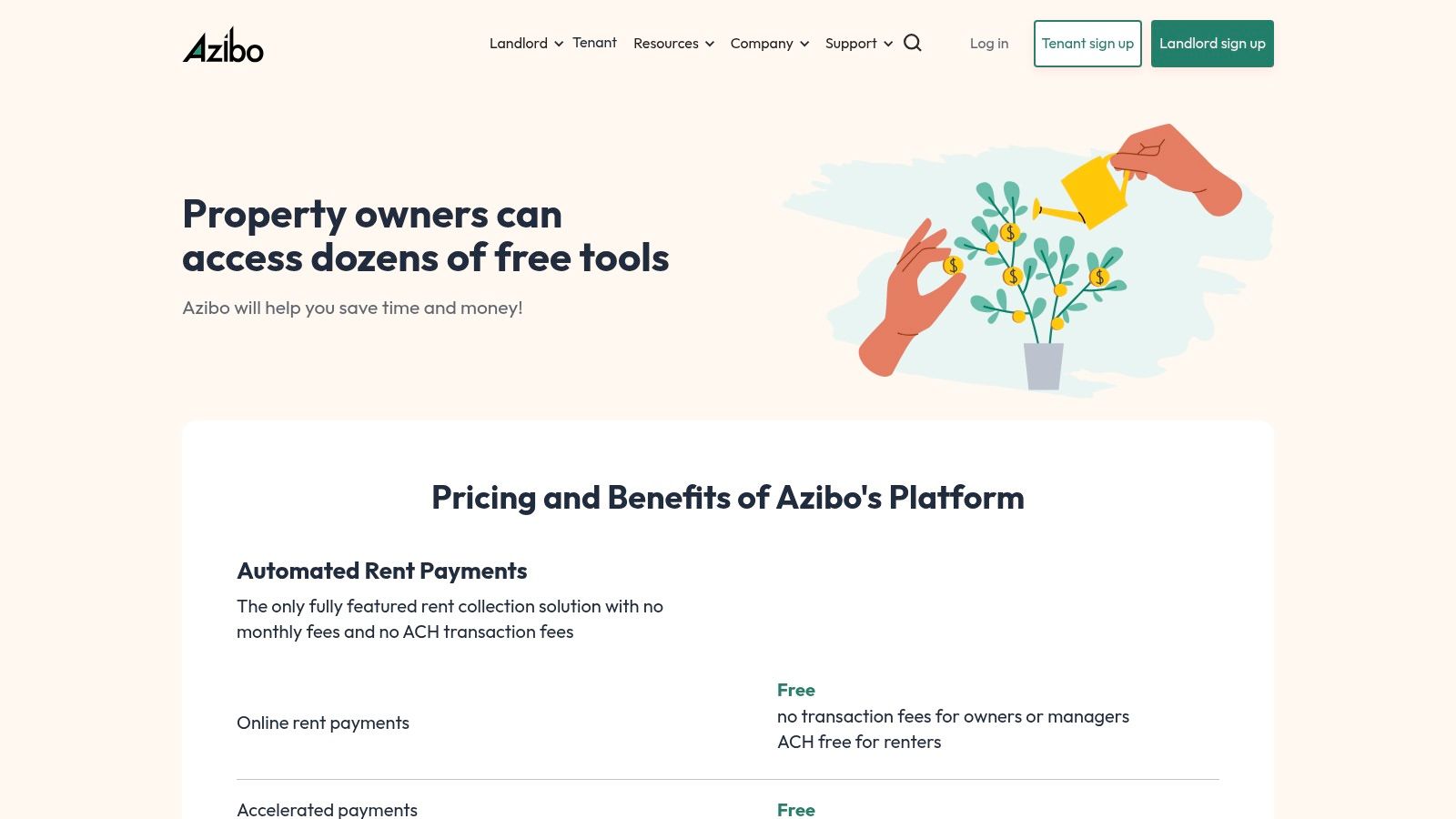
Azibo sits in the middle of accounting software and rental operations software. That's why some landlords like it. You can collect rent, track expenses, store documents, and keep the financial side close to the payment side instead of splitting those jobs across multiple tools.
For an owner-operator, that setup is practical. When rent collection, expense tracking, and account activity live together, reconciliation usually gets easier because you're not trying to stitch together records from separate systems.
Where Azibo works best
Azibo makes the most sense for landlords who want one login for the financial core of the business. It's especially appealing if you want a banking-style workflow alongside rent collection and reporting.
That said, integrated finance tools often work best when you use more of the provider's ecosystem. If you only want one piece of the platform and plan to keep the rest elsewhere, some of the convenience starts to disappear.
What to watch before you commit
The main question with Azibo isn't whether it has enough basic features. It usually does for a small portfolio. The true question is whether you want your accounting workflow tied closely to the platform's banking and payment rails.
That can be a strength or a limitation depending on how you operate.
- Use Azibo if you want rent collection, documents, and expense tracking in one place
- Skip Azibo if you want maximum flexibility with outside banks and disconnected tools
- Be careful if you manage unusual ownership structures or need more advanced accounting controls
Azibo is a good “keep it simple” platform. It's not the most specialized accounting engine on this list, but it can reduce tool sprawl for landlords who want straightforward financial management without a lot of setup.
4. Baselane

You buy another rental, open a new bank account to keep things clean, and tell yourself the bookkeeping will stay simple this time. Three months later, rent is hitting one place, maintenance is tracked somewhere else, and you are still exporting transactions into a spreadsheet to figure out property cash flow. Baselane is built for that exact pain point.
Its value is straightforward. Banking, rent collection, transaction tracking, and basic reporting sit close together, so the monthly review usually takes less cleanup. For landlords with a small portfolio, that setup can be more useful than a general accounting tool loaded with features you will never touch.
Where Baselane makes sense
Baselane works best for owners who want visibility by property and prefer cash management that matches the books. If your main question each month is "which property is producing cash and which one is draining it," the dashboard gets you there faster than a patchwork system.
I have found that this matters most for landlords who are outgrowing spreadsheets but are not ready for accountant-grade software. That middle ground is where a lot of "free" tools either feel too thin or start pushing paid upgrades.
Baselane is also worth a hard look if you operate room-by-room rentals or are testing a PadSplit-style model. In that setup, the software has to help you answer practical questions fast:
- Can you separate income and expenses clearly by property or unit setup?
- Can you see failed payments or timing gaps before they create a cash crunch?
- Can you keep banking activity and reporting close enough that reconciliation does not become a second job?
- Can the system still make sense once occupancy, turns, and utility splits get messier?
If you track performance closely, it helps to understand gross effective income for rental property analysis, because room-by-room operators can look profitable on scheduled rent and still underperform after vacancy, concessions, or collection issues.
The real trade-off
Baselane is strongest when you use it as more than a ledger. The closer your rent flow, reserves, and expense activity stay inside the platform, the more time it saves. That is the upside.
The limitation is just as real. If you keep multiple outside bank relationships, need unusual entity structures, or want advanced accounting controls, the convenience starts to fade. Free landlord software often works well right up to the point where your business gets more operationally messy.
Free software stops being free when you spend hours every month correcting reports by hand.
Baselane is a solid fit for landlords who want a finance-first operating system, not just a rent collection app with a few reports added on. For a straightforward portfolio, that can be enough. For a growing room-by-room business, use it with a checklist mindset and make sure the free workflow still holds up once the portfolio gets complicated.
5. Innago
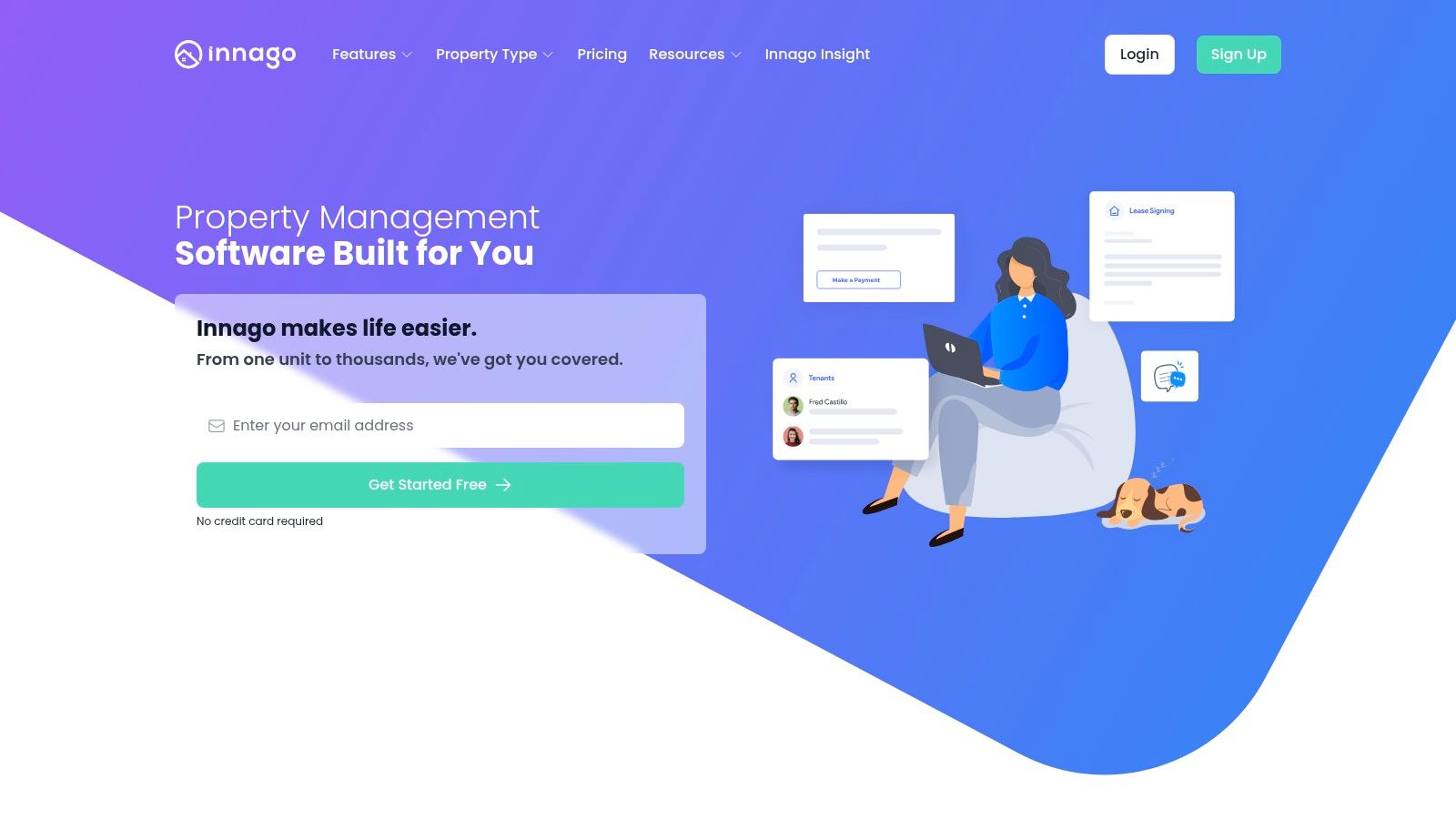
Innago is the practical pick for landlords who want a free system that handles the everyday stuff well. Rent collection, applications, screening, maintenance, and basic expense tracking are all there. It doesn't pretend to be a full accounting stack, and that honesty is part of why it works.
If you're coming from spreadsheets, Innago usually feels like a relief. You can get rent online, keep tenant records in one place, and stop chasing paper checks and email threads.
Where Innago shines
This is a day-to-day operations tool first. The accounting side is enough for many small landlords, especially if what you really need is visibility and consistency, not accountant-grade depth.
Innago is often best for:
- DIY landlords: You handle leasing, payments, and maintenance yourself
- Small portfolios: You don't need advanced fund accounting or complex ownership reporting
- Beginners: You want something straightforward, not a finance system that needs setup work before it's useful
Where it falls short
The limitation is also obvious. Innago isn't built as full double-entry accounting software. For many landlords, that's fine. For anyone with more complex books, multi-owner reporting, or compliance-heavy accounting needs, it may start to feel thin.
That doesn't make it weak. It just means you should use it for what it does well. If you want a clean operating hub with light accounting baked in, Innago is one of the strongest free options. If you need deeper books, pair it with stronger accounting processes or pick a more finance-first tool.
6. Apartments.com Rental Manager
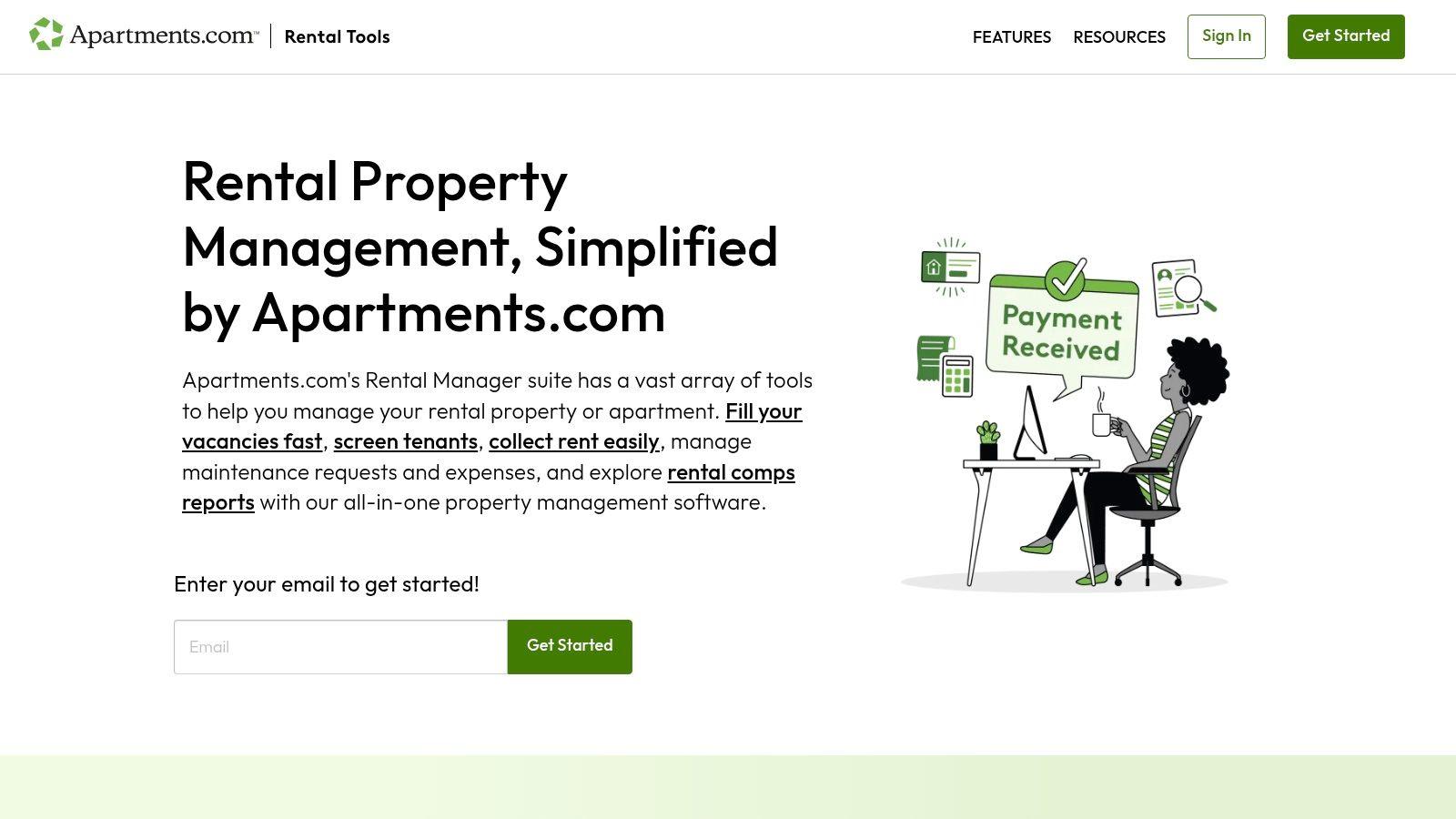
Apartments.com Rental Manager makes sense when listings and management matter as much as accounting. A lot of landlords don't need a pure bookkeeping platform. They need one place to advertise vacancies, screen applicants, collect rent, and keep some expense records organized.
That's where this tool earns its spot. It's not a true accounting system, but it covers enough of the operating cycle to be useful for smaller portfolios.
Best use case
This platform is strongest for landlords who want fewer moving pieces during leasing and turnover. If you list vacancies often and don't want separate tools for advertising and basic rent operations, Apartments.com Rental Manager is convenient.
The financial side is more lightweight. You can track expenses and pull reports, but you shouldn't mistake that for full bookkeeping infrastructure.
My take on the trade-off
For a single-family landlord or someone with a few units, that may be all you need. For a growing portfolio, this usually becomes a front-end operations tool rather than your final accounting system.
A simple rule helps here:
- Choose it if vacancy marketing is a constant part of your workload
- Pass on it if your books are already messy and accounting is the main problem
- Upgrade later if you start needing tighter reporting by property or owner
Apartments.com Rental Manager is useful because it combines visibility and action. You can market, screen, and collect in one place. Just don't expect it to replace a finance-first platform when your reporting needs get more serious.
7. TurboTenant
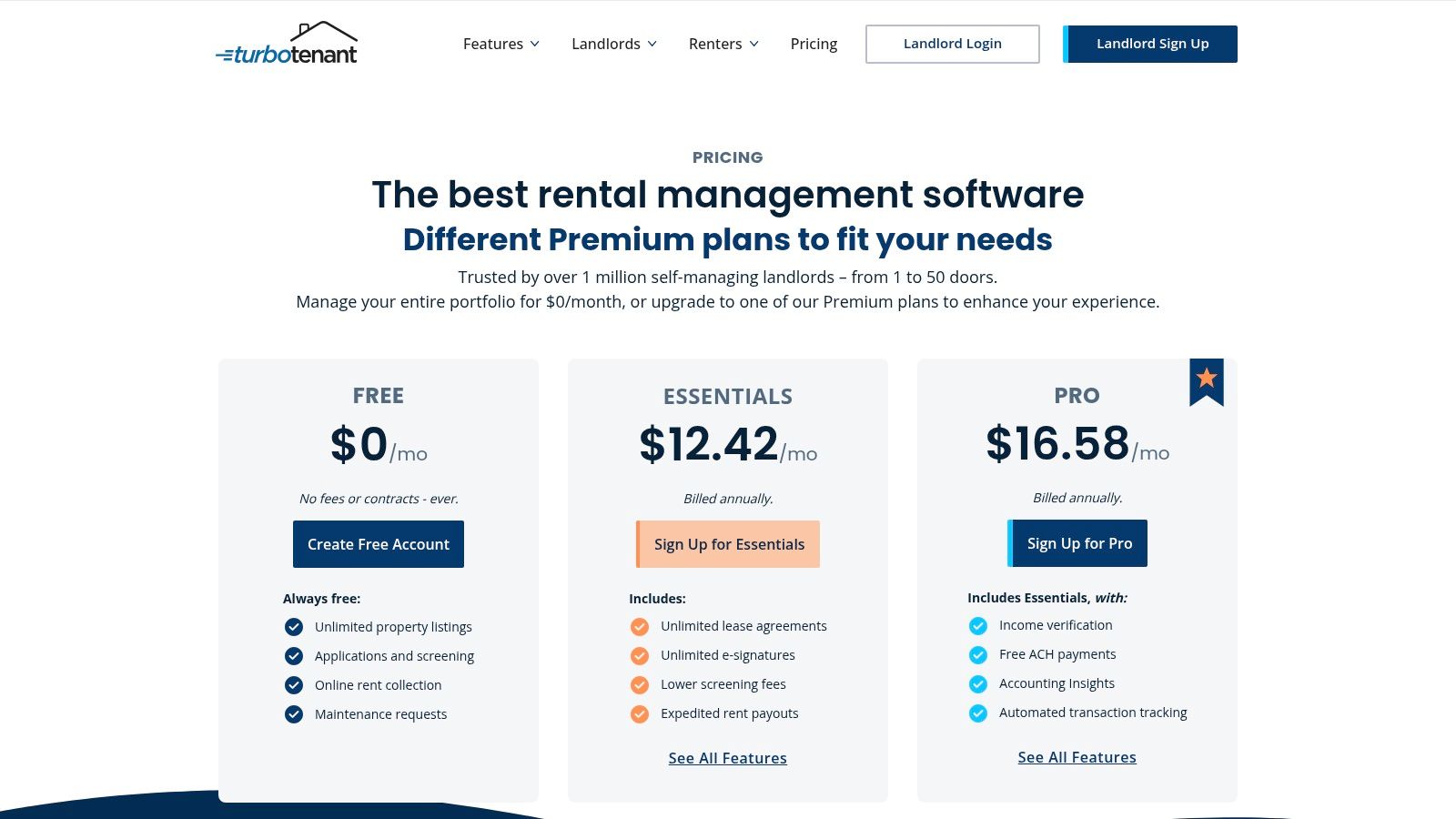
You list a vacancy, collect a few applications, sign the lease, and then realize your "accounting system" is still a bank feed plus a spreadsheet. That is the lane TurboTenant fits. It helps landlords get the leasing and rent-collection work under control first, with just enough financial tracking to avoid total disorder.
That matters because free landlord software usually makes you choose a side. Some tools are finance-first. Others are leasing-first. TurboTenant is clearly in the second camp.
Where it fits best
TurboTenant works well for landlords who need to fill units, screen tenants, and collect rent without adding a lot of setup work. If you have a small portfolio, or you are self-managing a few turnovers a year, that can be enough.
I would put it in the "operations first, books second" category. You can track basic income and expenses, but its primary value is keeping the front end of the rental cycle organized.
It can also make sense for owners testing room-by-room leasing before committing to heavier software. If you are managing shared housing, the core question is whether you only need applicant flow and payment tracking, or whether you also need clearer unit, room, and tenant coordination across the property. That is where a co-living property management system for shared housing operators may be a better fit.
The real trade-off
TurboTenant's free tier is useful because it removes friction from the day-to-day leasing process. The limit is that it does not give you accounting depth. Once you care about cleaner categorization, property-level reporting, or year-end books you can hand to a CPA without cleanup, you start to feel the ceiling.
That is the decision framework I would use:
- Choose TurboTenant if leasing, applications, and rent collection are the main pain points
- Use it cautiously if you run room-by-room rentals and need tracking that matches beds, rooms, or shared utility splits
- Pass on it if your biggest problem is messy bookkeeping, not tenant placement
- Expect to upgrade later if your portfolio is growing and you want stronger reporting by property
TurboTenant earns its spot because free software does not have to do everything to be useful. It just has to solve the right problem. For smaller landlords, that problem is often leasing speed and payment collection. For operators with more complexity, especially co-living or PadSplit-style setups, the free tier is usually a starting point, not the final system.
8. TenantCloud
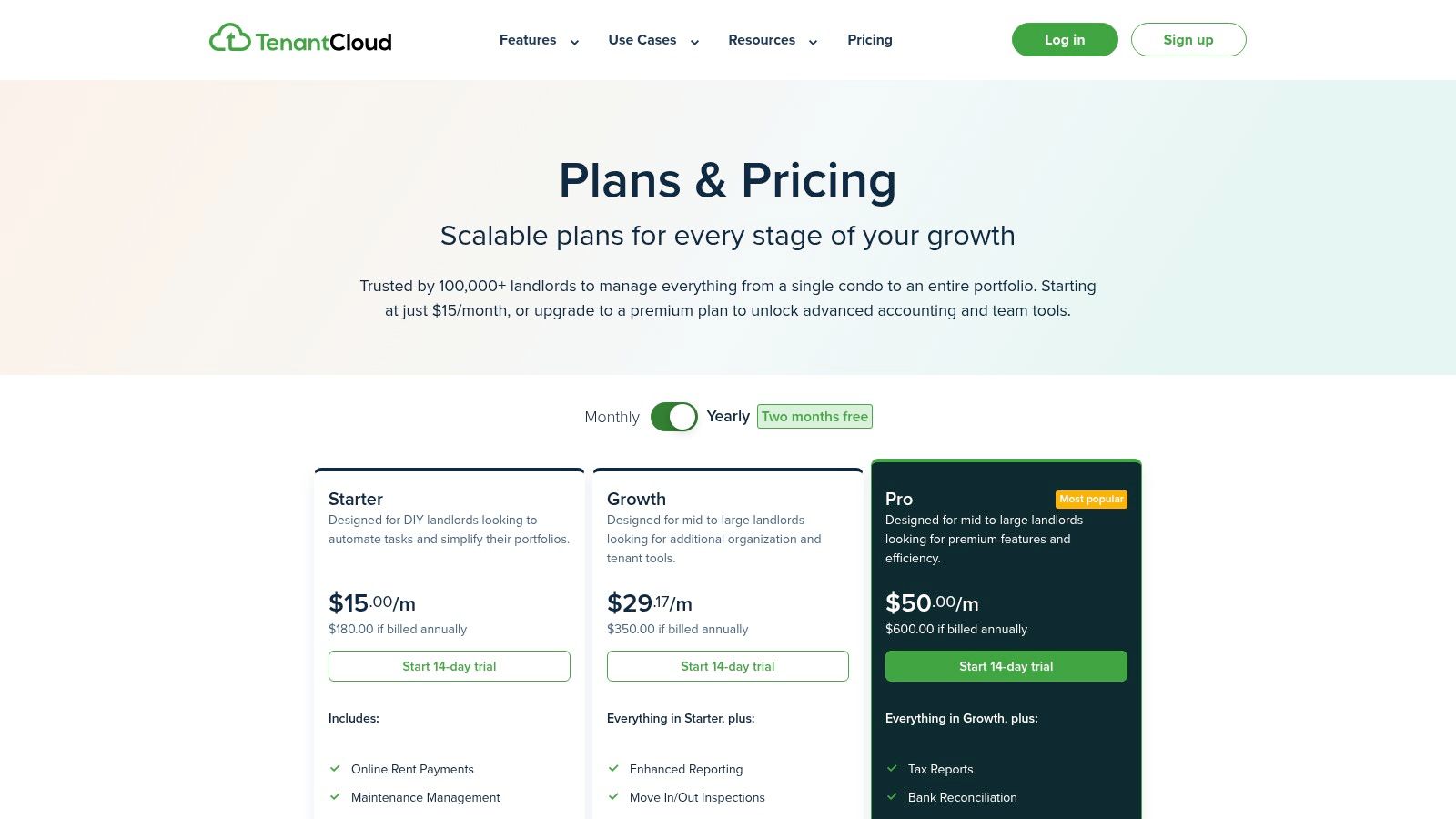
TenantCloud tries to cover a lot of ground. Rent collection, expense logging, tax reports, messaging, and maintenance are all part of the package. For some landlords, that breadth is the attraction. For others, it can feel a bit heavier than they want.
Still, cloud access isn't optional anymore for most operators. TenantCloud's own reporting says cloud-based solutions account for over 70% of property software market share, cited in Fortune Business Insights coverage of the property management market. That lines up with how landlords work now. They want mobile access, centralized records, and less dependence on paper or desktop-only tools.
Why it makes sense for co-living and shared housing
If you're managing shared homes or room-by-room rentals, centralizing communication matters almost as much as tracking money. Tenant portals and cloud records help keep requests, payments, and messages from scattering across texts and email threads. That's one reason co-living operators often look for software that combines accounting with communication, as discussed in this guide to co-living property management.
Keep tenant records, payment history, and maintenance notes in one system. That habit matters more than fancy dashboards.
Where free users hit the wall
TenantCloud's free entry point is useful, but accounting depth is where many users eventually feel the limit. More advanced reconciliation and reporting tend to live in paid tiers. If you're running a very small portfolio, that may not matter yet. If you're growing, watch for the moment when the system starts asking you to do month-end cleanup outside the platform.
It's a solid starter option, especially if you want broad coverage in one app.
9. Landlord Studio
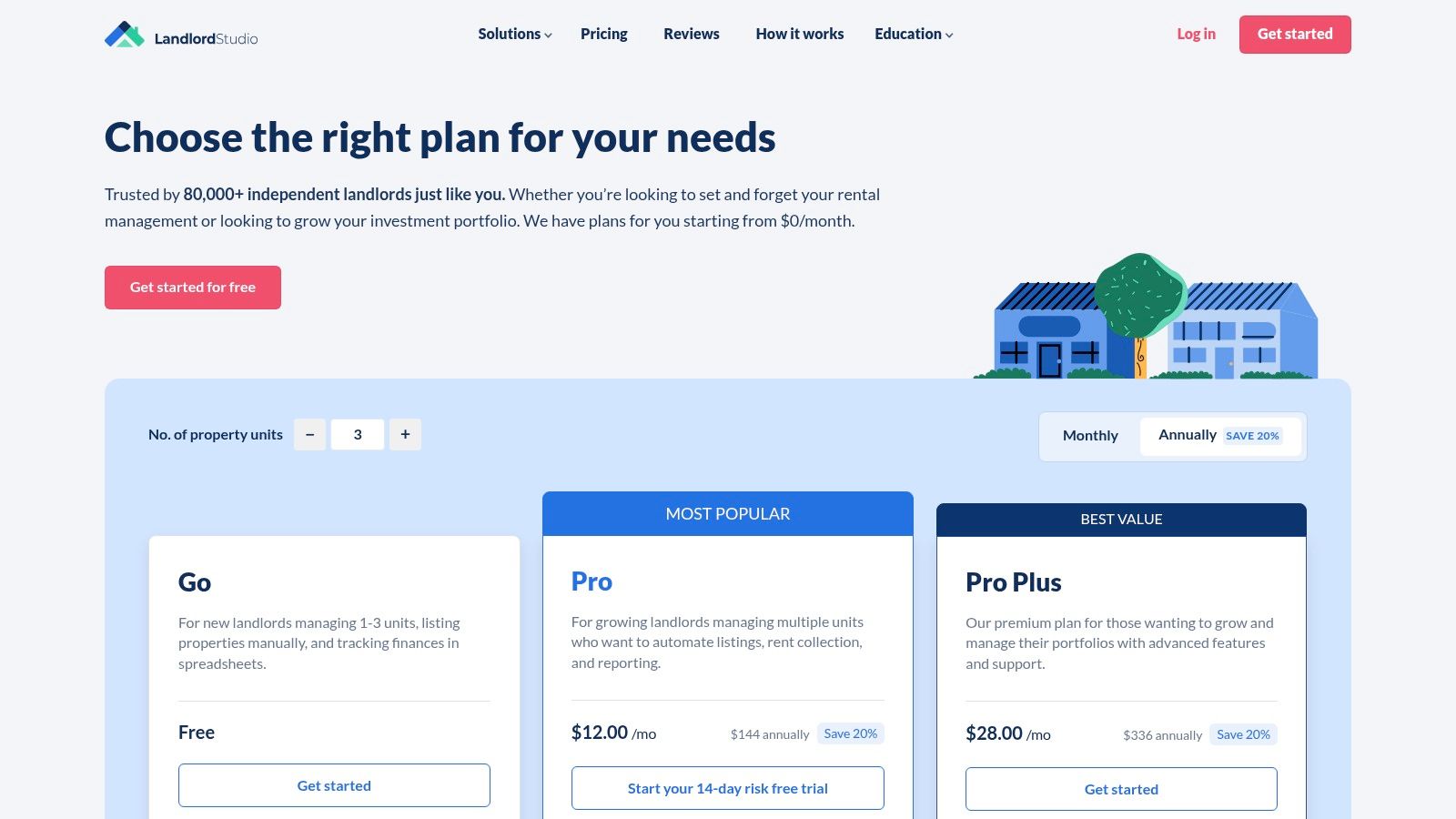
Landlord Studio feels more accounting-focused than many free landlord tools, even on its entry plan. That's why it appeals to landlords who care about receipts, expense tracking, and tax organization more than listing syndication or applicant flow.
Its product framing is also worth paying attention to. Landlord Studio markets a free all-in-one landlord platform with rental accounting, tenant screening, online rent collection, receipt capture, mobile bank-feed imports, industry-specific reports, and Schedule E support. That's important because it shows how far free software has moved beyond simple rent logs.
Why that matters
For small landlords, the big win isn't just “software instead of spreadsheets.” It's reducing reconciliation work. When transactions import, receipts attach to expenses, and reports stay property-specific, you spend less time rebuilding records by hand.
That's the practical value of a platform like Landlord Studio. It treats bookkeeping as part of the workflow, not a side task.
The limit on the free plan
The catch is that the free tier has guardrails. Unit limits, storage limits, and missing automations are common on these plans. That doesn't make the free version bad. It just means you should go in expecting a small-portfolio starter plan, not an unlimited free back office.
Landlord Studio is a good choice if you want rental-specific accounting and don't need a ton of operational complexity. If your portfolio grows, the upgrade path is there.
10. Wave Accounting
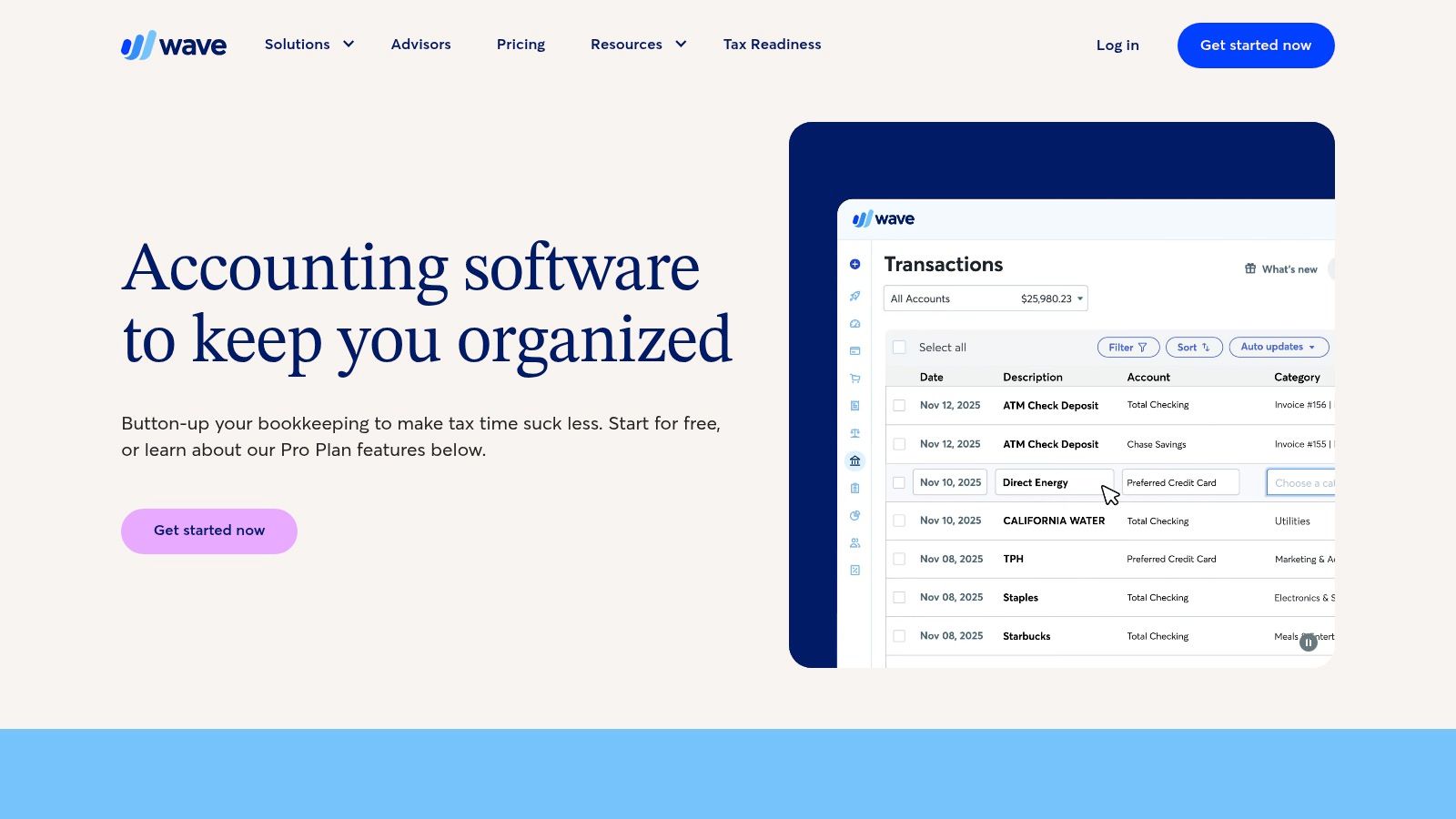
Wave is the outlier on this list because it isn't landlord software. It's general accounting software. That's also why some landlords swear by it.
If you want true general-ledger bookkeeping without a monthly software bill, Wave can be a smart move. You get a real accounting foundation, and many bookkeepers already know how to work with it.
When Wave is the right answer
Wave fits landlords who think like accountants or work closely with one. If your goal is clean books first and rental workflows second, it gives you more control than most free landlord-focused tools.
It's especially useful if you:
- Need standard accounting reports
- Want to hand books cleanly to a CPA
- Don't mind building your own property structure with accounts, tags, or classes
Why many landlords still won't like it
The downside is obvious the minute you try to manage leases or rent collection inside it. Those landlord-specific workflows aren't native. You'll be adapting a business accounting product to a rental business, and that takes setup discipline.
This connects to a broader issue in landlord accounting. The Balance App's overview of landlord accounting software notes that mainstream accounting tools often require custom charts of accounts, workarounds for properties and tenants, and extra fees for things like depreciation or 1099 filing. That's the central trade-off with Wave. The accounting bones are better than many free landlord tools, but the rental workflow is something you build yourself.
For detail-oriented landlords, that can be worth it. For everyone else, it can become another spreadsheet problem wearing nicer clothes.
Top 10 Free Landlord Accounting Software Comparison
| Product | Core features | UX & impact (★) | Pricing & value (💰) | Target & USP (👥 ✨) |
|---|---|---|---|---|
| PadPulse 🏆 | Dynamic pricing, AI messaging, smart locks/thermostats, listings, portfolio P&L | ★★★★☆, +10% rev, 80% less manual work (founder cases) | 💰 Free Research/Host (≤10 rooms), Growth $12/room/mo ($10 ann), Pro $18/room/mo ($15 ann), Enterprise custom; HW add-ons | 👥 PadSplit hosts & co‑living operators; ✨ centralized pricing+AI automation+smart‑home+market intelligence |
| Stessa | Property & portfolio rental accounting, Schedule E exports, bank feeds | ★★★☆☆, clear tax-ready dashboards | 💰 Free core; paid upgrades for advanced automations | 👥 Investors & tax-focused landlords; ✨ Schedule E export & simple CPA handoff |
| Azibo | Free ACH rent collection, expense tracking, optional landlord banking, docs | ★★★☆☆, broad free features for rent collection | 💰 Free ACH; card payments incur fees; banking optional | 👥 Owners wanting integrated rent collection+banking; ✨ free ACH + integrated banking |
| Baselane | Landlord banking (sub-accounts), bookkeeping, rent collection, NOI reports | ★★★☆☆, strong finance UX when using banking | 💰 Free Core; ACH fees to external banks, paid banking perks | 👥 Small portfolios seeking banking-driven workflows; ✨ virtual sub-accounts & high-yield saving |
| Innago | Online rent collection, expense tracking, e-sign leases, maintenance portal | ★★★☆☆, truly free day-to-day PM workflows | 💰 Free for landlords; revenue via tenant-paid services | 👥 Small landlords & DIY managers; ✨ simple, consistently free setup |
| Apartments.com Rental Manager | Listings + tenant screening, rent collection, expense reports, maintenance | ★★★☆☆, good listing+management integration | 💰 Free core tools; payment method fees vary | 👥 Landlords who advertise and manage from one place; ✨ CoStar listings reach |
| TurboTenant | Applications, tenant screening (tenant-paid), rent ledger, premium add-ons | ★★★☆☆, large user base, frequent updates | 💰 Free core; Premium for advanced accounting | 👥 DIY landlords needing simple applications & screening; ✨ free tenant-facing workflows |
| TenantCloud | Rent collection, expense logging, tax reports, maintenance, messaging | ★★★☆☆, scalable with paid tiers for advanced accounting | 💰 Free entry; paid tiers add bank reconciliation & team features | 👥 Growing landlords; ✨ free PM core with upgrade path |
| Landlord Studio (GO) | Income/expense tracking, online rent collection, mobile receipt capture | ★★★☆☆, rental-focused simplicity | 💰 Free GO (limits on units/storage); Pro for bank feeds & reports | 👥 Small portfolios starting out; ✨ mobile receipt capture & clear upgrade path |
| Wave Accounting | Double-entry accounting, P&L & cash flow, invoicing, exportable reports | ★★★★☆, true GL accounting at no monthly cost (Starter) | 💰 Free Starter; some automations/features in Pro | 👥 Landlords wanting full bookkeeping & CPA-ready books; ✨ general-ledger control |
Your Next Step From Financial Chaos to Clarity
It usually starts the same way. One bank account, a spreadsheet with three broken formulas, receipts sitting in a glove box, and no clean answer when you ask a simple question like, "What did this property make last month?"
The fix is not picking the app with the longest feature list. The fix is choosing software that removes the specific bottleneck creating errors in your portfolio. If bookkeeping is the mess, start with a finance-first tool. If leasing, turnover, and resident communication are eating your week, start with an operations-first platform that gives you enough accounting to stay in control.
Free software can be a real starting point. It can also become expensive in quieter ways. The usual trade-off is not the monthly price. It is processing fees, limits on units or transactions, weak reporting, and the extra admin work that shows up once the portfolio gets more complex.
That matters more than landlords expect.
A free plan is working if it cuts duplicate entry, gives you clean reports, and shortens month-end close. If you still need side spreadsheets to track deposits, split utility charges, room turns, owner draws, or missing expenses, the software is only shifting the mess somewhere else.
Here is the practical short list:
- Pick Stessa if your main issue is property-level income and expense tracking, reporting, and tax prep.
- Pick Innago if you want broad property management coverage and your accounting needs are still fairly light.
- Pick Baselane or Azibo if you want banking, rent collection, and bookkeeping closer together.
- Pick Wave if you want true double-entry books and are comfortable building a landlord workflow around a general accounting system.
- Pick PadPulse if you run room-by-room housing and standard landlord software keeps forcing manual workarounds.
That last group needs a different checklist. Room-by-room and PadSplit operators should test whether a platform can handle multiple occupants at one address, staggered move-ins and move-outs, member communication, and clean property-level visibility without extra tracking outside the system. Many "free landlord accounting" tools look fine for whole-unit rentals and start breaking the moment one property has five residents on different timelines.
I have found one rule works better than any marketing page. Count your workarounds after setup. If you still rely on separate spreadsheets for occupancy, pricing, expenses, or reconciliations, you have your answer.
Choose the tool that makes your current portfolio simpler, not the one that sounds best in a comparison table. Good software should help you close the books faster and trust the numbers when you look at them.
If you run PadSplit or room-by-room rentals, PadPulse is worth a close look. It is being built for co-living operators who need pricing, communications, operations, and financial visibility in one place instead of five disconnected tools. Join the interest list if you want early access and a cleaner system for shared housing.