Expedia vs Booking: A Host’s Guide for Co-Living
July 18, 2026
Most Expedia vs Booking advice is written for travelers hunting the cheapest hotel night. That advice doesn't help much if you run a shared house, rent by the room, and care about who walks through the front door as much as what they paid.
For a co-living host, the key question isn't just which OTA gets more bookings. It's which one helps you protect per-room RevPAR, guest fit, house stability, and NOI. A cheap one-night booking that creates conflict in a six-bedroom home can cost more than an empty room. A slightly higher-fee booking that stays longer, follows house rules, and reduces turnover can be the better financial outcome.
This is the version of Expedia vs Booking that matters for PadSplit-style operators.
Why Most Expedia vs Booking Guides Are Wrong for You
Most comparison articles make the same mistake. They compare hotel prices, traveler perks, and loyalty discounts as if every host runs a standard hotel or a full-unit vacation rental.
You don't.
If you operate co-living or rent by the room, your business behaves differently. One room turning over affects cleaning, key management, resident harmony, shared kitchen use, noise complaints, and the next booking's review risk. That's why the usual “who has lower rates” framing is too shallow.
A room-by-room operator needs to judge OTAs on a different set of filters:
- Stay pattern: Are guests more likely to book short gap-filler stays or longer planned stays?
- Household fit: Will this guest work in a shared environment with strangers?
- Admin load: How much messaging, payment handling, and schedule management comes with each booking?
- Cash flow timing: When do you receive the money?
- Revenue quality: Does the booking improve NOI after turnover and operational friction?
If you're building a rent-by-the-room strategy for co-living, these questions matter more than broad consumer rankings.
The metric that actually matters
A beginner host often chases occupancy first. That's understandable, but it's incomplete. Full occupancy with constant churn, payment friction, and poor house alignment can underperform a slightly lower occupancy mix with better guest stability.
Practical rule: In co-living, the best booking isn't always the fastest one to fill the room. It's the one that holds revenue while creating the least operational drag.
That changes how you should look at Expedia and Booking.com. One platform may be better for visibility and quick fills. The other may produce bookings that fit a shared-living model better in specific markets. The winner depends on the type of room you offer, how hands-on you are, and whether your biggest problem is vacancy, turnover, or margin compression.
Expedia Group vs Booking Holdings at a Glance
For a PadSplit-style host, the biggest platform is not automatically the best platform. The better OTA is the one that sends bookers your house can absorb profitably, with fewer preventable turnovers, less screening friction, and stronger per-room RevPAR.
At the portfolio level, Booking.com usually wins on reach and search volume, while Expedia Group usually wins on trip intent. Booking.com gives a room more chances to get seen. Expedia often captures travelers who are planning a fuller trip and booking with more structure. For a shared home, that difference matters because booking intent affects arrival patterns, communication load, and how often a reservation turns into operational drag instead of clean revenue (Hostaway's comparison for hosts).
Right below is the host-level view.
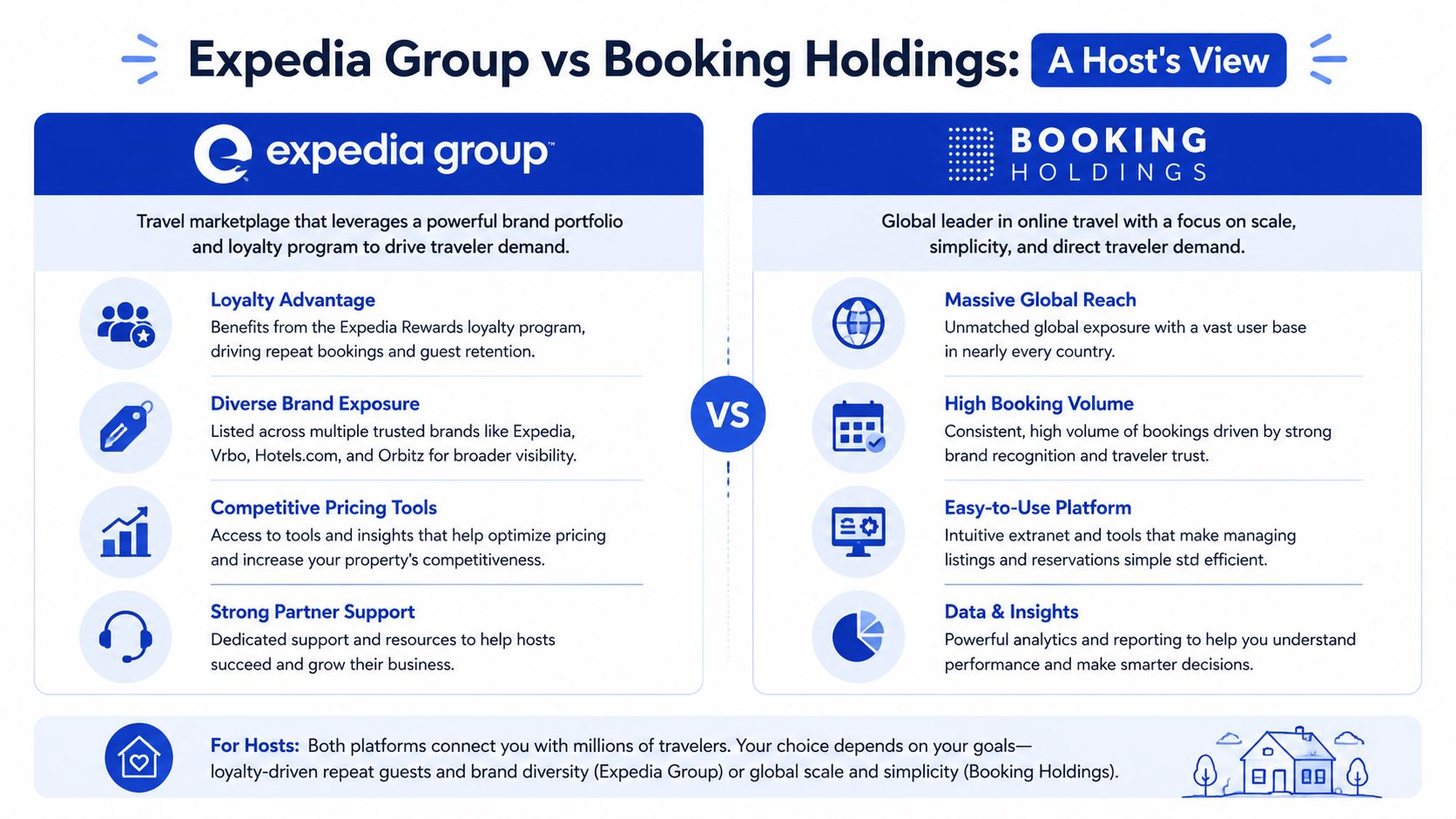
| Platform | Core strength for hosts | Best fit for co-living | Main trade-off |
|---|---|---|---|
| Expedia Group | More planned, trip-oriented demand | Houses that perform better with organized arrivals and clearer stay purpose | Less helpful if you rely on fast fill for sudden room loss |
| Booking.com | Broad exposure and higher booking volume potential | Hosts who need to keep vacant rooms visible and fill gaps quickly | More volume can mean more screening work, more messaging, and more turnover pressure |
What Booking Holdings usually means for room-by-room operators
Booking.com is often the better top-of-funnel engine. If a resident leaves with short notice, it can get your room in front of more shoppers quickly. That matters in co-living because every empty room hits NOI immediately.
The trade-off is workload. More visibility tends to bring a wider spread of guest quality, more edge cases, and more time spent on pre-arrival questions, house-rule clarification, and exception handling. In a private hotel room model, that friction is manageable. In a shared home, one bad fit can affect multiple paying residents.
What Expedia Group usually means for room-by-room operators
Expedia tends to align better with hosts who value booking intent over raw inquiry count. Guests coming through a trip-planning flow are often easier to place into a house that depends on predictable move-ins, clearer schedules, and lower conflict between residents.
That does not mean Expedia bookings are always better. It means the platform can produce a cleaner operating pattern in the right market. If your property performs best with fewer surprises and more deliberate arrivals, Expedia can be a strong fit. If you are trying to reduce vacancy days across multiple rooms, Booking.com often gives you more shots on goal.
The metric that matters is not total bookings. It is whether the booking improves room revenue after cleaning, resets, staff time, resident friction, and vacancy risk. That is also why strong OTA performance depends on pricing intelligence for room-by-room revenue management, not just broad distribution.
Comparing Commission Fees and Payout Models
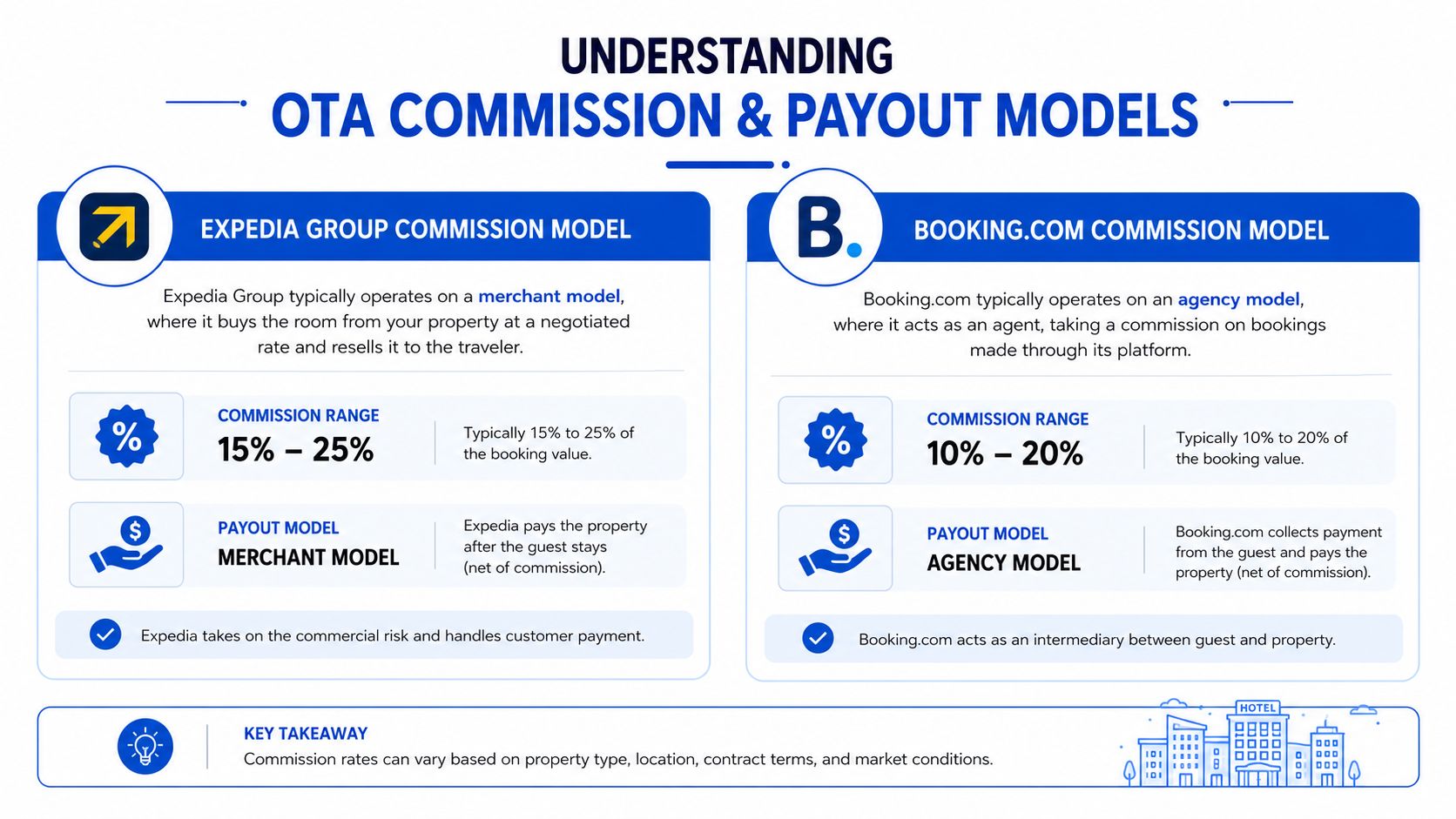
Hosts who fixate on commission percentages usually misprice the actual cost of an OTA. For a PadSplit-style operation, the bigger question is cash timing. A lower fee does not help much if payout delays force you to cover turns, supplies, payroll, and utility float out of pocket.
Booking.com often runs on an agency-style structure where the host has more direct involvement in collecting payment. Expedia more often sits in the middle of the transaction and remits funds afterward. The exact setup can vary by market, property type, and agreement, which is why headline fee charts are a weak decision tool for shared housing operators.
Why payout mechanics hit co-living NOI harder
A hotel can absorb some payment friction because one reservation usually affects one room. In co-living, one delayed or disputed payout can ripple across several operating decisions in the same week. You still need to reset rooms, buy consumables, pay staff, and keep the house stable for current residents.
Direct collection gives many smaller hosts tighter control over failed cards, refunds, no-shows, and reconciliation. That control matters if you review cash weekly and make room-by-room decisions based on what has cleared, not what is still sitting in OTA limbo.
Merchant-style payout can still work well. Some operators prefer fewer guest payment touchpoints and are willing to trade control for a cleaner front-end booking flow. The trade-off is back-end visibility. If your accounting is already stretched, delayed remittance and platform-side adjustments can create more cleanup than the commission line suggests.
How to compare the platforms like an operator
Review each OTA against the money questions that affect NOI:
- Payout speed: How long after check-in or check-out does cash hit your account?
- Collection control: Can you see failed payments early enough to prevent a bad move-in?
- Refund and dispute handling: Who owns the guest conversation, and how much staff time does that consume?
- Reconciliation effort: How easily can your team match bookings, fees, taxes, and net deposits each month?
- True net room revenue: After discounts, payment timing, and admin time, which channel leaves more cash per occupied room?
Many hosts benefit from pricing intelligence for room-by-room revenue management. Rate strategy, payout timing, and discount discipline all feed the same number. Net revenue per available room.
Fee ranges only matter in context
Commission ranges vary enough by contract and listing type that broad comparisons can mislead. One analysis from Nutshell highlights a scenario where Expedia's commission is materially lower than Booking.com's, which can change retained earnings for that property setup (Nutshell's earnings comparison).
Use that kind of comparison carefully. A co-living host is not buying a theory. You are choosing how money enters the business, how much manual work follows each booking, and whether the channel improves per-room RevPAR after operating friction.
If you compare only commission percentages, you'll miss the booking channel that protects your cash flow.
Analyzing Guest Types and Booking Demand
Two bookings can produce the same gross revenue and still create very different outcomes in a shared house.
One guest books through Expedia as part of a longer trip. They know their dates, they've planned ahead, and they arrive with a clearer reason for travel. They use the room as a stable base, follow house patterns, and don't generate much friction beyond normal onboarding.
Another guest books through Booking.com at the last minute because they found a bargain and need somewhere tonight. They may still be a perfectly fine guest. But short-notice, short-duration stays often create more messaging, more edge-case requests, and more turnover pressure.
That difference matters because, for co-living, guest quality is operational quality.
The longer-stay versus quick-fill pattern
One of the more useful observations in this category is that Expedia's package and all-inclusive strength, with savings of $200 to $350 on week-long trips, tends to attract travelers seeking longer, higher-occupancy stays. By contrast, Booking.com's last-minute bargain orientation often correlates with shorter, lower-ADR stays. That distinction is especially important for PadSplit-style operators balancing occupancy against NOI (Guesty's host-focused Expedia vs Booking analysis).
If you're running a house with shared bathrooms, a common kitchen, and resident expectations around quiet hours, this isn't abstract. Shorter stays usually mean:
- More turnovers: More cleaning coordination, more check-in issues, more chances for access problems
- More screening pressure: Less time to identify a guest who may be a poor fit for shared living
- More wear on staff or owner time: More messages, more arrival logistics, more exceptions
Longer planned stays can offset a slightly lower nightly yield because they reduce operating friction.
Two guest stories that show the trade-off
The first guest uses Expedia because they're bundling transportation and lodging for a work-related trip. Their booking window is longer. Their arrival is organized. They stay long enough to settle in, and the room doesn't need to be turned immediately after they leave. In a shared house, that usually means fewer interruptions.
The second guest uses Booking.com because they need a room now. If your room would otherwise sit empty, that booking can be valuable. It fills a gap that direct demand may not catch in time. But if that guest clashes with existing residents or creates extra turnover work, the booking can be expensive in ways the gross payout doesn't show.
Shared housing punishes the wrong guest faster than a standard hotel does.
How to use that insight
A new host shouldn't think in absolutes like “Expedia guests are good” or “Booking.com guests are risky.” That's too simple. Instead, use each OTA for the demand pattern it serves best.
Use Booking.com when a room is unexpectedly open and visibility is the priority. Use Expedia when your house performs better with guests whose trips are planned and whose stays are more likely to align with a calmer shared environment.
Managing Operations and Platform Tools
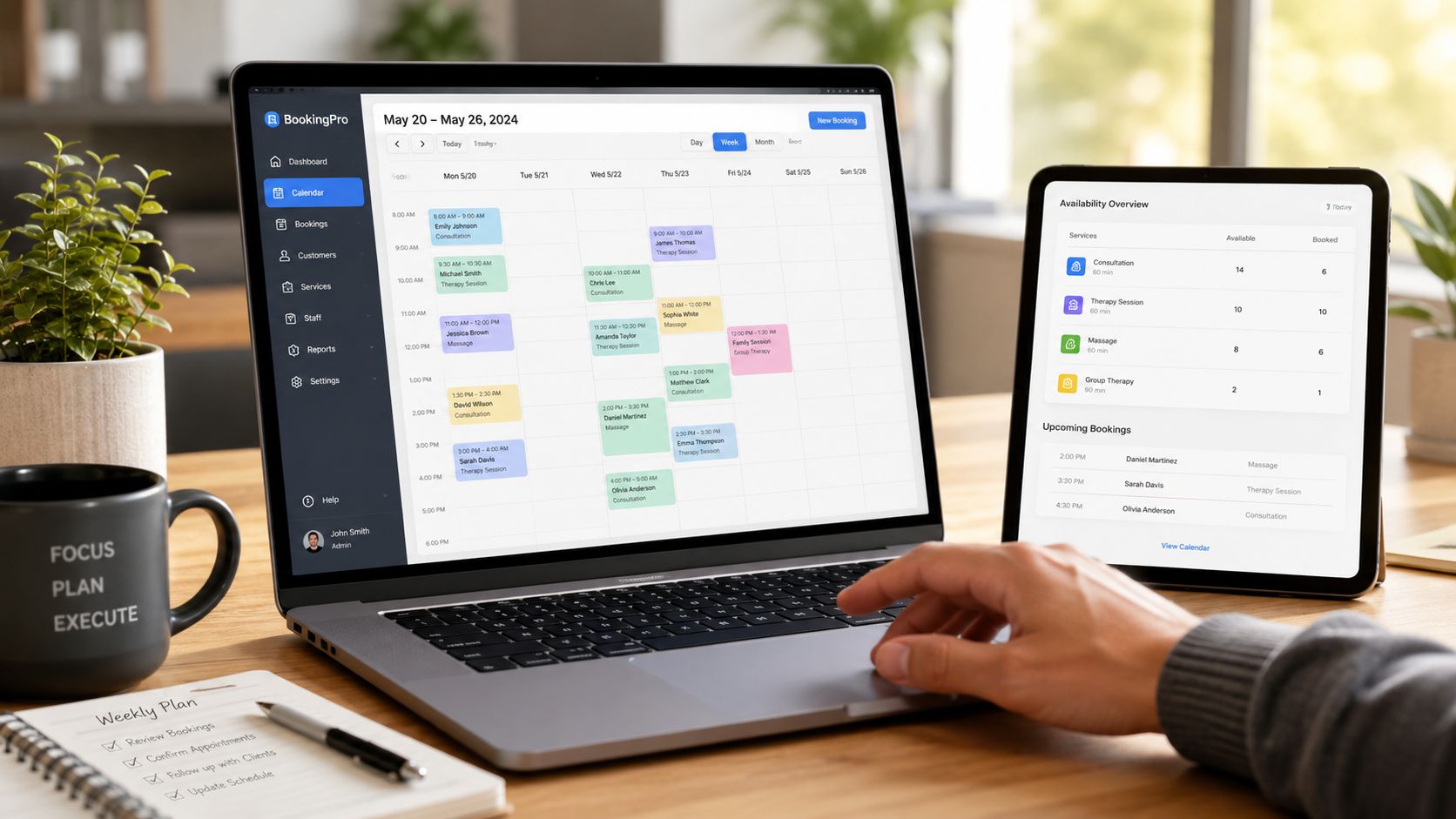
For a PadSplit-style host, operations usually decide whether an OTA is profitable. The problem is not just getting booked. The problem is getting booked into the right room, on the right dates, with house rules, turnover timing, and resident stability still intact.
A hotel can absorb some operational sloppiness. A shared house usually cannot. One calendar error can force a room move, upset current residents, trigger refund requests, and burn hours of staff time. That hits NOI fast.
Calendar sync has to work at the room level
If you sell bedrooms individually, each bedroom needs to exist as its own inventory unit across every channel and in your PMS or channel manager. Hosts who try to manage a six-bedroom home as one broad listing create their own headaches. The platform did not cause that problem. The room mapping did.
Use a few hard rules:
- Map each room separately. Every rentable bedroom needs its own calendar, rate, and availability controls.
- Name rooms for operations, not marketing. “Upstairs Room 2” is easier for cleaners, support staff, and guest messaging than something vague or cute.
- Build in turnover buffers where needed. If one room takes extra inspection time because of shared-bath traffic or laundry delays, protect that time in the calendar.
- Test every sync change. Minimum stays, blocked dates, and rate edits are where bad mappings usually show up.
Once you have more than a few active rooms, a purpose-built Expedia channel manager for room-by-room operations saves more than admin time. It reduces the odds of the expensive mistakes that shared housing punishes hardest.
Your listing setup is part of operations
New hosts often treat listing quality as a marketing task. In co-living, it is a screening task.
The best listings reduce bad-fit bookings before they happen. State the shared-living basics plainly. Cover quiet hours, guest policies, parking, kitchen use, laundry access, work-from-home expectations, and whether the room fits a short convenience stay or a quieter medium-term resident. A vague listing gets more inquiries. It also gets more preventable problems.
Photos matter for the same reason. Show the bedroom, but also show the bathroom reality, the kitchen, the laundry area, and the common spaces as they are. If a guest arrives expecting hotel privacy and finds true shared living, the booking can turn into a support issue on day one.
Clear listing details protect RevPAR by filtering out guests who create outsized operating cost.
Cancellation settings should match labor capacity
Flexible cancellation can help fill gaps. It can also create dead nights, wasted cleaning slots, and last-minute scramble if your market does not refill quickly.
Set policies based on how your house runs:
- Self-managing after hours: Use stricter settings if late cancellations create manual rework you cannot absorb.
- Tightly scheduled cleaners: Protect enough notice so you are not paying for turns that disappear.
- Access-control workflow: Match cancellation timing to code creation, check-in instructions, and support coverage.
- Resident stability as the priority: Choose settings that reduce churn, even if they limit some search exposure.
This is one of the biggest differences between co-living and standard short-term rentals. In a shared home, a cancellation policy is not just a sales tool. It is a staffing and house-stability decision.
Support volume is a real platform cost
Commission is easy to see. Exception handling is not.
Date changes, partial refunds, early arrivals, roommate concerns, extension requests, and guest mismatches all create labor. Booking volume alone does not tell you which OTA is better for your property. The better platform is often the one that produces fewer avoidable interventions per occupied room.
Build a simple internal playbook and use it every time. Define who reviews new bookings, who checks guest notes, what triggers a manual approval or follow-up message, and when a reservation should be declined or escalated. Hosts who run this process tightly usually protect more NOI than hosts who focus only on occupancy.
The Verdict Which Platform Is Best for Co-Living Hosts
There isn't one winner in Expedia vs Booking for every host. There is only the better fit for your property, market, and management style.
If your goal is maximum global exposure and faster vacancy fill, Booking.com usually has the edge. If your goal is attracting more deliberate demand and keeping fee structure favorable in certain North American short-term rental scenarios, Expedia/Vrbo can be the stronger choice.
Use Expedia if these conditions describe your property
For short-term rental hosts in the US and Canada, Expedia/Vrbo charges a fixed 8% commission rate, while Booking.com charges approximately 15%, making Expedia/Vrbo cheaper by 7 percentage points on total booking value in that context (Houst's comparison for North American hosts).
Expedia is often the better lane when:
- Your rooms are in the US or Canada: The fee gap can matter if your margins are tight.
- You prefer more planned demand: Bookings tied to broader trip planning can fit a more stable house rhythm.
- You care more about booking quality than raw lead volume: Fewer, better-aligned stays can beat noisier demand.
- You can tolerate less instant gap-filling power: This works best when your vacancy problem isn't severe.
Use Booking.com if these conditions describe your property
Booking.com is often the right choice when:
- You need reach first: Visibility matters when rooms open unpredictably.
- Your market is competitive or internationally exposed: Broader demand pools help.
- You can manage higher inquiry volume: More traffic only helps if your operations can absorb it.
- You want more direct payment control: For some hosts, the payout model is a serious operational advantage.
Booking.com also tends to suit hosts who are disciplined with screening, messaging, and turnover systems. The platform's strength can become a weakness if your back end is messy.
The best answer for many operators
For many co-living houses, the best setup isn't choosing one forever. It's assigning each channel a job.
Use one OTA to maintain broad visibility and fill unexpected holes. Use the other to attract more planned demand that may fit your house better. Then judge each channel on outcomes that matter to you:
| What to measure | Why it matters for co-living |
|---|---|
| Net revenue by room | Gross bookings can hide discounting and fee drag |
| Average stay pattern | Longer stays often reduce turnover stress |
| Resident friction | A bad fit affects the whole house, not just one room |
| Admin time per booking | High-volume channels can become labor-heavy |
| Cash flow timing | Delayed remittance can squeeze small operators |
Don't ask which OTA is best in general. Ask which OTA produces the cleanest NOI for your specific house.
Your OTA Strategy with PadPulse
Most experienced operators end up in the same place. They don't want to depend on one channel, but they also don't want to juggle pricing, messaging, occupancy gaps, and room-level reporting across multiple systems by hand.
That's the actual challenge after the Expedia vs Booking debate. A multi-channel approach can be smart, but only if you can control it.
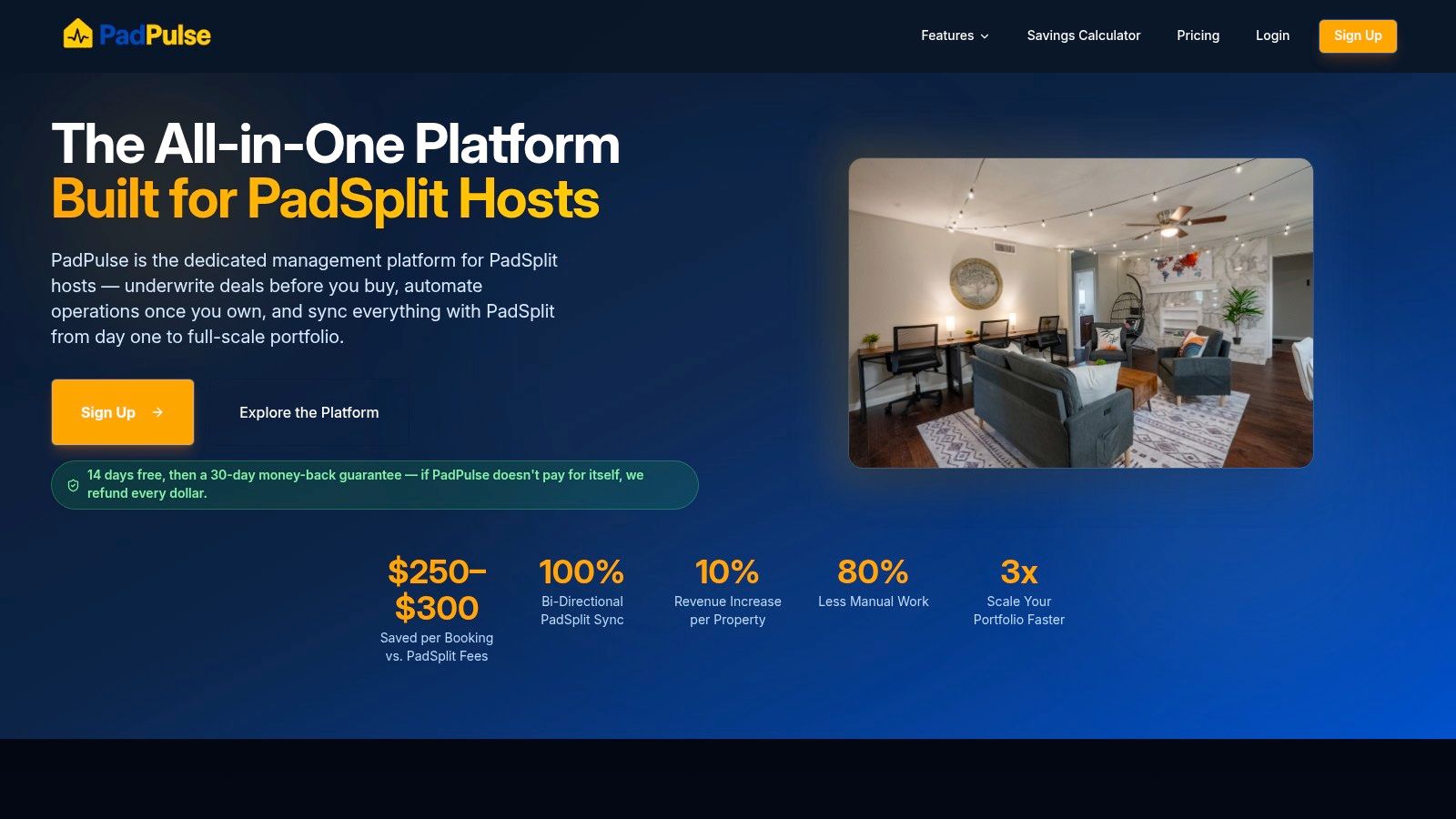
For co-living operators, the ideal setup is a central operating layer that does three jobs well:
- Balances pricing and occupancy: Room-level pricing should respond to vacancy pressure without crushing NOI.
- Handles communications consistently: Guest inquiries, check-in instructions, and house rules need one standard, not channel-by-channel improvisation.
- Shows performance by room and channel: You need to know which bookings produce healthy margin after operational costs.
That's where purpose-built tooling becomes more important than choosing a single OTA winner. A standard hospitality stack often treats a property like one unit or one hotel room type. Co-living doesn't work that way. Every room is its own revenue line, its own turnover event, and its own risk profile inside a shared house.
The operators who scale this model well usually centralize pricing logic, guest communication, access control, and financial reporting. That gives them the freedom to use Expedia where it works, Booking.com where it works, and direct channels where those outperform both.
If you're serious about room-by-room NOI, that's the operational maturity to aim for.
PadPulse is building that central layer for co-living and PadSplit-style operators. If you want one place to manage room-level pricing, messaging, smart access, and reporting across your portfolio, join the PadPulse interest list for early updates and limited beta access.