Depreciation Calculation Software: The Landlord's Guide
June 19, 2026
You bought beds, smart locks, kitchen appliances, maybe even separate window units or furniture for each room. Tax season arrives, and all of it is sitting in a spreadsheet that made sense six months ago but now feels like a puzzle with missing pieces.
If you run a room-by-room rental, that mess matters more than most landlords realize. Many owners track rent carefully but treat asset depreciation like a side task. That usually means one of two outcomes. They either skip deductions they're entitled to, or they spend hours rebuilding records by hand.
That's where depreciation calculation software starts to earn its keep. It doesn't change the accounting rules. It helps you apply them consistently, across many assets, without relying on memory and cell formulas.
Your Biggest Untapped Tax Deduction
A new investor often understands cash expenses right away. If you buy a refrigerator, you paid for it. If you replace a mattress, money left your account.
Depreciation is different because it reflects value being used up over time. A car exemplifies this: You don't expect it to hold the same value after years of driving. Rental assets work the same way. Furniture wears down. Appliances age. Equipment becomes less valuable as you use it.
For a landlord, that decline in value can become a legal tax deduction.
Why beginners miss it
Most owners don't ignore depreciation because they don't care. They ignore it because the process feels technical. You need to track when an asset was placed in service, how it should be categorized, which method applies, and how the deduction should flow into your books.
That's manageable when you own one small rental with a few big-ticket items.
It gets messy fast when you run shared housing with separate room furniture, keyed entry systems, and recurring upgrades across the same property.
Practical rule: If you're using a spreadsheet to track room furniture, smart devices, and improvement costs across multiple units, you're probably doing accounting work that software can handle more reliably.
A lot of new landlords start with whatever bookkeeping setup is easiest. That may be fine for collecting rent and watching expenses. For broader basics, a guide to free accounting software for landlords can help you understand what your current tools may or may not cover.
What software actually changes
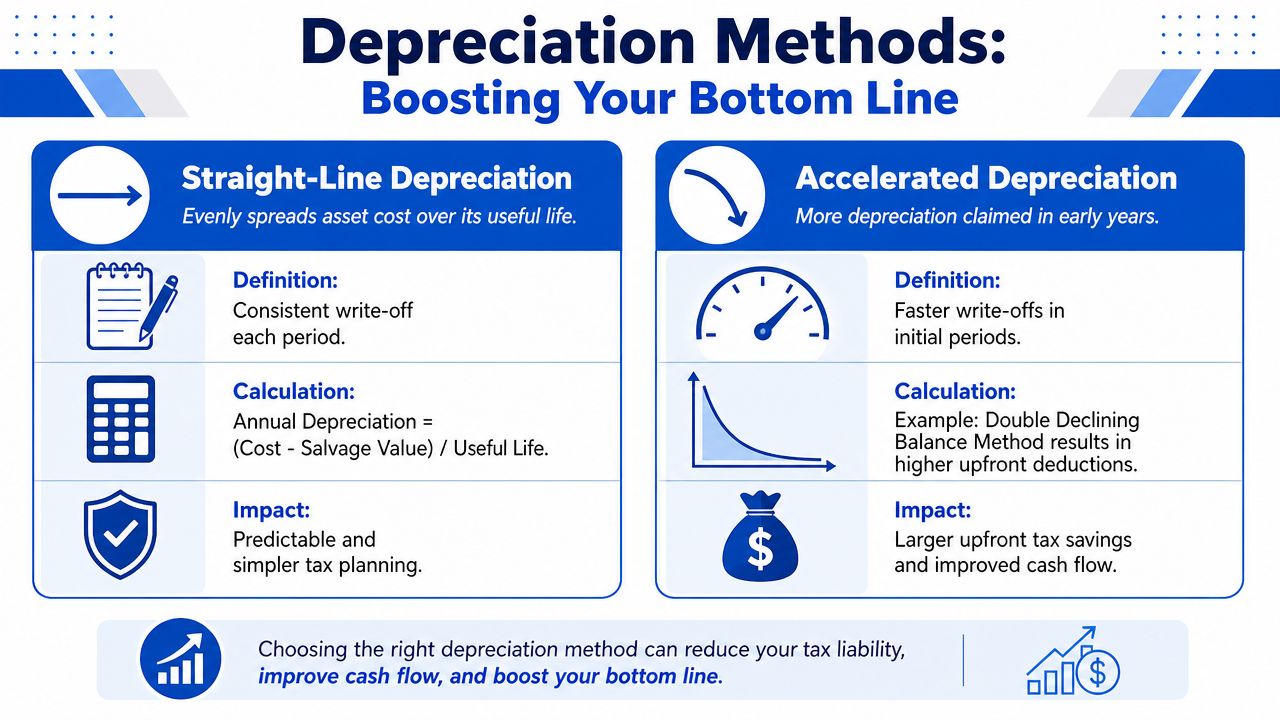
Depreciation calculation software automates a process that is still rules-based at its core. Under straight-line depreciation, annual expense is calculated as (cost − salvage value) ÷ useful life, while accelerated methods apply more expense earlier in the asset's life, as explained in NetSuite's depreciation overview.
That matters because manual systems break down in ordinary ways:
- Formulas get overwritten
- Asset dates get entered inconsistently
- One purchase gets recorded in two places
- Tax and book treatment drift apart over time
Software won't make depreciation exciting. It will make it usable.
For a rental business, that means cleaner deductions, better records, and less end-of-year scrambling. For a co-living operator, it can also mean finally treating each room's assets like the income-producing tools they are.
How Depreciation Boosts Your Bottom Line
A lot of new rental owners feel profitable until tax time arrives.
Rent came in. Bills were paid. The property seems to be working. Then they learn they missed a deduction tied to the things wearing out while they earn income. That is what depreciation is about. It recognizes that assets lose value over time, much like a car loses value the longer you drive it.
The simplest way to think about it
If you buy a mattress, desk, or stove for a rental, that item helps produce income for more than one year. Because of that, you often do not deduct the full cost all at once. You spread the cost over the years the asset is expected to help the business.
Under the straight-line method, the annual expense is (cost − salvage value) ÷ useful life. It is the easiest method to follow because the deduction stays even from year to year.
That steady pattern helps with planning. You can estimate taxable income more accurately, compare one property period to another, and avoid treating a long-lasting purchase like a one-month expense.
Straight-line vs accelerated
The primary difference is timing.
| Method | How it works | Why an investor might use it |
|---|---|---|
| Straight-line | Spreads depreciation evenly over time | Easier forecasting and steadier reporting |
| Accelerated | Takes more depreciation earlier in the asset life | Larger deductions sooner, which may improve near-term after-tax cash flow |
Say you furnish three bedrooms in a co-living home and upgrade the shared kitchen. Straight-line gives you a more even deduction pattern. An accelerated method pushes more of that deduction into earlier years.
Neither approach is automatically better in every case. The better fit depends on how you want to manage taxes, reporting, and cash flow. New investors often get tripped up here because the question is not only "How much can I deduct?" It is also "When does that deduction help me most?"
For room-by-room operators, timing decisions can get harder fast. One room may get new furniture this year, another may get a smart lock next year, and shared-area appliances may follow a different schedule. If you only look at the house as one big bucket, you miss how those separate purchases affect profit over time.
Why software matters here
The practical bottom-line impact is substantial. Depreciation lowers taxable income, but only if the records are accurate and kept current. A missed in-service date, a wrong useful life, or a room asset buried in a generic expense category can shrink the deduction you should have claimed.
That matters even more in co-living. A room-by-room rental has more moving parts than a traditional single-family lease. Bed frames, mini-fridges, desks, locks, and flooring updates may belong to specific rooms, while other assets serve shared spaces. Software helps you track those items at the level they operate, which gives you a clearer view of property performance and a more defensible tax record.
If you already review operating results each month, this P&L report example for landlords shows where depreciation appears and why it can change how profitable a rental looks on paper.
Depreciation does not put cash in your bank account directly. It can leave more cash in the business after taxes, and for a room-by-room operator, that can mean more money to reinvest in the next room turn, upgrade, or acquisition.
The Co-living Advantage Most Operators Miss
A room-by-room rental can look profitable on paper and still leave deductions unclaimed.
Here is the common mistake. An operator buys furniture for Bedroom 2, replaces the smart lock on Bedroom 5, adds a mini-fridge to a basement suite, and installs a new washer for everyone to share. If those purchases all get lumped into broad categories at the property level, it becomes harder to see what belongs where, how each item should be tracked, and whether it is being depreciated correctly.
Traditional rental advice usually starts with the building as the center of the story. That works well enough for a single lease property with fewer moving parts. Co-living works differently. Your income comes from separate rooms, separate turns, and separate upgrades, so your records need to reflect that reality.

Whole property thinking can blur what actually earns income
Depreciation for co-living gets tricky because the property is really a mix of smaller asset groups. Some items serve one room. Others serve everyone. A bed, desk, mattress, and lock may belong to one unit of income production. A sofa, shared refrigerator, or laundry machine supports common space. Those assets do not all age the same way, get replaced on the same schedule, or carry the same operational value.
A car is a useful comparison here. You would not track the whole vehicle and ignore the fact that the tires were replaced this year while the transmission may last much longer. A co-living house works in a similar way. The building is the shell, but many deductions sit inside the parts that wear out faster and get replaced room by room.
If Room 3 gets new flooring and a furnished setup after a turnover, that spending tells you something specific about Room 3. It affects that room's profitability, that room's refresh cycle, and your tax records. If you group everything under "property improvements" or "furnishings," you lose that clarity.
What room-level tracking looks like in practice
A useful system should let you answer four simple questions without digging through receipts and memory:
- What did you buy?
- Which room or shared area uses it?
- When did you place it in service?
- How is it being depreciated?
That is the core co-living advantage. Better tracking does not just support tax reporting. It helps you see which rooms are expensive to maintain, which upgrades last, and where your capital spending is going.
For operators comparing tools, this is one place where property management software for landlords and room-by-room rentals starts to overlap with asset management. The best systems do more than collect rent and track tenants. They also help tie purchases to the rooms and common areas that generate revenue.
A co-living property is one address, but operationally it behaves more like a small portfolio inside a single building. Generic landlord advice often misses that. Room-level depreciation records match the way your business runs.
Essential Features of Depreciation Software
Once you see depreciation as an asset-by-asset process, software choices get easier. The best tool isn't the one with the flashiest dashboard. It's the one that helps you calculate correctly, organize cleanly, and report without last-minute cleanup.
Features that matter first
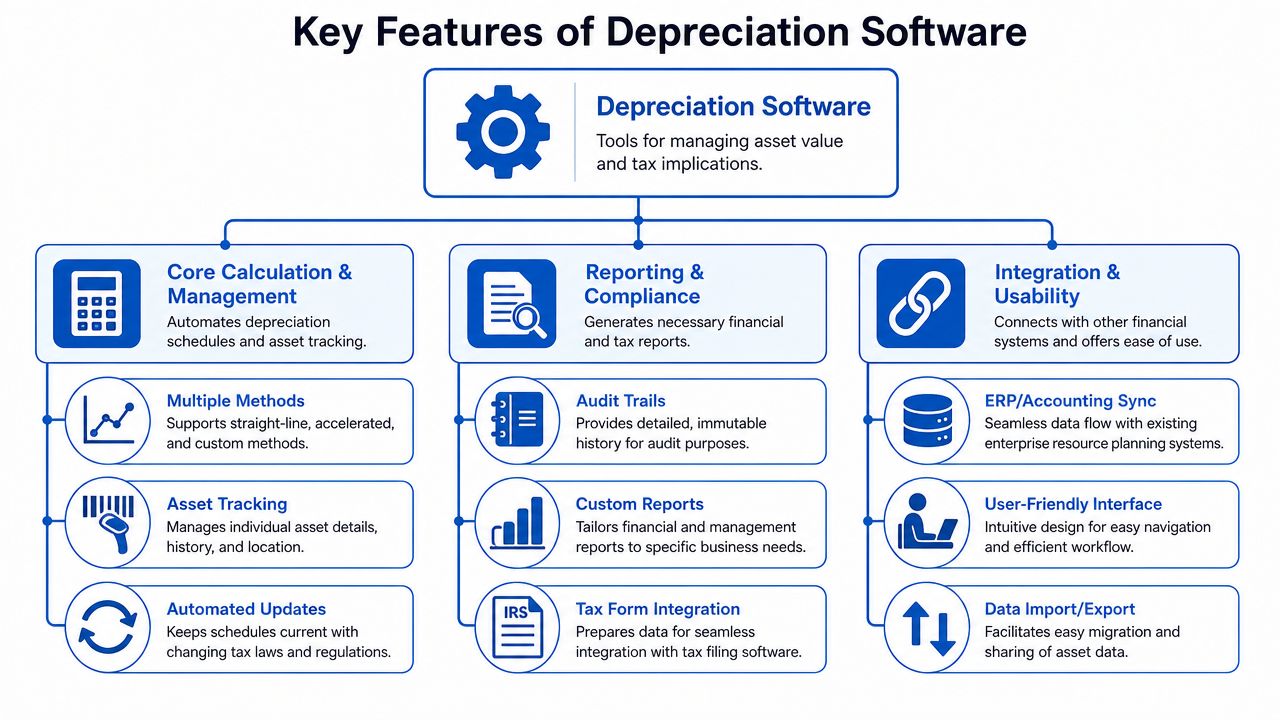
Start with the depreciation engine itself. A strong system should support more than one method and handle changing rules without forcing you into custom spreadsheet work.
A key differentiator is a flexible depreciation engine that supports different formulae, including MACRS and bonus depreciation, because accelerated methods can change the timing of expense recognition and directly affect taxable income and cash flow, as described by XAssets' depreciation software overview.
Here are the core features worth checking:
Multiple depreciation methods
You want support for straight-line, accelerated approaches, and tax-specific methods where applicable.Asset-level detail
The software should let you track each asset by description, date, location, and status. For co-living, location often means the exact room or shared area.Automated schedule generation
Once data is entered, the system should build and update depreciation schedules without repeated manual work.
Reporting and audit readiness
Good software should also make your records easier to defend.
Look for these capabilities:
- Clear fixed asset reports so you can see cost, accumulated depreciation, and current period expense
- Journal entry support if you want depreciation to flow into your books cleanly
- Audit trails that show what changed and when
- Export options for your accountant or tax preparer
One practical sign of software maturity is whether it turns depreciation into a repeatable workflow instead of a once-a-year scramble.
Buyer check: If a tool can calculate depreciation but can't help you trace an asset back to a room, invoice, or reporting category, it may not solve your real problem.
Integration and ease of use
A depreciation tool shouldn't become another island of data. It should work with your accounting and operations stack.
If you're evaluating the broader software side of your rental business, this primer on what property management software does for landlords is useful because depreciation works best when it fits into the systems you already use.
Keep an eye on usability too. If adding an asset takes too many clicks or categories are confusing, records will get sloppy. For small operators, a simple interface is often more valuable than a long feature list.
A short checklist
Use this when comparing tools:
| What to check | Why it matters |
|---|---|
| Method support | Handles tax and accounting complexity |
| Room or location tagging | Makes co-living assets trackable |
| Reporting output | Helps with close, taxes, and review |
| Journal integration | Reduces duplicate entry |
| Audit history | Supports compliance and cleanup |
The right software should help you trust your numbers, not just generate them.
Choosing and Implementing Your Solution
Most landlords delay software adoption because they think setup will create more work than it saves. That fear is understandable, especially if your current records live across spreadsheets, receipts, emails, and a bookkeeping platform.
Still, implementation is usually more manageable when you break it into decisions first and setup second.

What to look for before you buy
The strongest buying question is simple. Will this tool fit the way you already run your rental business?
Modern depreciation software is especially useful because it can manage multiple books at the same time, such as tax, GAAP, and state reporting, and integrating it with your accounting system reduces manual reconciliations and helps the month-end close move faster, according to Sage's explanation of fixed asset software.
That gives you a practical selection checklist:
Your accounting reality
If you already use accounting software, ask whether depreciation entries can sync cleanly. You don't want to post numbers twice.Your asset complexity
A landlord with one duplex needs less than an operator with furnished rooms, smart devices, and frequent replacements.Your reporting needs
Some owners only need year-end support. Others need monthly visibility for owners, lenders, or management review.
A simple implementation roadmap
Once you choose a system, keep the rollout grounded in three steps.
Clean your asset list
Gather what you already have. Purchase date, cost, description, location, and whether the item belongs to a room or shared area.
If records are incomplete, don't aim for perfection before you start. Aim for structure. A standardized list is better than ten scattered notes.
Connect it to your books
Map depreciation categories to your accounting setup, allowing software to start reducing friction instead of creating it.
A tool that supports journal generation can save a surprising amount of cleanup later, especially when month-end arrives and you're trying to reconcile property performance quickly.
This short demo gives a feel for how property and financial workflows are increasingly handled in one place:
Build repeatable workflows
After setup, make the system part of normal operations.
For example:
- When you buy a room asset, enter it the same week
- When you dispose of or replace an item, update the record promptly
- When month-end closes, review depreciation output with the rest of your reports
Software works best when you treat depreciation as an ongoing operating process, not an annual tax-season event.
Keep the first version simple
You don't need a perfect chart of every historical asset to get value. Start with current, material items and the categories that most affect your rental operation. Then improve the data over time.
That approach is especially practical for co-living operators. A clean process for room furniture, locks, appliances, and replacements is often more useful than a complicated setup nobody maintains.
The Future of Smart Asset Management
A rooming house can look simple from the sidewalk. Inside, it is a different story. Bed frames get replaced in one room, smart locks fail in another, a fridge is shared by six tenants, and each purchase has a different tax life. If you still track all of that on a static spreadsheet, small errors can pile up gradually until tax season forces you to sort them out.
That is why the future of asset management matters for room-by-room operators in a special way. Traditional landlords can often get by with property-level records for longer. Co-living operators usually cannot. They have more frequent replacements, more shared assets, and more room-level decisions that affect income.
Why static systems fall behind
The problem is not just doing the math once. The harder part is keeping records accurate as your business changes.
A spreadsheet works fine when you own one house and replace items only once in a while. Add more rooms, more turnovers, more furnishings, and more improvements, and the sheet starts acting like a paper map in a city that keeps adding new roads. It still shows something. It just stops showing enough.
Outdated methods also create risk. Assets get lumped into the wrong category. Replacements stay on the books after disposal. Shared items are tracked inconsistently from property to property. None of those mistakes feel dramatic on the day they happen, but they can lead to messy books, missed deductions, or extra cleanup for your CPA later.
What smarter tools are moving toward
Better software is starting to treat depreciation as part of day-to-day operations, not a once-a-year tax exercise.
For co-living and PadSplit-style rentals, that means features built around the way the business runs:
- Room-level asset tracking, so furniture, locks, window units, and other items are tied to the space that uses them
- Shared-asset handling, so items like kitchen appliances or laundry equipment are recorded clearly instead of forced into vague notes
- Cleaner disposal and replacement workflows, so old assets come off the books when new ones go in
- Accounting-ready outputs, so depreciation entries match the rest of your reporting with less manual cleanup
A car losing value each year is easy to picture because it is one asset. A co-living property is more like a small fleet. Some items wear out fast. Some last for years. Some belong to one room, and some support the whole house. Software that reflects that reality gives operators a clearer picture than broad property-only categories ever could.
The operator who tracks assets by room, by shared use, and by replacement cycle usually has better records than the operator who updates depreciation only when a tax return is due.
Why this matters for growth
Good asset records help with more than taxes.
They help you answer practical questions. Which room types cost more to maintain? Are premium room upgrades paying back? Are you replacing the same categories of items too often at one property? Those are operating questions, not just accounting questions.
That is where smart asset management becomes valuable for growing co-living businesses. It turns depreciation from a backward-looking compliance task into a tool you can use to price rooms, plan capex, and compare properties more confidently.
Operators who adopt that approach early usually spend less time correcting old records and more time making better decisions with current ones.