Buildium Vs AppFolio: Which Is Best For Co-Living?
May 1, 2026
You’re probably doing this the hard way right now.
One spreadsheet tracks which rooms are open. Another tracks who paid. Maintenance requests live in text threads, DMs, or a note on your phone. Lease dates are all over the place because one member moved into Room A this month, another is leaving Room C next month, and the shared bathroom issue somehow belongs to everyone and no one.
That’s why most Buildium vs AppFolio reviews miss the point for co-living. They compare these tools like every renter takes an entire unit. In a PadSplit-style business, they don’t. You’re managing beds, rooms, house rules, staggered move-ins, and constant turnover. That changes everything.
The Co-Living Challenge with Generic Software
If you run co-living houses, generic property management software starts breaking the minute you try to use it the way your business works.

A traditional landlord can think in units. One apartment, one lease, one rent amount, one move-out date. A co-living operator can’t. You’ve got separate room rates, separate screening decisions, separate deposits, and separate lease timelines inside the same house.
That’s the problem. Existing coverage focuses on traditional single-unit and multi-unit apartment management, not rent-by-the-room operations. Co-living operators need granular occupancy tracking, room-level pricing flexibility, and dynamic pricing workflows. Without that, operators end up stitching together software, spreadsheets, and separate pricing tools, which creates operational inefficiency that neither platform directly addresses, as noted by Agora’s Buildium and AppFolio comparison for co-living gaps.
Why the usual software stack gets messy fast
Here’s what that looks like in practice:
- Vacancy tracking breaks down: You’re not asking whether a property is occupied. You’re asking which room is occupied, when it turns, and whether that room can be repriced.
- Leasing gets fragmented: One house can have multiple active leases with different dates and different payment statuses.
- Operations become manual: Rent collection may live in one system while room assignment and occupancy planning happen elsewhere.
If that sounds familiar, you’re not the problem. The tools are.
For a broader look at what room-by-room operators need, this guide on co-living property management software is worth reading.
Generic property software doesn’t fail because it’s bad software. It fails because co-living is a different operating model.
Buildium and AppFolio are both serious platforms. But if you manage rooms instead of apartments, the only useful Buildium vs AppFolio question is this: which one creates fewer workarounds?
Buildium vs AppFolio At a Glance
If you run a co-living house with six leased bedrooms under one roof, these platforms feel very different on day one.
Buildium is the easier system to get live. AppFolio is the heavier system to operate. For room-by-room rentals, that distinction matters more than the usual marketing claims about features.
| Platform | Best fit in traditional property management | Entry profile | Main strength | Main issue for co-living |
|---|---|---|---|---|
| Buildium | Smaller residential portfolios | More approachable for lean teams | Faster setup and simpler daily use | Still organized around standard unit workflows |
| AppFolio | Larger portfolios with layered operations | Higher cost and more process overhead | Better accounting controls and reporting depth | Expensive fit for operators leasing bedrooms, not full units |
Buildium fits scrappy operators better
Buildium works better for operators who need to stand up a system fast, train a small team quickly, and keep admin overhead under control. If you are still doing part of the leasing, collections, or turnover coordination yourself, Buildium is usually the easier starting point.
That does not make it room-native.
It still expects a more standard residential setup than a co-living operator operates. You can make it work, but you will end up creating internal rules for how rooms are named, tracked, and leased.
AppFolio fits process-heavy teams better
AppFolio makes more sense once you already have accounting discipline, approvals, reporting needs, and staff to support a more structured operation. It is stronger for firms that care about finance controls and portfolio-level reporting, not just getting leases signed and rent collected.
For a PadSplit host or small co-living operator, that usually means more software than you need, at a price that is hard to justify.
My take: Buildium is the better short-term fit for most small and midsize co-living operators. AppFolio is the better fit for traditional property management companies with scale, staff, and back-office complexity.
The problem is that this comparison still breaks the same way for both tools. Neither one starts with the bedroom as the core object in the system. If your business lives or dies by room turns, staggered lease dates, and bed-by-bed pricing decisions, that gap shows up fast.
Core Features Compared for Room-by-Room Management
A room opens on Tuesday. One applicant wants to move in Friday. Another is approved but waiting on payday. The cleaner still has not finished the turnover. The front door code needs to change. In a co-living business, that is a normal day, not an edge case.
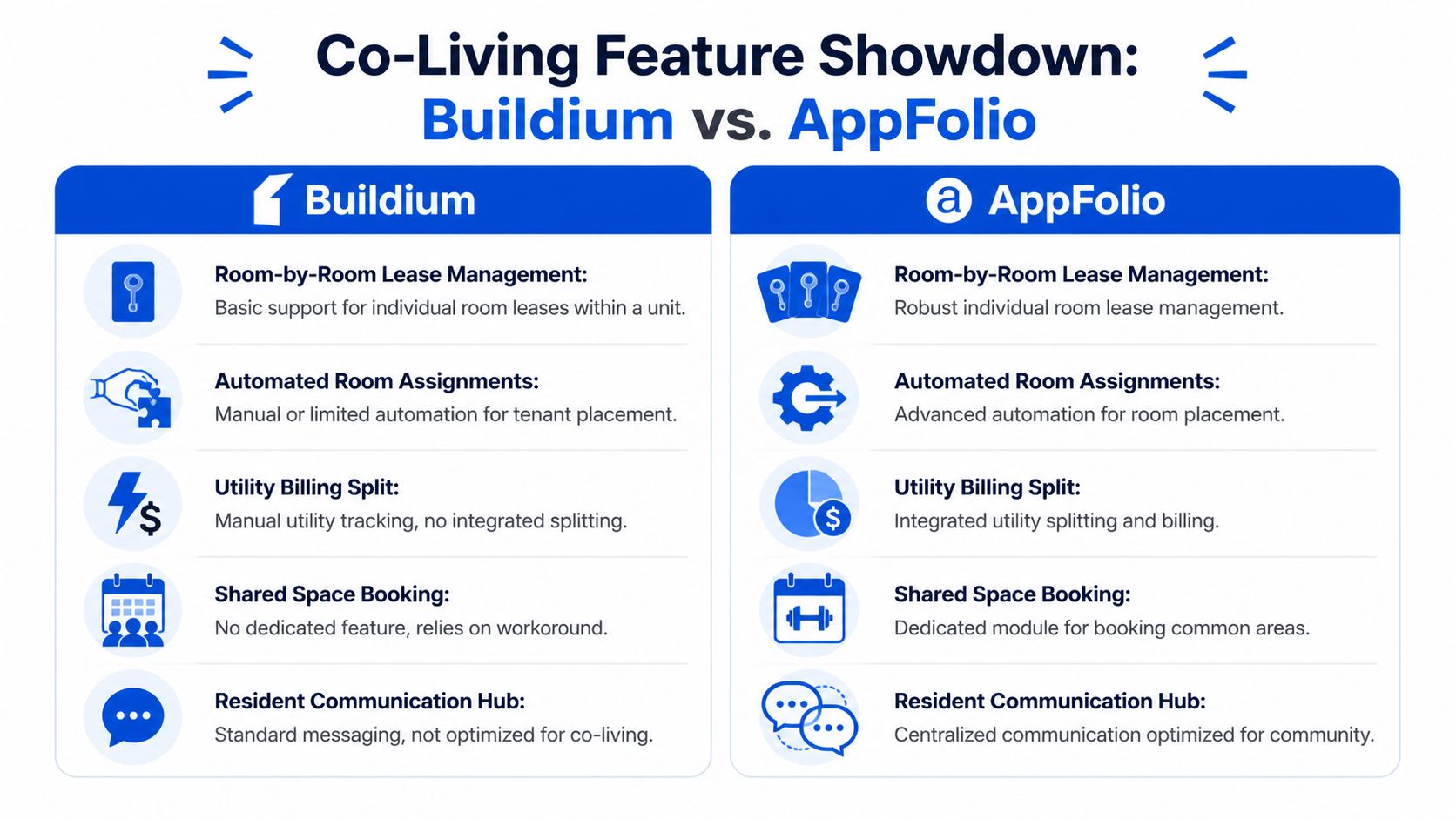
Generic property management software struggles here because it starts with the unit. Co-living operators start with the bedroom, the turnover clock, and the next available move-in date. That gap is the whole story.
Lease structure and occupancy control
Buildium and AppFolio can both be configured for room-by-room rentals. Neither is ideally suited for that purpose.
In Buildium, you usually create a workaround and enforce naming rules so each room behaves like its own rentable space. It is easier to set up, but the system still feels borrowed from standard apartment management. If your team is small, that may be acceptable for a while.
AppFolio gives you more control over process, approvals, and reporting. For co-living, that extra structure does not fix the core problem. You are still forcing room inventory into software built for full-unit leasing.
The daily test is simple. Can your team answer these questions without checking a spreadsheet, Slack thread, or whiteboard?
- Which room is physically ready today
- Which room is assigned but not occupied
- Which room is blocked by maintenance or cleaning
- Which room needs a rate change based on demand
If the answer is no, the software is slowing down leasing.
Screening and leasing workflow
Traditional leasing software assumes one applicant fills one unit. Co-living does not work like that.
You are screening one person into one room inside an active household. That means the leasing flow needs to track room fit, move-in timing, house rules, access setup, and communication with current residents. Buildium can handle the paperwork. AppFolio can handle the approvals. Both still leave operators stitching the actual workflow together.
That is why room pricing and room assignment get messy fast. The software stores the lease. Your team still has to manage the operating reality around it. If you are adjusting prices by room size, bathroom access, or seasonality, you need a separate pricing discipline. This guide on how to price rooms for rent is closer to how co-living operators make decisions than the default logic inside either platform.
My recommendation is blunt. If leasing speed matters more than back-office polish, Buildium is less painful. If you already have a structured ops team and strict controls, AppFolio is easier to standardize across staff. Neither one solves room-by-room leasing cleanly.
Accounting and reporting for shared housing
AppFolio is stronger on accounting depth. Buildium is easier to live with day to day.
That distinction matters less than people think for co-living operators. A key concern is whether you can see performance at the room level without rebuilding reports outside the platform. Shared housing creates accounting problems that standard rental software handles poorly: split utility recovery, staggered deposits, room-specific damage charges, and vacancy loss by bedroom instead of by property.
Those issues show up in a few predictable ways:
- Utilities end up tracked manually or outside the system
- Deposit deductions get harder to trace by resident and by room
- Owner reporting reflects the house, not the bedroom economics
- Per-room profitability takes extra spreadsheet work
If you own and operate your own homes, you can survive that with discipline. If you manage co-living for clients, this becomes a reporting problem fast. Owners want to know why House A looks full while Bedroom 3 sat vacant for 18 days and dragged the month down. Generic property software usually cannot answer that cleanly.
Maintenance and resident communication
Maintenance in co-living is not just a work order. It is coordination.
A leaking toilet in a private bath affects one resident. A broken fridge affects the whole house. A lock issue may affect only one bedroom, the cleaner, and the next move-in. Good co-living operations need location-specific tickets and audience-specific communication.
Buildium is simpler for a small team that just needs to get requests logged and closed. AppFolio is better for teams with more layers, more approvals, and tighter internal controls. Both platforms miss the shared-house context unless your staff adds it manually every time.
That manual layer is the killer. It creates missed messages, confused vendors, delayed turns, and residents who feel like nobody knows what is happening.
My take after using both workarounds is straightforward. Buildium is the easier patch job for smaller room-by-room operators. AppFolio is the heavier system for companies that care more about controls than speed. If your business depends on fast turns, staggered move-ins, and room-level visibility, both platforms ask your team to do too much off-platform.
Unpacking the Pricing Models for Co-Living Operators
You sign a lease on one more house, fill six rooms, and expect your software cost to stay reasonable. Then the bill shows up and reminds you that generic property software was priced for apartment units, not shared houses.
Buildium is easier to justify early
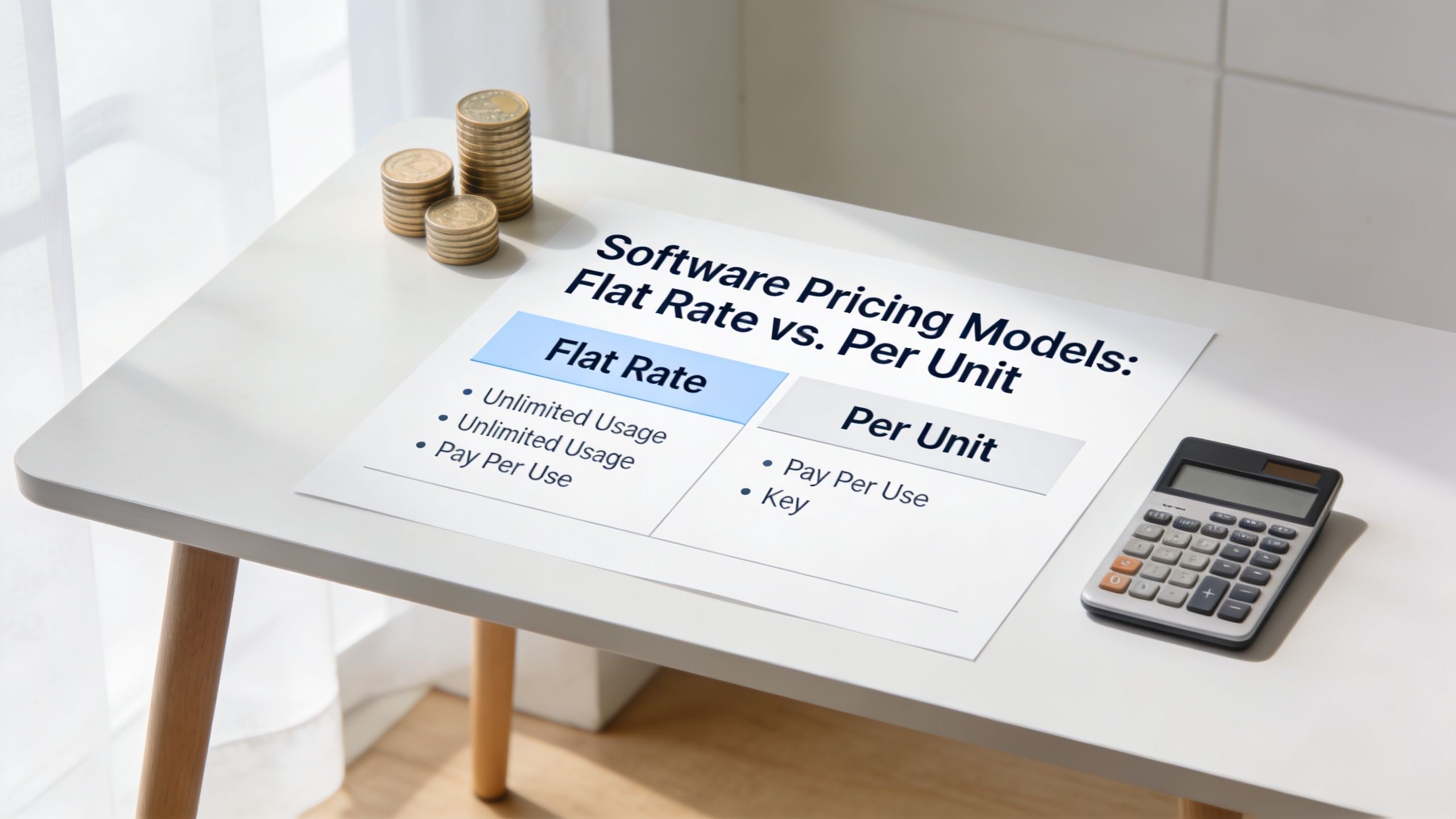
For small co-living operators, Buildium is the easier buy. The flat monthly structure is simpler to budget for, and that matters when your actual business model is already more complex than a standard apartment portfolio.
Room-by-room operators deal with uneven occupancy, staggered move-ins, frequent turns, and pricing differences between bedrooms in the same house. You do not need software pricing that punishes you every time you add rentable inventory. Buildium is still not built for co-living first, but its cost is easier to absorb while you patch the room-level gaps with process.
The add-ons can still annoy you. If you need extra support features, the effective monthly cost climbs. Even so, Buildium usually stays within reach for smaller hosts who own or operate a limited number of shared homes.
AppFolio gets expensive fast for this niche
AppFolio is priced like a platform for larger portfolios with more standardized operations. That can work for conventional property management. It is a bad fit for many PadSplit and co-living hosts who need room-level control but do not have enterprise scale.
The core issue is this: In co-living, your software cost should track with room revenue and operating reality. AppFolio often asks you to pay at a level that assumes a bigger organization, while still leaving your team to handle room assignments, shared-house turnover details, and house-specific exceptions through workarounds.
That math breaks quickly for smaller operators.
A few houses can produce a healthy business. They do not always produce enough margin to justify enterprise-style software minimums, especially when the platform still treats the property like a standard unit-based portfolio instead of a house full of separate rent decisions.
If you are tightening margins, room pricing matters as much as software pricing. This guide on how to price rooms for rent pairs well with this decision because bad room pricing can wipe out any savings you thought you got from cheaper software.
My recommendation on cost
If you are a smaller co-living operator, pick Buildium over AppFolio on price alone.
I would not put a new or mid-sized room-by-room business on AppFolio unless you already run enough scale to absorb the cost without feeling it. Paying more does not fix the core issue. Both platforms still force co-living operators into manual processes that generic software reviews usually ignore.
Buildium is the cheaper compromise. AppFolio is the more expensive compromise.
Paying more for a workaround is still paying for a workaround.
Advanced Needs Smart Locks and Dynamic Pricing
The bigger your portfolio gets, the more painful the missing features become.
Dynamic pricing is still mostly manual
Co-living operators don’t price inventory the same way traditional landlords do.
A larger room, a room with a private bath, a room opening during peak demand, and a room in a house near a major employer shouldn’t all be priced the same. You need room-level flexibility and a fast way to adjust rates based on demand, occupancy, and local comps.
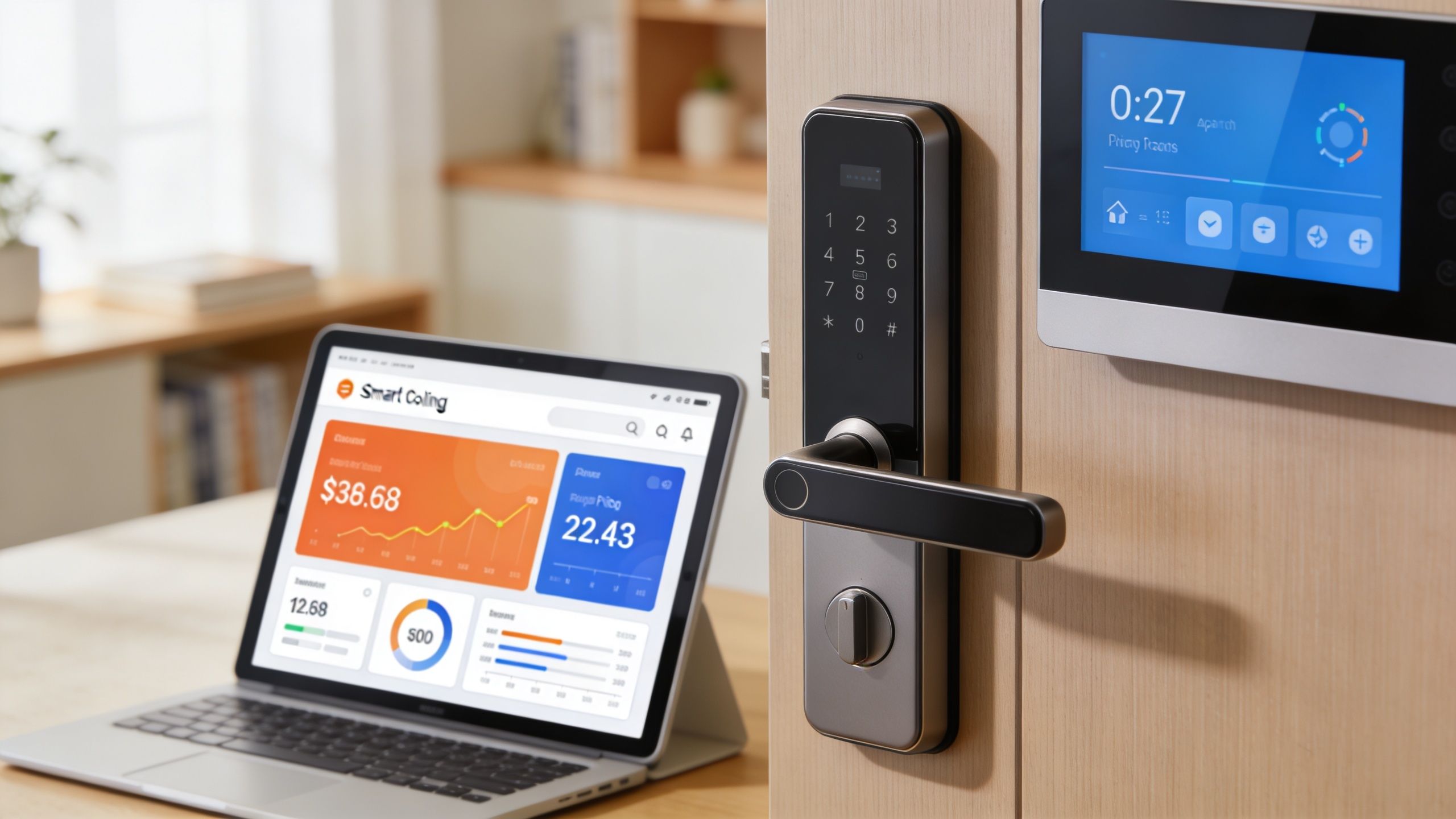
That’s where both Buildium and AppFolio feel dated for this niche. You can record rents. You can manage leases. But the pricing logic itself usually lives outside the platform. Operators end up updating rents manually after doing the essential thinking somewhere else.
Smart lock operations need tighter coordination
Room-by-room housing often depends on keyless access. New move-in. Old member leaves. Cleaner needs entry. Vendor needs temporary access. One room should be accessible, another should not.
When your property software doesn’t coordinate tightly with access control, your team ends up running a parallel process. One app handles leases. Another handles locks. A text thread fills the gaps.
That’s not just annoying. It creates preventable mistakes.
- Move-ins get delayed: Access isn’t ready when the lease is.
- Turnovers get sloppy: Cleaners, handymen, and leasing staff don’t share one operating view.
- Security gets riskier: Old permissions linger when offboarding is manual.
If you’re trying to automate more of your business, this article on short-term rental automation is relevant even if you don’t consider yourself a short-term operator. The core lesson is the same. Fragmented systems create extra labor.
The software doesn’t need to do everything. It does need to keep your team from managing rooms with memory, messages, and luck.
Scaling exposes the cracks
With one house, you can get away with ugly processes. With several houses, those processes become your bottleneck.
Buildium’s simplicity helps early. AppFolio’s operational depth helps larger teams. But neither one directly solves the modern co-living stack problem of pricing, room access, room status, and resident communication working together in one clear flow.
That gap matters more than another generic feature checklist.
Final Verdict for PadSplit and Co-Living Hosts
Here’s the direct answer.
If you run one or a few co-living properties and need software now, Buildium is the better choice. Not because it’s perfect. It isn’t. But its lower starting cost and easier setup make it the more reasonable option for operators who can tolerate some workaround-heavy processes.
When Buildium makes sense
Buildium is the practical pick if you want:
- Lower financial risk: You can get organized without enterprise minimums.
- Faster onboarding: The interface is generally easier for smaller teams.
- Solid traditional operations: Maintenance, payments, and reporting are good enough for many landlords adapting into co-living.
You’ll still need manual process design around room-level leasing and occupancy. But at least you won’t overpay for the privilege.
When AppFolio doesn’t make sense
For most independent co-living operators, AppFolio is the wrong buy.
It’s expensive, it requires scale, and it’s still not built around room-by-room operations. Yes, it’s stronger on enterprise accounting and broader administrative control. That only matters if your portfolio and staffing model are already large enough to support the cost and complexity.
If you manage shared housing like an owner-operator, AppFolio usually solves the wrong problems at the wrong price.
My blunt recommendation
Use Buildium if you need a current solution and can accept that it’s a traditional platform you’ll have to adapt.
Skip AppFolio unless you’re running a much larger operation, with serious reporting demands and enough units to justify enterprise software. Even then, go in with open eyes. You’re still fitting a rooming-house business into a unit-based system.
The gap in this market isn’t Buildium vs AppFolio. It’s that co-living operators still don’t have enough purpose-built software options. That’s why so many hosts still live in spreadsheets even after paying for “property management” software.
Frequently Asked Questions
Can I use free landlord tools instead
You can, but most free tools are even less suitable for co-living than Buildium.
They usually work best for a simple setup: one property, one tenant, one lease. Once you’re managing multiple rooms in one house with separate residents and staggered move-ins, free tools tend to break fast. You’ll save money upfront and lose time every week.
Can I move from spreadsheets into Buildium or AppFolio
Yes, but clean your data first.
Start with one source of truth for each house. List every room, current resident, rent amount, lease status, move-in date, and any balance issues. If your spreadsheet is chaotic, the mess will just move into the new system.
A simple migration checklist helps:
- Standardize room names: Pick a naming format and stick to it.
- Verify lease dates: Old errors become future collection problems.
- Clean resident balances: Don’t import confusion.
- Separate active from inactive data: Historical records shouldn’t clutter daily ops.
Is AppFolio ever worth it for co-living
Yes, but the use case is narrow.
If you’re operating at a large scale, already have structured internal processes, and need stronger enterprise accounting, AppFolio can make sense. That’s usually not the typical PadSplit host or small co-living owner. It’s more likely a larger management company with staff dedicated to finance and operations.
Is Buildium enough for room-by-room rentals
It’s enough to run the business. It’s not enough to run it elegantly.
That’s the difference. You can collect rent, track maintenance, and manage core landlord tasks. But for room assignment, room-level pricing decisions, and shared-house workflows, you’ll still lean on external systems and internal SOPs.
What should I prioritize when choosing software for co-living
Focus on operations, not marketing copy.
Look for these practical needs first:
- Room-level visibility: Can your team tell what’s open and what’s turning?
- Simple onboarding: Can someone new learn it without constant supervision?
- Reliable payments and maintenance: Basic workflows still matter.
- Integration readiness: If the software can’t work with the rest of your stack, it becomes a bottleneck.
Is it better to wait for software built for co-living
If your current process is breaking, don’t wait to get more organized.
Use the best available option for now, but choose with clear expectations. Buildium can serve as a workable bridge. Just don’t mistake a workaround-friendly platform for a co-living-native one.
If you’re tired of forcing unit-based software to manage room-by-room rentals, keep an eye on PadPulse. It’s being built specifically for PadSplit hosts and co-living operators who need dynamic pricing, smarter messaging, access control, and room-level visibility in one place. Join the interest list to get early updates and beta access details as the platform moves toward launch.