Best Smart Thermostat for Rental Property: 2026 Guide
April 29, 2026
The text usually comes in around the same time as the utility bill.
One tenant says the house is freezing. Another says their room is too warm to sleep. Meanwhile, the thermostat is in a hallway that doesn’t feel like either room, and you’re left paying for settings that nobody agrees on. If you run co-living homes, rent by the room, or manage turnovers across multiple rentals, this isn’t a small annoyance. It’s an operating problem.
That’s why the best smart thermostat for rental property use isn’t just a gadget purchase. It’s a control decision. You’re trying to protect HVAC costs, reduce friction, and keep the property comfortable enough that residents stop messaging you about temperature every other day.
Renters want these devices too. A 2022 Rent.com survey of over 1,000 renters found that smart thermostats were the single most-wanted smart home device, chosen by 35% of respondents, ahead of smart lights or locks, according to SmartRent’s summary of the survey. That matters because a thermostat can improve both the cost side and the leasing side of the business.
The Landlords Dilemma Utility Bills and Tenant Comfort
A regular thermostat works fine when one household agrees on what “comfortable” means. Rentals rarely work that way.
In a shared house, one resident may work nights and sleep during the day. Another may leave windows open. A third may crank the heat because they’re paying fixed rent and never see the utility bill. If you cover utilities, every one of those habits lands on your expense line. If you don’t, complaints still come back to you when the system feels inconsistent.
The first mistake many landlords make is treating HVAC control like a simple hardware choice. It isn’t. It’s part policy, part operations, and part tenant experience. The thermostat on the wall affects all three.
In room-by-room rentals, temperature control is rarely about one person’s comfort. It’s about managing shared expectations without letting costs drift.
There’s also a market expectation now. Smart home features used to feel optional. They don’t anymore, especially when tenants compare listings and expect basic convenience. A thermostat that allows remote oversight and a more consistent schedule can make a rental feel better managed, even if the resident never opens the app themselves.
The practical appeal is straightforward:
- Lower waste between occupancies: You can reduce unnecessary heating or cooling when nobody is there.
- Faster intervention: If a property is running too hot or too cold, you can respond without driving over.
- Fewer thermostat disputes: Rules are clearer when settings are managed through a system instead of hallway negotiations.
For co-living operators, the challenge goes deeper than most buying guides admit. A single thermostat controlling multiple bedrooms, common areas, and different resident preferences creates a fairness problem. The best smart thermostat for rental property use has to solve that operational reality, not just look good in a product roundup.
Why Standard Smart Thermostats Fail in Rentals
Many landlords start with the same assumption homeowners do. Buy the popular model, connect the app, and let the “smart” features handle the rest.
That works better in an owner-occupied home than in a rental.
Consumer convenience is not landlord control
A lot of mainstream thermostats are built around one family, one routine, and one decision-maker. They learn habits over time, adapt to daily patterns, and try to optimize comfort automatically. In a rental, especially a furnished rental or shared home, that logic breaks down fast.
Guests come and go. Residents don’t all keep the same schedule. A room may be vacant one week and occupied the next. If the thermostat keeps “learning” from inconsistent behavior, it can create exactly what landlords don’t want: unpredictable settings.
A popular example is the learning thermostat category. In a primary home, auto-learning can feel helpful. In a rental, it can feel like the thermostat has started freelancing.
Variable occupancy confuses smart features
Short-term and medium-term rentals have one set of issues. Co-living houses have another. Both confuse consumer-grade automation.
Here’s where standard setups often fail:
- Learning schedules drift: The thermostat adapts to temporary usage that doesn’t represent the next occupant.
- Guest adjustments linger: One resident pushes the temperature to an extreme, and the device starts treating that as normal behavior.
- Shared spaces distort readings: A hallway thermostat may report a “good” temperature while one bedroom stays stuffy and another runs cold.
- App complexity creates friction: A feature-rich thermostat may still be a poor rental fit if tenants can’t use it easily.
That’s why many operators eventually stop asking which thermostat is most famous and start asking which one is most manageable.
For landlords building broader automations around access, messaging, and turnovers, this same principle applies across the stack. Consumer tools can work, but rental operations usually need more predictable rules and less improvisation. That’s one reason many operators look at short-term rental automation workflows as a system, not a pile of disconnected devices.
What actually matters in a rental
The best smart thermostat for rental property use usually isn’t the one with the flashiest learning feature. It’s the one that gives you stable control, clear limits, easy remote access, and settings that don’t get weird every time occupancy changes.
Practical rule: If a feature makes the thermostat harder to predict after a turnover, it’s probably a homeowner feature, not a rental feature.
That doesn’t mean popular brands are unusable. ecobee, Honeywell, Nest, Mysa, and others all have models that can fit certain rental setups. The point is that landlords should evaluate them through an operating lens. Not through a retail popularity lens.
Essential Features for Landlords and Co-Living Operators
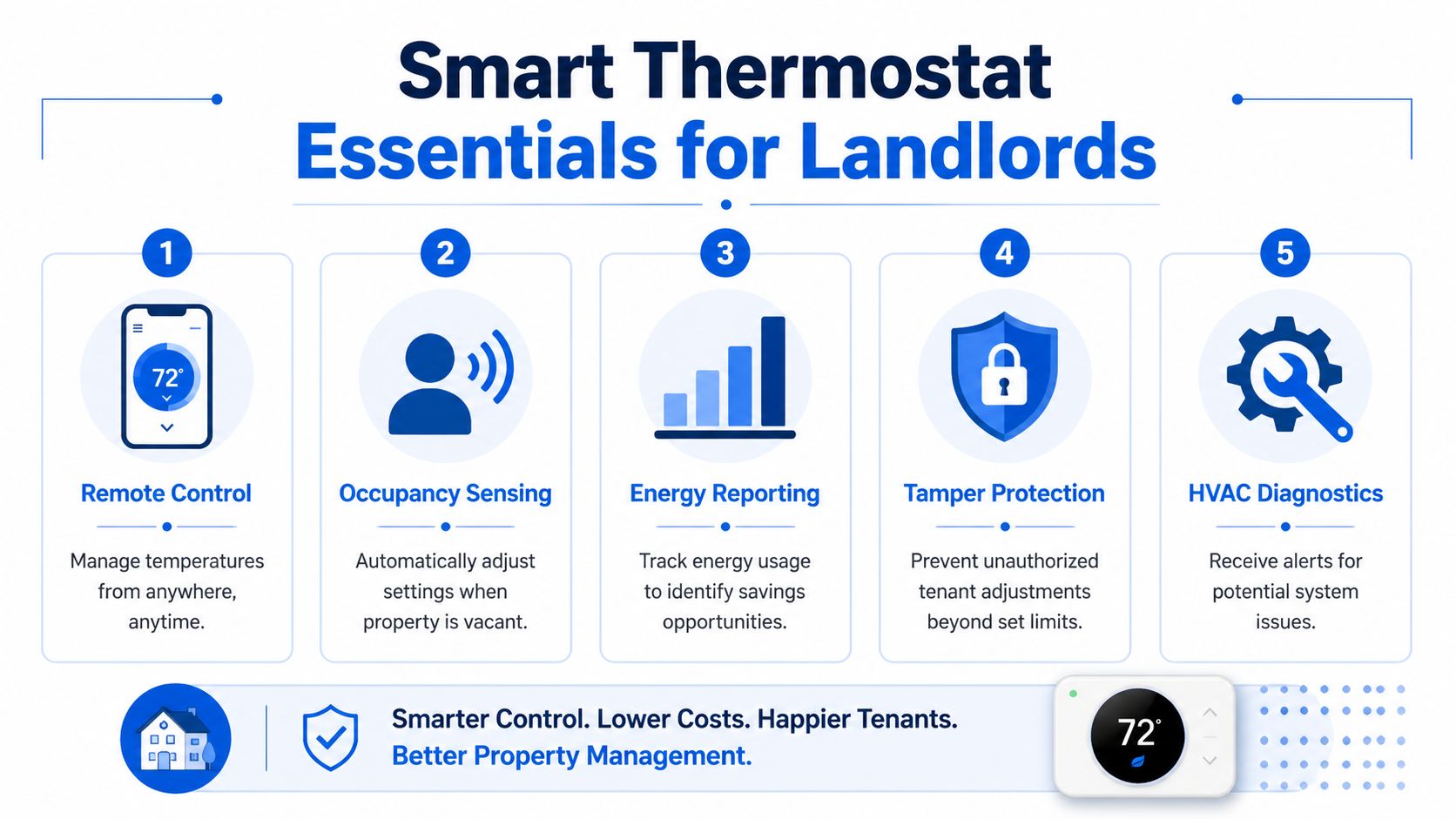
A smart thermostat earns its keep in rentals when it reduces management work, not when it adds another app to babysit. Before comparing brands, I look for a handful of features that directly affect cost control and resident experience.
Remote access that actually helps
Remote control is the baseline. If you can’t see the current temperature, make adjustments, and confirm the system responded, the thermostat isn’t doing much for a landlord.
This matters most in three situations:
- Between stays or move-ins: You can avoid conditioning an empty property harder than needed.
- After complaints: You can verify what the property is doing before sending maintenance.
- During weather swings: You can adjust faster when temperatures change suddenly.
Mysa, ecobee, Honeywell T9, and similar models all offer app-based access in the rental context discussed in the research materials. The difference is in how cleanly that access fits your HVAC setup and how easy it is to manage across more than one property.
Scheduling and temperature limits
A thermostat schedule should feel boring. That’s a compliment.
You want predictable routines for occupied and vacant periods, plus limits that prevent extreme settings. In rentals, this matters more than advanced automation. A resident doesn’t need full control over the system to be comfortable. They need a fair band they can adjust within.
Look for controls that let you:
- Set minimum and maximum temperatures: This protects HVAC usage and helps stop runaway utility bills.
- Create repeatable schedules: A standard template saves time when you manage multiple homes.
- Override cleanly when needed: You should be able to make a temporary change without rebuilding the whole schedule.
Occupancy sensing and vacant-property logic
Occupancy-aware features can help, but only when they support your operating rules instead of replacing them. In a rental, occupancy sensing works best as a backup signal, not as the sole decision-maker.
For example, if a property is clearly vacant, the thermostat should support a lower-energy mode. If a resident returns, the system should recover without confusion. That’s useful. What usually doesn’t work is handing too much control to a device that’s guessing based on inconsistent movement patterns.
Usage reporting and diagnostics
A thermostat should also help you spot problems.
Energy trend views, runtime patterns, and basic alerts can show when a system is working harder than usual or when a property is being conditioned more than expected. You don’t need a complicated dashboard to get value from this. Even simple reporting helps landlords catch waste earlier.
That’s especially true in portfolios where one house suddenly starts behaving differently from the rest.
| Feature | Why it matters in rentals | What to watch for |
|---|---|---|
| Remote control | Lets you respond without site visits | Clunky multi-property app design |
| Scheduling | Creates consistency across turnovers | Too many nested settings |
| Temperature limits | Prevents extreme manual changes | Weak admin controls |
| Occupancy support | Reduces waste in vacant periods | Overreliance on auto-learning |
| Reporting | Helps identify inefficiency and misuse | Data that’s too vague to act on |
Per-room zoning for co-living harmony
Most guides stop being useful here.
The ability to set per-room temperature controls is a major gap in the market, because most smart thermostat content focuses on whole-unit control rather than the problem co-living operators face: balancing comfort and utility costs across separately rented rooms, as noted by Minut’s discussion of smart thermostat gaps for rentals.
If you manage a shared house, one hallway thermostat often creates bad incentives. The resident closest to it gets disproportionate comfort. The resident furthest away sends the complaint. And everyone assumes someone else is causing the bill to rise.
What works better depends on the property:
One thermostat plus room sensors
This setup can improve decision-making in homes where one thermostat controls central HVAC. Room sensors help you understand whether the hallway reading is misleading. ecobee and Honeywell T9 are commonly discussed in this context because they can account for conditions beyond a single wall unit.
This approach helps when the HVAC system is centralized and full zoning isn’t realistic.
True zone control where feasible
Some properties can support stronger zoning strategies, especially where the system design allows separate control by area. That’s a bigger upgrade, but it’s often the cleanest long-term fix for chronic hot-and-cold disputes.
In co-living houses, I’d prioritize separating common areas from sleeping areas whenever the property layout and HVAC design allow it.
Clear control rules for shared homes
Even the best hardware won’t fix a bad rule set. In shared housing, residents should know who can adjust what, within what range, and how to request changes if a room consistently feels off.
Operators managing room-by-room rentals usually need a property playbook, not just a thermostat. That’s also why broader co-living property management workflows matter. HVAC control works better when it sits inside clear operating rules for the whole house.
The thermostat shouldn’t become a roommate with authority issues.
Analyzing the ROI of a Smart Thermostat
A co-living house with six residents can burn through a heating budget fast. One person runs warm, another works nights, a third keeps opening windows, and the owner still gets the utility bill. That is the setting where thermostat ROI becomes a real operating question, not a smart-home experiment.
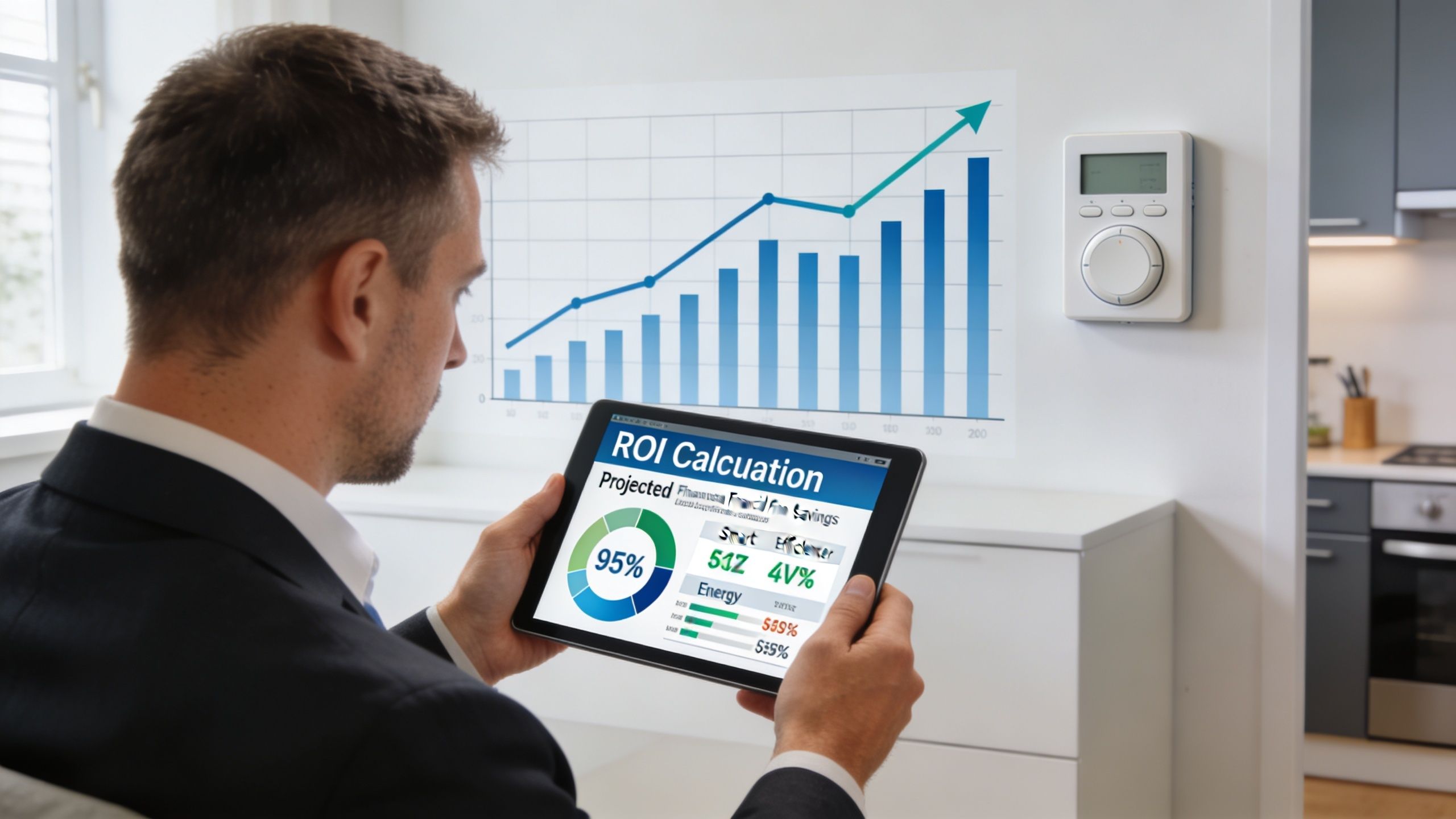
The first question is simple. Will it pay for itself?
Sometimes yes. Sometimes no. The return depends on who pays utilities, how often residents turn over, how much control staff keeps, and whether the property has a central system that is wasting runtime. In a single-family rental where tenants pay their own bill and stay for years, the financial case is often weaker. In room-by-room rentals with landlord-paid utilities, frequent resets, and recurring comfort complaints, the math usually looks much better.
The savings case
One useful benchmark came up earlier. ENERGY STAR certified smart thermostats can reduce annual heating and cooling costs in the right central HVAC setups, and Mysa’s earlier analysis also notes that heating and cooling often make up a large share of rental utility spend.
That matters because HVAC is one of the few expense lines you can influence without a renovation. You are not waiting on a roof replacement or a major plumbing project. You are reducing wasted runtime, bad schedules, and all-day conditioning of half-empty houses.
I usually look at three buckets:
Direct utility savings
Focus on properties with owner-paid gas or electric bills, high seasonal usage, or vacant-room conditioning that runs longer than it should.Operational savings
Fewer site visits, fewer manual adjustments, and fewer late-night resident messages have value, especially across scattered co-living homes.Resident retention and fewer disputes
This is harder to price, but it matters. If temperature fights are common, staff time gets consumed fast and house satisfaction drops.
Sample math that actually helps
The same Mysa analysis provides a useful example. In a 4-bedroom rental with about $1,200 in annual heating costs, a 26% reduction would equal $312 per year. Across a larger portfolio, that adds up quickly.
The bigger point is not the exact number. The bigger point is that thermostat control can affect net operating income in the same way better utility billing, tighter turnover processes, or fewer maintenance trips do.
That is especially true in co-living. One badly managed shared house can wipe out the savings from several well-run ones because temperature complaints create both energy waste and staff work.
Investment lens: In landlord-paid properties, smart thermostat ROI is strongest where turnover is frequent, HVAC runs hard, and house rules need to be enforced consistently.
How to judge payback in the field
Skip the fantasy spreadsheet. Use real operating conditions.
Start with total installed cost, including any sensors, wiring fixes, and staff setup time. Then estimate how much runtime you can realistically cut. After that, add the management savings. If your team is still handling repeated “heat is too high” or “someone changed the schedule” messages, those hours belong in the calculation.
I also separate properties into two groups. The first group is stable rentals where tenants control their own utility behavior and the owner has little reason to intervene. The second group is shared homes where one thermostat affects multiple paying residents and the owner is exposed to utility overages and constant adjustment requests. The second group usually produces a faster payback.
For operators who track housing performance closely, thermostat spending should sit beside utility reporting and budgeting, not in a miscellaneous tech bucket. That is the same logic behind tighter rental property accounting workflows, where small operating leaks are measured before they turn into margin problems.
Managing Security Privacy and Tenant Policies
A smart thermostat touches two sensitive areas at once. Building access to connected devices, and resident expectations about who controls their living environment.
Landlords often think about those issues after installation. That’s backwards. If you don’t set the rules early, the first conflict will set them for you.
Secure the device like any other connected property hardware
The thermostat is part of your building infrastructure. Treat it that way.
A few practical habits go a long way:
- Use a dedicated property network when possible: Keep connected building devices separate from resident-facing internet access.
- Control admin credentials tightly: Don’t let old staff, vendors, or former managers retain app access.
- Standardize account ownership: The property or management company should own the login, not an individual employee.
- Document reset procedures: Turnovers go smoother when someone knows exactly how to reclaim a device after a router swap or hardware replacement.
You don’t need an enterprise security team to do this well. You do need discipline.
Be careful with occupancy and usage data
Some smart thermostats collect activity signals, schedules, and usage histories that can imply occupancy patterns. That information may be operationally useful, but it should be handled carefully.
The safest approach is simple. Only collect what the property needs. Restrict who can view it. Don’t promise residents one thing and then do something different.
If you use occupancy-aware features, say so in the lease or house rules in plain language.
Put thermostat rules in writing
Most thermostat disputes aren’t technical. They’re policy failures.
A good thermostat policy should answer basic questions before anyone asks them in frustration:
| Policy topic | What to clarify |
|---|---|
| Control rights | Whether tenants can adjust settings and within what range |
| Shared-home rules | How common areas and private rooms are handled |
| Request process | How residents report rooms that are consistently too hot or too cold |
| Equipment tampering | Whether removing sensors or devices violates house rules |
| Access during outages | What happens if Wi-Fi or app access is unavailable |
The best policies feel fair, not punitive. Residents usually accept guardrails when they understand the reason behind them.
A thermostat policy works best when it protects comfort and limits waste at the same time. If it only does one, complaints follow.
For co-living homes, spell out that one person’s preference can’t override the whole house. That sounds obvious. It becomes much less obvious once everyone starts touching the same controls.
Integrating Thermostats into a Management Platform
At 9:30 p.m., one resident in bedroom three says the room is freezing, another says the hallway is stuffy, and your on-call staff member is hunting through three different apps to figure out who changed what. That is the point where a smart thermostat stops being a gadget and starts becoming an operations problem.
Why standalone control stops scaling
A single-family rental can survive a messy app setup for a while. Co-living and room-by-room rentals usually cannot.
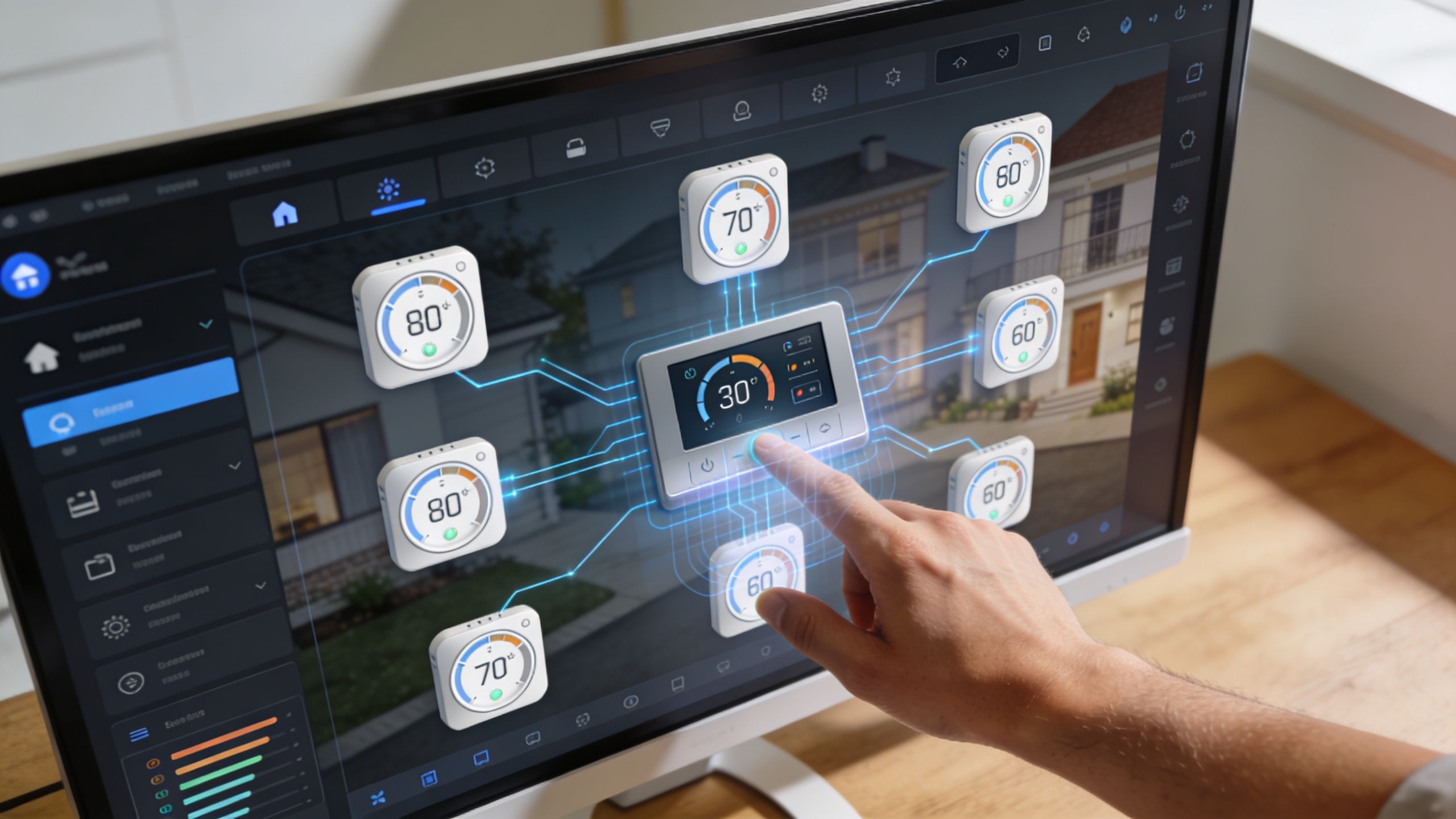
The reason is simple. The operating model is different. Bedrooms turn over on different dates, common areas stay occupied even when one room is vacant, and comfort complaints come from several residents sharing one HVAC system. If thermostat control sits in a separate app with no connection to leasing, maintenance, or access, staff waste time piecing together context before they can even respond.
The failure points show up fast:
- No shared view across the portfolio: Staff jump between property accounts and device logins to find the right thermostat.
- Poor coordination during partial occupancy: One empty bedroom does not mean the whole house should shift into vacancy settings.
- Slow maintenance triage: A hot-room complaint is harder to diagnose when work orders, notes, and thermostat history live in different places.
- More staff mistakes: The more systems your team touches, the easier it is to change the wrong setting in the wrong house.
I have found that the primary bottleneck is not thermostat control itself. It is context. The person handling the complaint needs to know who lives there, what rooms are occupied, whether a turnover is scheduled, and whether the issue is recurring.
What integration changes in practice
Thermostats become more useful when they are tied to the rest of the operating stack.
That does not require fancy automation on day one. Even basic integration helps a manager set homes to the right mode during vacancies, flag repeat comfort issues at the same property, and give staff one place to check status before contacting residents. In a co-living house, that matters because the right setting for a shared kitchen is often different from the right setting for an empty bedroom or a recently filled room.
A connected setup can support practical workflows such as:
- Pre-move-in adjustments for an incoming resident's room or shared zone
- Setbacks tied to actual vacancy status, not assumptions
- Faster review of homes with repeat heating or cooling complaints
- Better coordination between maintenance tickets and thermostat history
Many articles aimed at single-family landlords miss the fundamental issue. In co-living, temperature control is rarely a whole-home question. It is a shared-house question with competing preferences, staggered occupancy, and staff who need to act quickly without creating a new complaint somewhere else.
One example of where this is headed
Some operators are looking for systems that combine room-by-room rental operations with smart-home controls in one place. PadPulse is one example being positioned for PadSplit hosts and co-living operators, with planned thermostat integration alongside messaging, pricing, and portfolio reporting.
The appeal is practical. HVAC decisions affect turnover timing, maintenance response, utility spend, and resident satisfaction at the same time. Keeping those functions separate creates extra clicks and slower decisions.
When thermostat controls sit inside the same operating system as resident communication and property status, staff can solve the problem faster and with fewer guesswork calls.
Full platform integration is not required before you buy hardware. But it is smart to choose thermostats that will still fit your operating model once you add more houses, more rooms, and more people touching the system.
Installation and Scaling Best Practices
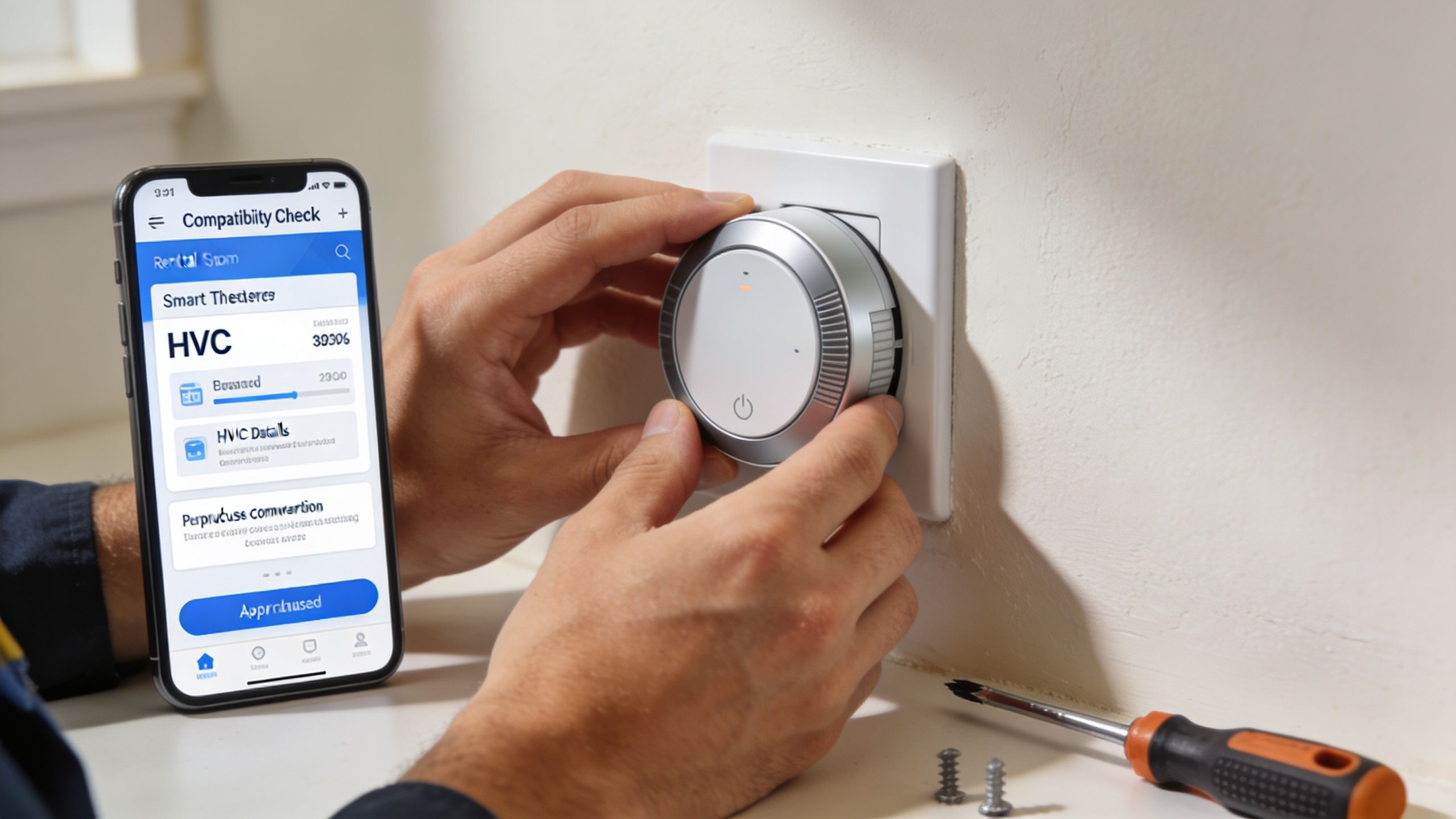
The easiest thermostat to manage is the one you installed correctly the first time. Most headaches come from rushed compatibility checks, weak Wi-Fi planning, or buying different models across the portfolio without a standard.
Check compatibility before you buy
This matters more than brand preference.
Some thermostats work with traditional 24V systems such as furnaces and ducted heat pumps. Others are built for line-voltage or specialty setups. Research materials for this topic specifically note Mysa’s compatibility with traditional 24V heating systems, while also discussing separate support considerations for other system types in rental settings.
Before ordering anything, confirm:
- HVAC type: Central HVAC, heat pump, heating-only, cooling-only, or another setup
- Wiring reality: What’s on the wall now, not what you assume is there
- Control goal: Whole-home management, room-sensor support, or a more advanced zoning path
- Guest interface needs: Especially important in furnished or short-stay rentals
If the wiring is unusual or the system has a history of quirks, bring in a pro. A failed DIY install costs more than a simple service call.
Standardize across the portfolio
Once you find a model or small set of models that fit your properties, resist the urge to keep experimenting unless there’s a clear reason.
Portfolio consistency makes everything easier:
- Training is simpler
- Replacement parts are easier to stock
- Settings can be templated
- Troubleshooting gets faster
A mixed estate sometimes requires more than one thermostat type. That’s fine. What hurts is unnecessary variety.
After the hardware is selected, this walkthrough is a useful visual reference for setup basics and common installation issues:
Create a repeatable deployment checklist
If you’re scaling beyond one property, write down the process.
A practical rollout checklist should include:
- Photograph existing wiring before removal
- Label the thermostat by property and unit
- Connect to the correct network
- Set admin ownership immediately
- Apply the standard schedule and limits
- Test manual and app controls
- Document the final configuration
That last step gets skipped all the time. Then a turnover happens, a router is replaced, and nobody remembers how the device was set up.
Troubleshoot the common failures first
Most field issues are basic.
- Device offline: Check Wi-Fi status, power, and whether the router changed.
- System not responding: Recheck wiring and HVAC compatibility.
- Residents confused: Simplify on-wall instructions and reduce unnecessary options.
- One room still uncomfortable: Reassess sensor placement or whether the property needs zoning rather than more tweaking.
Good scaling is usually boring. That’s what you want.
Landlord FAQ for Smart Thermostats
A co-living operator usually asks different thermostat questions than a single-family landlord. The problem is not just energy use. It is what happens when six adults share one HVAC system and each person thinks the house should run at a different temperature.
Will the heat or AC still work if Wi-Fi goes out
Usually, yes.
In most smart thermostat setups, the HVAC equipment keeps running based on the local schedule or last active settings. What stops working is remote access, alerts, and off-site changes until the connection comes back. That matters in room-by-room rentals, where one outage can leave you blind across multiple resident complaints.
How do I keep tenants from tampering with the thermostat
Use hardware controls and written policy together.
A lockout setting, admin permissions, and temperature limits handle the technical side. Lease terms and house rules handle the human side. In co-living homes, I have found that residents are less likely to override the thermostat when there is a clear process for requesting a change and a posted explanation of the allowed temperature range.
Do I need the same thermostat model in every property
No, but standardization still matters.
Older buildings, mini-splits, heat pumps, and conventional forced-air systems do not always support the same device. Across a portfolio, the goal is to reduce unnecessary variation so maintenance staff are not relearning apps, wiring, and control logic at every turnover. In shared housing, consistency also makes resident instructions easier to post and enforce.
Are smart thermostats worth it in long-term rentals too
Often, yes, but the reason changes.
If the tenant pays utilities and controls the space, the thermostat is usually more of an amenity and a vacancy-management tool. If the owner pays utilities, or if several tenants share one system, the savings and control are easier to justify because small schedule changes affect the whole property.
Should I choose room sensors or full zoning
Choose based on the source of the complaint.
Room sensors help when one or two bedrooms run hotter or colder than the rest of the house and the core HVAC setup is otherwise acceptable. Full zoning makes more sense when separate groups of tenants regularly want different temperatures at the same time. In many co-living houses, sensors are the cheaper first step, but they will not solve a true multi-tenant control conflict by themselves.
Are rebates or tax credits available
Sometimes.
Availability depends on the utility program, location, and thermostat model. Check current local programs before buying, but do not build the whole ROI case around incentives. They change, and they disappear.