10 Best Property Management Software Options for 2026
May 29, 2026
If you're managing a co-living house with spreadsheets, text threads, a lock app, and a separate payment tool, you already know the problem. Nothing is technically broken, but everything takes too many clicks, too much follow-up, and too much memory. One missed room turn, one unpaid utility adjustment, or one buried maintenance message can throw off the whole week.
That gets worse in room-by-room rentals because the work isn't just property management. It's occupancy management, roommate communication, access coordination, and per-room decision-making. A standard apartment workflow doesn't cleanly fit a house where each bedroom behaves like its own revenue unit.
That's why the best property management software for co-living operators looks different from the best software for a conventional apartment building. You need room-level visibility, faster messaging, flexible pricing, and tools that don't force you to re-enter the same data across five systems.
This market has matured quickly. One market estimate valued property management software at USD 26.55 billion in 2025 and projected USD 29.19 billion in 2026 and USD 61.41 billion by 2034, with a 9.70% CAGR, while another estimated USD 3.61 billion in 2025 and USD 5.89 billion by 2033 at a 6.4% CAGR, showing different scopes but the same overall direction toward a large, growing software category centered on automation and reporting (Fortune Business Insights property management market outlook).
Most roundup lists still focus on generic leasing and accounting. This one is ranked for co-living, shared housing, and room-by-room operators who care about vacancy turns, smart lock workflows, direct bookings, and clean per-room financial tracking.
1. PadPulse
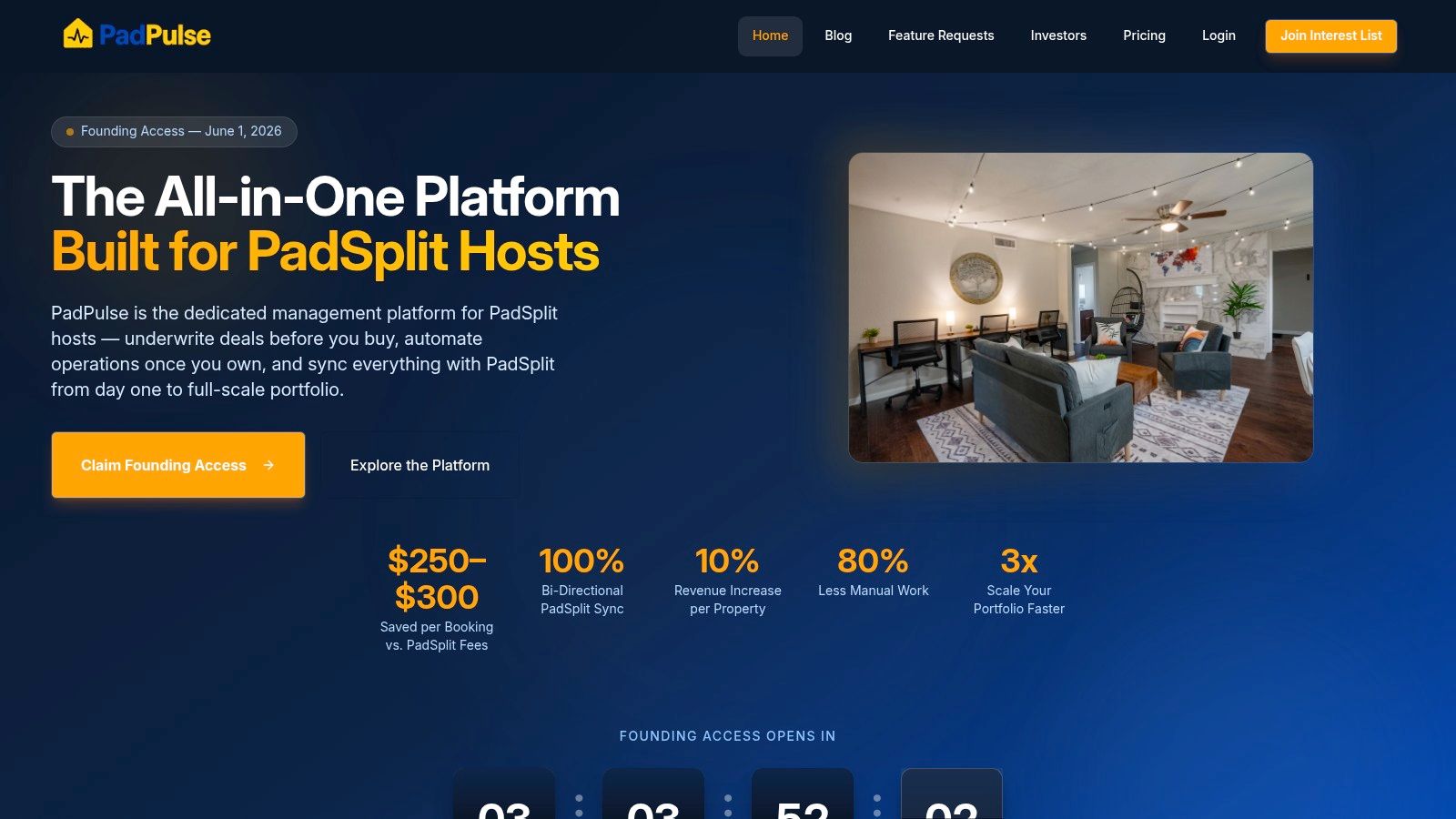
A rooming house can look full on paper and still leak revenue every week. One room is underpriced, another turn is delayed because the lock code never changed, and a maintenance thread is sitting in a separate inbox. That is the operating reality PadPulse is trying to solve.
PadPulse ranks first here because it is being built for co-living and room-by-room operators, not retrofitted from a conventional apartment workflow. That distinction matters more than feature volume. In shared housing, the room is the revenue unit, the resident experience is more communication-heavy, and small delays stack up fast across turns, access changes, and roommate issues.
It is also early. Founding access is currently slated to open around June 1, 2026, with broader rollout planned around June 15, 2026. Operators who prefer a platform with years of edge-case history should treat that as a real trade-off. Operators who are tired of forcing general-purpose software into a PadSplit-style model may decide the upside is worth it.
Why it stands out for room-by-room rentals
The biggest differentiator is workflow fit. PadPulse is designed around PadSplit operations, including bi-directional sync for members, rooms, occupancy, maintenance tickets, and messenger threads. Generic platforms usually handle pieces of that process, but room-by-room teams still end up stitching together spreadsheets, messaging apps, pricing tools, and manual updates.
PadPulse also reaches beyond the standard accounting-plus-leasing stack. The product roadmap includes dynamic pricing that pushes rates to PadSplit, AI-assisted messaging, direct-booking pages, live P&L tracking, portfolio analytics, underwriting tools, and smart-home integrations for keyless locks and thermostats. For this niche, that combination is more relevant than a long list of enterprise features built for conventional multifamily.
I would pay close attention to the per-room financial side. That is one of the most common weak spots in broad property management systems. If you need a clearer view of room performance, pricing decisions, and house-level margins, PadPulse is aiming at the right problem set. Readers comparing generalist platforms can also review this breakdown of Buildium vs AppFolio for property managers to see how traditional systems differ before judging a room-first platform.
Practical rule: If your staff is re-entering room, resident, and ticket data across multiple tools, the stack is costing more than it looks.
What works and what to watch
The direct-booking piece is practical, not cosmetic. Operators who can drive repeat demand or local traffic often want more control over booking flow and fewer platform fees. PadPulse is also planning free entry tiers and per-room paid plans, which gives smaller hosts a path to test the system before committing to a bigger rollout.
The caution is maturity. Early products can have the right blueprint and still need time to harden reporting, edge-case handling, and integrations. I would not buy PadPulse because of broad promises around performance gains. I would buy it, or at least trial it, because the feature set lines up with the daily realities of co-living better than most software in this category.
For readers new to the category, PadPulse's overview of what property management software is gives a useful baseline before you compare platforms.
Best for
- PadSplit operators: Native workflow alignment is the core advantage.
- Room-by-room investors: Per-room pricing and financial visibility fit the business model.
- Growing co-living managers: Free and paid tiers create a cleaner path from a small portfolio to scale.
Watch out for
- Early-stage risk: Launch features may change after rollout.
- PadSplit-heavy focus: Operators who need broad multi-channel listing management on day one may prefer a more established general platform.
2. AppFolio Property Manager
AppFolio Property Manager is one of the strongest system-of-record platforms on the market. If you want one environment for accounting, leasing, maintenance, inspections, workflows, and resident communication, it's a serious option.
Where it shines is operational scale. In a 2026 survey of 343 current property managers, over 96% reported increased operational efficiency from AppFolio AI solutions, and early users of Realm-X Assistant and Messages reported average savings of 10.3 hours per week on task completion and 11.9 hours per week on communication-related work (AppFolio 2026 software comparison and survey details). That's the clearest quantified case in this category for why automation matters.
Where AppFolio fits for co-living
For room-by-room rentals, AppFolio is excellent at the “big engine” part of the job. Accounting is strong. Maintenance workflows are mature. Mobile functionality is good. The ecosystem is broad, which helps if you want one core platform and several connected tools around it.
The trade-off is fit at the room level. AppFolio wasn't built around PadSplit-style operations. You can often make a powerful general platform work, but there's usually more configuration, more process design, and more compromise.
AppFolio is best when your operational problem is scale and consistency, not niche room-level workflow design.
If you're debating between these two approaches, this comparison of Buildium vs AppFolio is useful for understanding how heavyweight software differs from more accessible mid-market tools.
Best for
- Mid-size to large operators: Strong for firms standardizing multiple workflows.
- Teams that need serious accounting: Finance depth is a real advantage.
- Operators betting on automation: AI-assisted communication and tasking are central to the product.
Not ideal for
- Very small portfolios: It can feel like too much system for too little inventory.
- Highly specialized room-by-room models: Powerful, but not purpose-built for that niche.
3. Buildium by RealPage
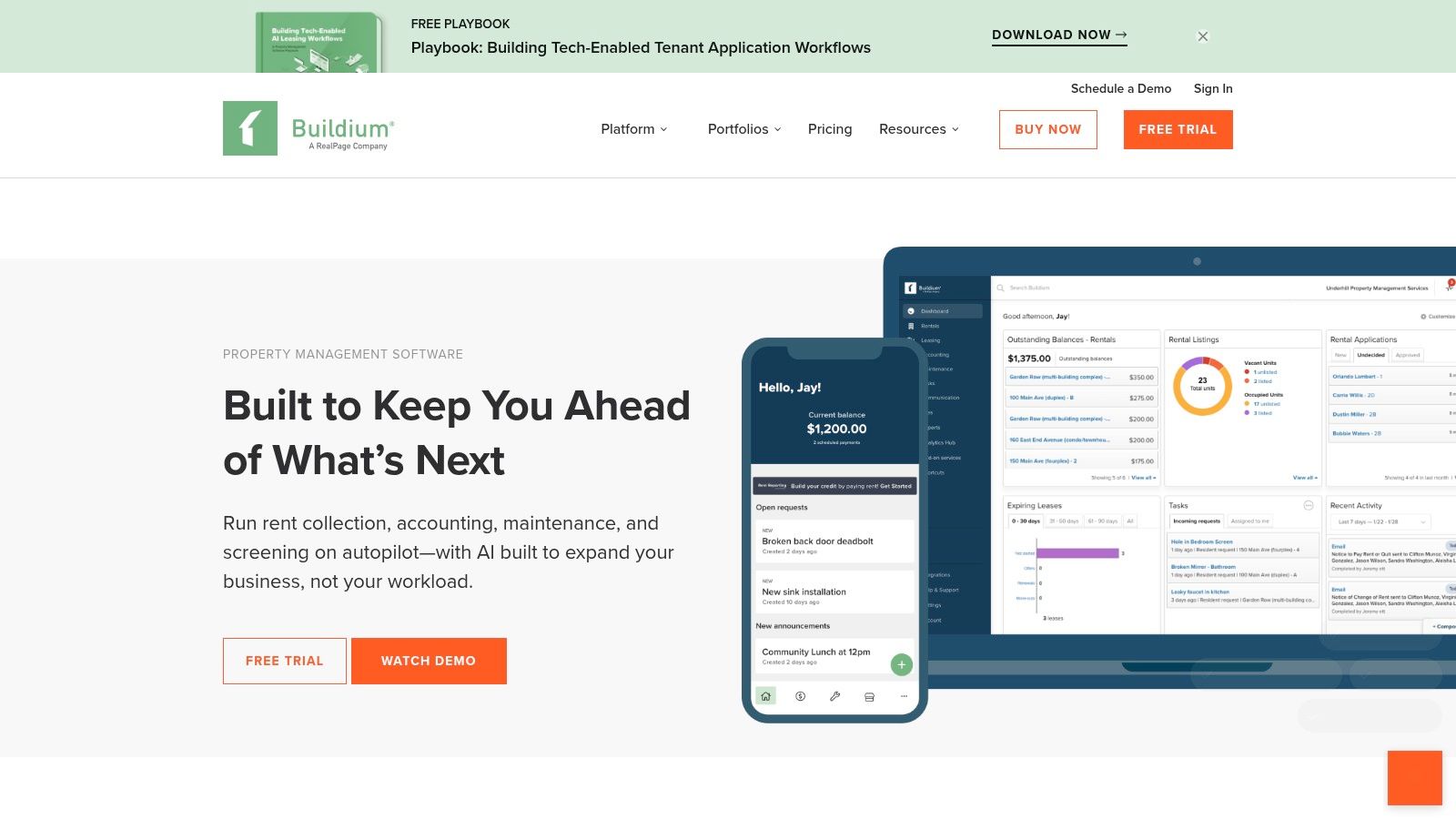
Buildium sits in a practical middle ground. It's more structured than landlord-first budget tools, but it's less imposing than enterprise platforms. For a lot of small and mid-sized operators, that's exactly the right balance.
I usually think of Buildium as a “get organized and stay organized” platform. It covers the core stack well: leasing, screening, e-signatures, maintenance, accounting, portals, and reporting. It also has a clearer pricing posture than many quote-only competitors, which matters when you're trying to model real software cost before you commit.
The real Buildium trade-off
Buildium works best when your portfolio is growing and your processes are becoming repeatable. It's a good fit for operators who've outgrown spreadsheets but don't want a heavyweight implementation project.
For co-living, the weakness is that it still thinks mostly in standard rental-operating terms. You can manage room-by-room portfolios with it, but you may still need side systems or manual work for nuanced pricing, channel-specific communication, or highly detailed room-level reporting.
That said, many operators don't need a perfect co-living-native product on day one. They need something dependable that handles payments, books, maintenance, and resident workflows without drama. Buildium does that well.
If your biggest concern is the accounting side of the stack, this guide to best accounting software for rental properties helps clarify whether your PMS should also be your finance backbone.
Why people choose it
- Published tiers: Easier to budget than quote-only platforms.
- Good operational core: Strong everyday functionality for growing teams.
- Manageable complexity: More capable than entry-level apps without the enterprise overhead.
Where it falls short
- Feature gating: Some advanced capabilities sit in higher tiers.
- Co-living specialization: Not designed around roommate-heavy, room-level operations.
4. Yardi Breeze / Breeze Premier
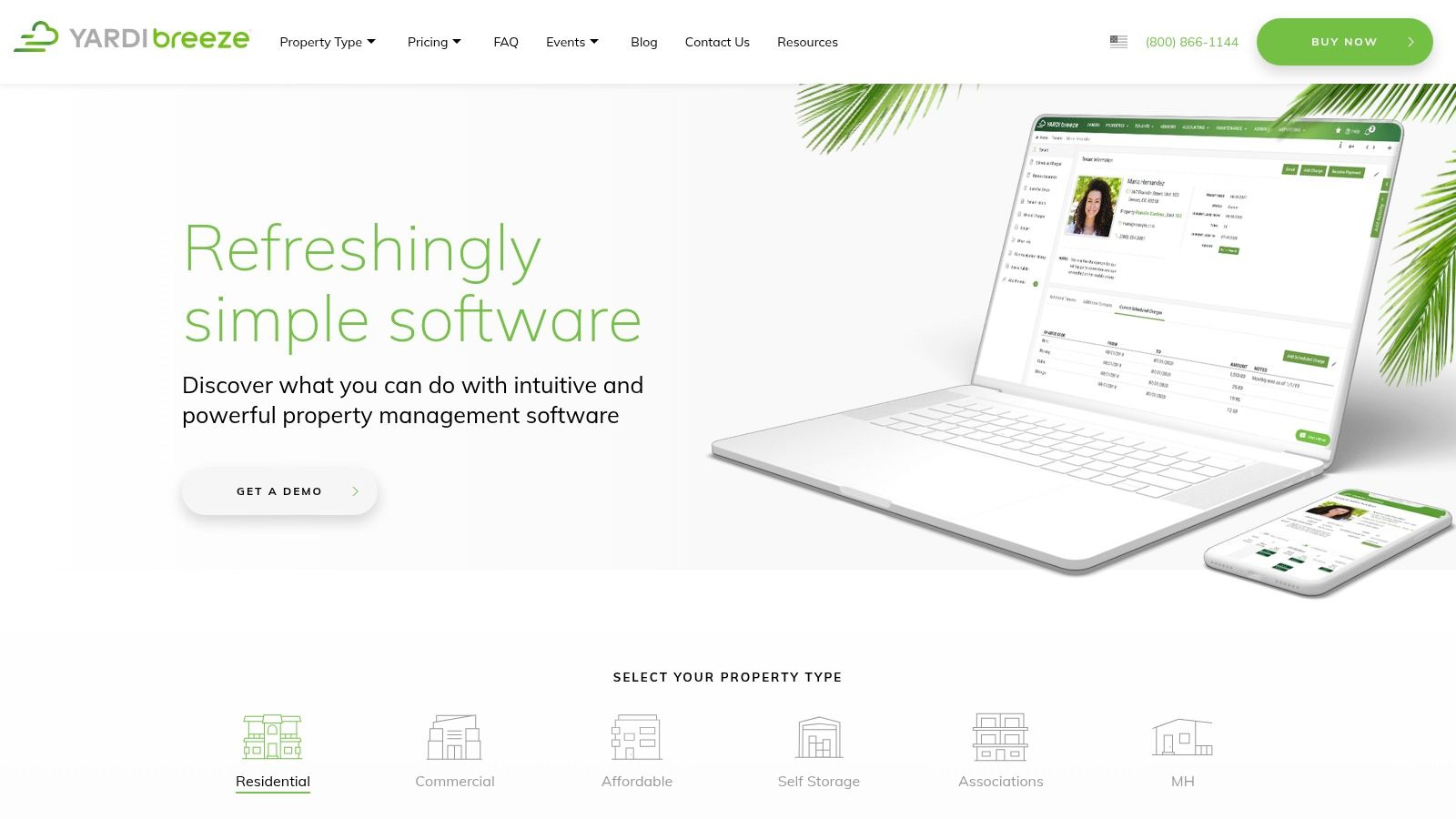
Yardi Breeze is the lighter, more approachable side of the Yardi family. That makes it appealing to landlords and managers who want accounting credibility and a recognizable platform without going straight into a heavier enterprise deployment.
The strength here is operational discipline. Yardi has deep roots in property operations, and Breeze inherits that feel. Financial reporting, resident and owner portals, payments, leasing, and maintenance are all there, with optional add-ons for marketing and investor-facing needs.
Good software for operators who value accounting structure
Some tools feel like they started with listings and later added accounting. Yardi Breeze feels more grounded in financial control from the start. If your first question is “Will my books stay clean?” rather than “Can I automate every conversation?” that's a point in its favor.
For co-living, it's usable but not specialized. A room-by-room operator can absolutely run on Breeze, especially if the portfolio is relatively standardized. But if your daily grind includes lots of moving parts across many individual occupants, you may still want stronger messaging and automation layers.
Worth noting
- Add-on path: You can start relatively simple and layer on more capability.
- Yardi reputation: Some operators feel safer with a long-established provider.
- Less open-ended flexibility: It can feel more opinionated than systems built around broad customization.
If accounting and operational controls matter more to you than startup-style speed, Yardi Breeze deserves a closer look.
5. Rent Manager
Rent Manager is for operators who want control. Not surface-level control. Deep control. Custom fields, configurable workflows, report writing, and broad portfolio support are the core story here.
This isn't the first platform I'd hand to a beginner managing one co-living house. It is a platform I'd take seriously if the business is complex, mixed-use, or full of exceptions that lightweight tools can't model well.
Strong when your portfolio doesn't fit a template
Rent Manager is especially attractive if you manage different asset types or unusual operating structures. That's often relevant in shared housing because those portfolios rarely stay perfectly standardized for long. One house may run one way, another may have different service bundles, utility structures, or vendor workflows.
The upside is flexibility. The downside is effort. Platforms like this usually pay off only if the operator is willing to define processes carefully and invest in setup.
Who tends to like it
- Operators with niche needs: Customization is the selling point.
- Managers with mixed portfolios: Residential plus other asset classes is a better fit here than in many simpler tools.
- Data-minded teams: Reporting depth is a real strength.
Who may not
- Solo landlords: It can be more platform than they need.
- Teams wanting instant simplicity: There's a learning curve, and that's part of the package.
6. DoorLoop
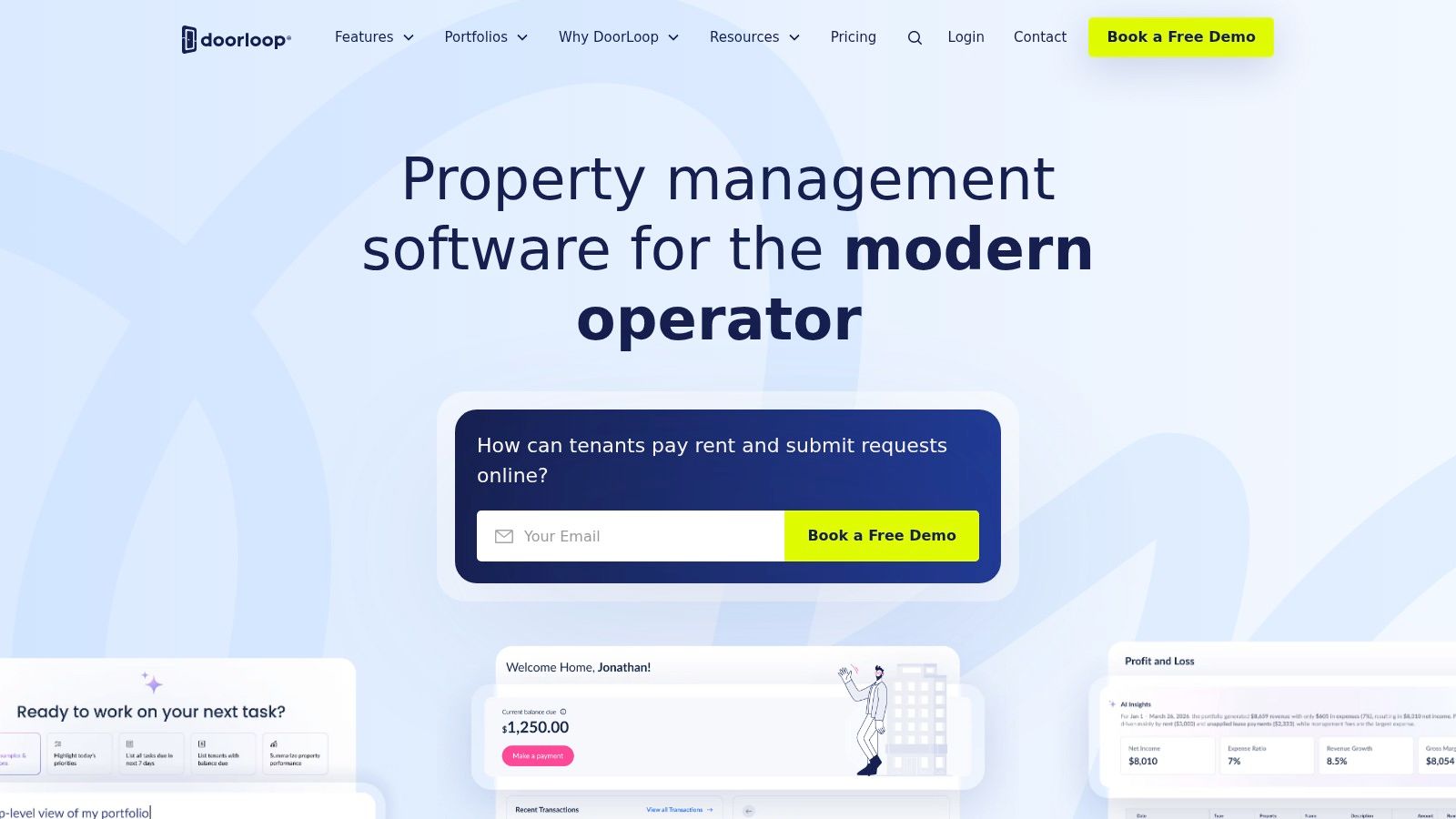
DoorLoop has become popular for a reason. It gives operators a broad feature set without making the software feel intimidating. That's harder to pull off than it sounds.
For beginners and non-technical teams, DoorLoop is one of the easier systems to understand. Accounting, leasing, screening, payments, maintenance, portals, workflow automation, and AI-assisted features all sit in a product that generally feels more approachable than the enterprise incumbents.
A practical middle-market pick
If Buildium feels a little too traditional and AppFolio feels too big, DoorLoop often lands in the sweet spot. It's especially appealing for operators who want migration help and responsive support instead of a long, painful setup process.
For room-by-room rentals, DoorLoop is solid as a broad operations platform. The main limitation is depth in niche co-living workflow design. It's better at helping a team run smoothly than at modeling every edge case unique to shared housing.
Good fit if you want
- Fast onboarding: Teams often choose it because they want to get live quickly.
- Balanced feature depth: Enough power for growth without overwhelming the staff.
- Integration flexibility: Useful if your stack still includes QuickBooks or other connected tools.
Less compelling if you need
- Very deep enterprise controls: Large organizations may eventually outgrow it.
- Purpose-built room economics: It's all-in-one, but not all-in-one for co-living specifically.
7. Hemlane
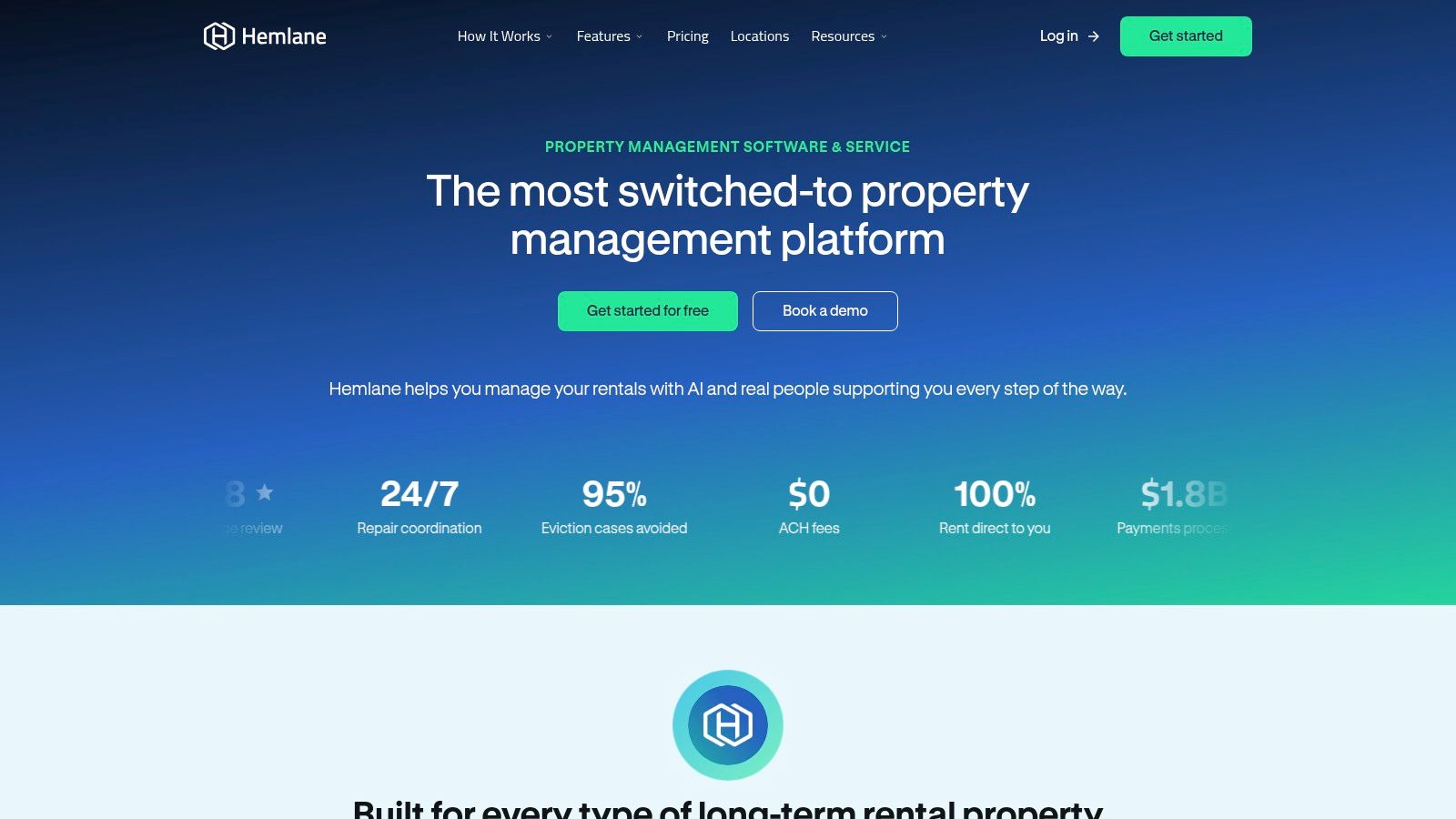
Hemlane does something many platforms don't. It combines software with optional operational help. That's useful if you run distributed properties or don't have a full in-house team for every showing, repair, and local coordination task.
This model can work surprisingly well for room-by-room operators who own houses across different neighborhoods or cities. Shared housing often creates more small operational touchpoints, not fewer. A software-only solution doesn't always solve that.
Useful when you need humans in the loop
Hemlane covers listing syndication, applications, screening, lease signing, messaging, and online payments. The bigger distinction is the optional service layer, including coordinated maintenance support and local leasing help.
That can be a strength or a cost trap, depending on how you use it. For an operator with limited staffing, optional service support can smooth out the rough edges. For a portfolio that's already operationally tight, extra services can become an expense line you no longer need.
Software doesn't remove fieldwork. It only makes fieldwork easier to coordinate.
Best for
- Distributed portfolios: Especially where local coordination is inconsistent.
- Lean ownership teams: Helpful if you don't have on-site staff.
- Operators easing into software: You can add services when the process breaks, not before.
Less ideal for
- Large, process-heavy firms: Enterprise breadth isn't the focus.
- Operators obsessed with cost compression: Service layers can add up as you scale.
8. TenantCloud
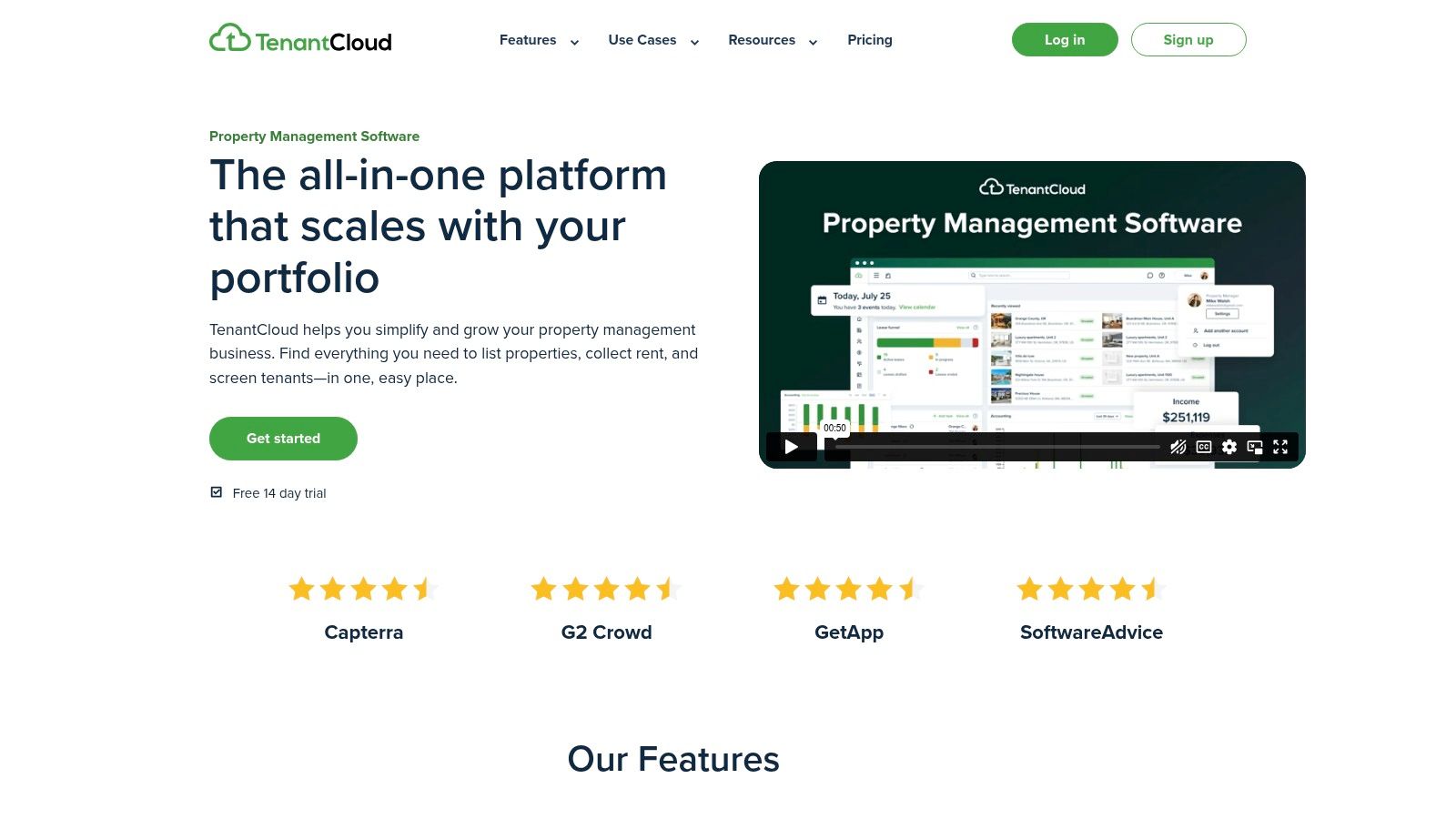
TenantCloud is one of the more practical “step up from basic tools” options in the market. If you've been using a collection of lightweight apps and you're ready for a more complete platform, it makes a lot of sense.
Its appeal is straightforward. Listings, screening, payments, maintenance tracking, inspections, accounting, reconciliation, owner tools, and mobile apps are all available in a product that usually feels accessible to smaller operators.
A good bridge between DIY and full-scale PMS
Not every operator needs advanced AI workflows or a giant integration marketplace. Many just need fewer mistakes, cleaner books, and one place to manage requests, payments, and resident records.
TenantCloud is good at that middle ground. For co-living, the limitation is familiar. It supports the business broadly but won't natively solve every room-by-room edge case you run into. It's a practical operations platform, not a specialized shared-housing operating system.
Why it makes this list
- Transparent entry point: Easier to test than many heavier systems.
- Solid core coverage: Enough functionality for real operations, not just rent collection.
- Beginner-friendly path: Good for owners moving out of spreadsheet mode.
Where it may lag
- Advanced team automation: Larger organizations may want more process depth.
- API-heavy builds: Operators with a very custom stack may need more extensibility.
9. RentRedi
RentRedi is one of the more interesting choices for room-by-room operators who care about pricing predictability. Its mobile-first design is helpful, but the bigger advantage is simpler scaling logic for landlords who don't want every added room to trigger another pricing surprise.
That matters more than many people expect. One undercovered issue in this category is total operating cost as you grow. Low-cost or free plans can look great at the start, but real costs often shift through gated features, per-unit pricing, premium tiers, and add-ons. That's why software should be judged on scalability, not just sticker price, a gap highlighted in broader industry coverage about hidden costs and premium feature gating (analysis of pricing trade-offs in property management software).
Why co-living operators should pay attention
RentRedi includes unlimited properties, tenants, and teammates across plans, along with payments, listings, screening, maintenance, vendor tools, and e-lease workflows. For operators managing many rooms under one business, that kind of pricing posture can be easier to plan around than per-door software.
The trade-off is depth. Advanced accounting and analytics aren't as extensive as what you'll get in a larger platform. So the question is simple: do you want predictable cost and mobile simplicity, or deep financial controls inside the PMS itself?
Strong fit for
- Hands-on landlords: Especially those working from a phone most of the day.
- Room-by-room operators watching software spend: Predictable pricing is a real advantage.
- Small teams: Fast setup and simple workflows matter here.
Weaker fit for
- Finance-heavy operators: Reporting depth is lighter than enterprise suites.
- Complex organizations: Large teams may eventually want more control layers.
10. TurboTenant
TurboTenant earns a spot because many operators start here. If you're self-managing a smaller portfolio and want to move off manual processes without taking on a heavy monthly software commitment, it's an easy entry point.
Its freemium structure is the draw. Marketing, applications, screening, online rent collection, and maintenance tools make it possible to get basic operations online quickly. For a single co-living house or a few smaller rentals, that can be enough.
Best when you need momentum, not sophistication
TurboTenant is useful when the current problem is disorder, not scale. It helps landlords centralize the basics and get out of inbox-and-spreadsheet mode without a major implementation.
For room-by-room operations, though, you'll likely encounter the ceiling. Shared housing gets messy faster than standard rentals. Once communication volume rises, room turns speed up, and financial tracking needs more nuance, budget-first tools tend to show their limits.
Good choice for
- DIY landlords: Fastest path to basic digital operations.
- Small co-living tests: Fine for proving a model before investing in a bigger stack.
- Cost-sensitive owners: Low barrier to entry is the point.
Not the best fit for
- Operators planning rapid growth: You may outgrow it quickly.
- Teams needing deeper controls: Accounting insights and workflow sophistication are more limited.
Top 10 Property Management Software Comparison
| Product | Core features & USP (✨) | UX & performance (★) | Target audience (👥) | Pricing & value (💰) |
|---|---|---|---|---|
| 🏆 PadPulse | ✨ Dynamic pricing, AI messaging, smart‑home (locks/thermostats), native PadSplit bi‑directional sync, P&L & market intel | ★★★★★ automation; ~91% occ.; +10% rev; early‑adopter MVP risk | 👥 PadSplit hosts & pad‑style co‑living operators; early adopters | 💰 Free Research & Host (≤10 rooms); Growth $12/room/mo ($10 annual); Pro $18/$15; Enterprise custom; smart‑lock/HVAC add‑ons |
| AppFolio Property Manager | ✨ Enterprise accounting, Realm‑X AI assistant, leasing, maintenance, APIs & integrations | ★★★★☆ mature, data‑rich; heavyweight implementation | 👥 Large portfolios (50+ units); enterprise managers | 💰 Custom quote; minimums; premium enterprise cost |
| Buildium (by RealPage) | ✨ Accounting, leasing, portals, maintenance; AI features in higher tiers | ★★★★☆ transparent; good OOTB reports & automation | 👥 SMB → midmarket (50–500 doors) | 💰 Published tiers + free trial; per‑transaction fees apply |
| Yardi Breeze / Breeze Premier | ✨ Yardi accounting core, online leasing, RentCafe & Chat IQ add‑ons | ★★★★☆ simple unit pricing; easy upgrade path to Yardi stack | 👥 Small–mid landlords wanting Yardi ecosystem | 💰 Unit‑based pricing; clear minimums; à‑la‑carte add‑ons |
| Rent Manager | ✨ Deep accounting, report writer, custom fields/workflows & large integrations | ★★★★☆ very powerful; steeper learning curve | 👥 Mixed‑use, niche portfolios needing customization | 💰 Quote pricing; implementation package usually required |
| DoorLoop | ✨ Accounting, leasing, AI assistant, QuickBooks sync, fast onboarding | ★★★★☆ easy deploy; responsive support; mid‑market fit | 👥 Mid‑market operators seeking quick ROI | 💰 Clear starting price; good value; some add‑on fees |
| Hemlane | ✨ Listing syndication + optional coordinated maintenance & local leasing services | ★★★☆☆ flexible hybrid (software + services) | 👥 Distributed landlords who need local ops help | 💰 Per‑unit + base fee; service add‑ons increase cost |
| TenantCloud | ✨ Listings, screening, payments, maintenance, accounting & owner portal | ★★★☆☆ low‑cost, landlord‑friendly | 👥 Small landlords & single‑family / small multifamily | 💰 Transparent low‑cost tiers; quotas until Pro/Business |
| RentRedi | ✨ Unlimited units per subscription, mobile‑first, rent collection & vendor tools | ★★★☆☆ strong mobile UX; quick setup | 👥 Landlords wanting predictable portfolio pricing | 💰 Portfolio pricing; some pro features via sales |
| TurboTenant | ✨ Freemium marketing, applications, screening; paid tiers for payouts & accounting | ★★★☆☆ DIY‑friendly; very low entry cost | 👥 DIY landlords up to ~50 units | 💰 Freemium core; Essentials/Pro paid tiers for extras |
Your Next Step to Automated Property Management
A rooming house looks profitable on paper until the daily friction starts piling up. One room turns over early, another tenant needs a lock code reset, two prospects ask about different rooms in the same property, and the numbers still have to reconcile by unit and by room. Generic software can handle parts of that. Room-by-room operations need a system that keeps the whole workflow connected.
That is the lens for this ranking. It is built for co-living and shared housing operators, not just conventional landlords comparing broad feature grids. The tools that rise to the top here are the ones that help with roommate-level pricing, smart lock coordination, faster turns, cleaner communication, and per-room financial tracking.
The market has also matured. Buyers now expect automation, reporting, and cloud access as standard. The key question is fit. A platform can be excellent for conventional multifamily and still create extra manual work for shared housing because the lease structure, turnover pattern, and communication load are different.
I have seen operators make the same mistake more than once. They buy for brand recognition or accounting depth, then rebuild room-level workflows in spreadsheets, texting apps, and smart-home dashboards. That usually works for a few homes. It breaks once volume picks up.
If you run PadSplit homes or similar room-by-room rentals, PadPulse stands out because it is built around that operating model. If you want a mature general platform with broader market adoption, AppFolio, Buildium, DoorLoop, and Yardi Breeze are credible choices, each with clear trade-offs in flexibility, setup time, and feature depth. If low cost and quick setup matter most, RentRedi, TenantCloud, Hemlane, and TurboTenant are easier entry points, but expect more workarounds as operations get more complex.
Choose for the portfolio you are building, not just the pain you feel this month.
If shared housing is the core of your business, PadPulse is worth a close look. It is designed for operators who need dynamic pricing, unified messaging, direct booking workflows, room-level financial visibility, and smart-home controls in one system. If that matches the stack you have been stitching together manually, join the interest list and see whether early access fits your operation.