Best Dynamic Pricing Software: 7 Rental Tools
September 9, 2026
A room-by-room operator can spend the morning changing rents, updating listings, answering member messages, and checking whether a vacancy is becoming expensive. The next decision is usually unclear: keep adjusting rates manually, connect a specialized pricing tool, or adopt a broader revenue-management platform. The best dynamic pricing software depends on that operating model. A PadSplit-style portfolio has different needs from nightly vacation rentals, while a large multifamily community may prioritize centralized controls over room-level flexibility.
This comparison weighs the pricing engine, demand and market data, automation, PMS connectivity, smart-lock workflows, pricing model, operator fit, implementation effort, and portfolio scalability. It also separates mature products from emerging options. PadPulse is in staged rollout, so its planned repricing capability belongs in the emerging PadSplit-native category rather than being presented as a fully mature alternative today. For background on rate setting in vacation rentals, see this guide to Florida VRBO pricing strategy.
1. PadPulse
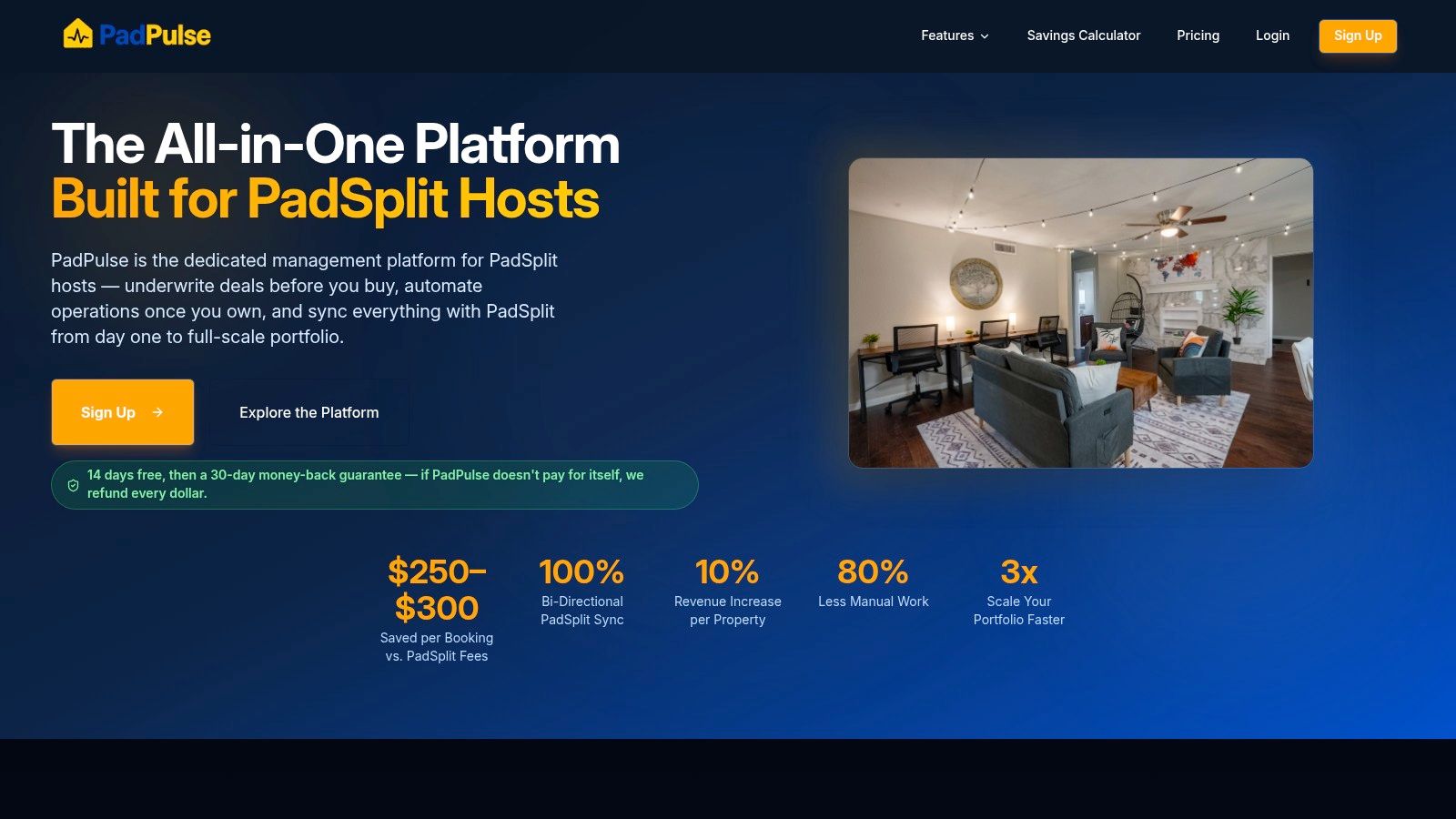
PadPulse is the most directly aligned option for operators who rent individual rooms through PadSplit or run co-living homes with similar workflows. It's designed as an all-in-one property management platform, combining native, bi-directional PadSplit synchronization with planned dynamic pricing, AI-assisted messaging, operational workflows, and smart-home integrations.
That native connection matters. A room-by-room operator shouldn't have to re-enter rooms, rates, members, or messages across separate systems. PadPulse's planned workflow is intended to keep those records synchronized while giving operators one place to manage underwriting, launch preparation, communications, vendors, financial reporting, and portfolio performance. Its dynamic pricing strategy guide explains the operating concept behind automated repricing.
Why it fits room-by-room rentals
PadPulse's product scope reaches beyond rate recommendations. Planned and available workflows include market research and underwriting with shareable PDF exports, launch checklists, furnishing trackers, a unified inbox for SMS and PadSplit Messenger, vendor threads, Stripe payouts, live P&L reporting, portfolio analytics, and a “Daily Pulse” briefing.
Smart-home add-ons are particularly relevant to shared housing. Keyless locks can support controlled access, while HVAC monitoring can help operators track property conditions and utilities. Those integrations make the platform more operationally specific than a standalone nightly-pricing calculator.
PadPulse publishes commercial claims on its website, including savings of $250 to $300 per booking compared with PadSplit fees, a typical approximately 10% revenue lift per property, and up to 80% less manual work. Those figures are company-published claims, not independent benchmarks. The site also shares founder proof points, including Travis S.’s reported growth from 3 to 15 properties, reaching 181 rooms and approximately 91% stabilized occupancy.
Best fit: PadSplit hosts and co-living operators who want pricing, messaging, reporting, and property operations in one room-by-room workflow.
Trade-offs and rollout status
PadPulse offers a free Research tier, an optional $29 per month unlimited Buy Box search, a Host plan at $49 per month for one property with up to 10 rooms after a 30-day free trial, Growth at $10 per room per month billed annually, and Professional at $15 per room per month billed annually. Enterprise and manager tiers are quote-based. Smart locks, HVAC monitoring, and a managed option are add-ons, with the managed service listed as starting at $350 per home per month and available July 1, 2026.
The platform offers a 14-day free trial and a 30-day money-back guarantee if it doesn't pay for itself. However, PadPulse is rolling out in stages through 2026, and some advanced capabilities and managed services are scheduled for later launch. That makes timing, beta access, and feature availability essential questions before adoption.
2. PriceLabs
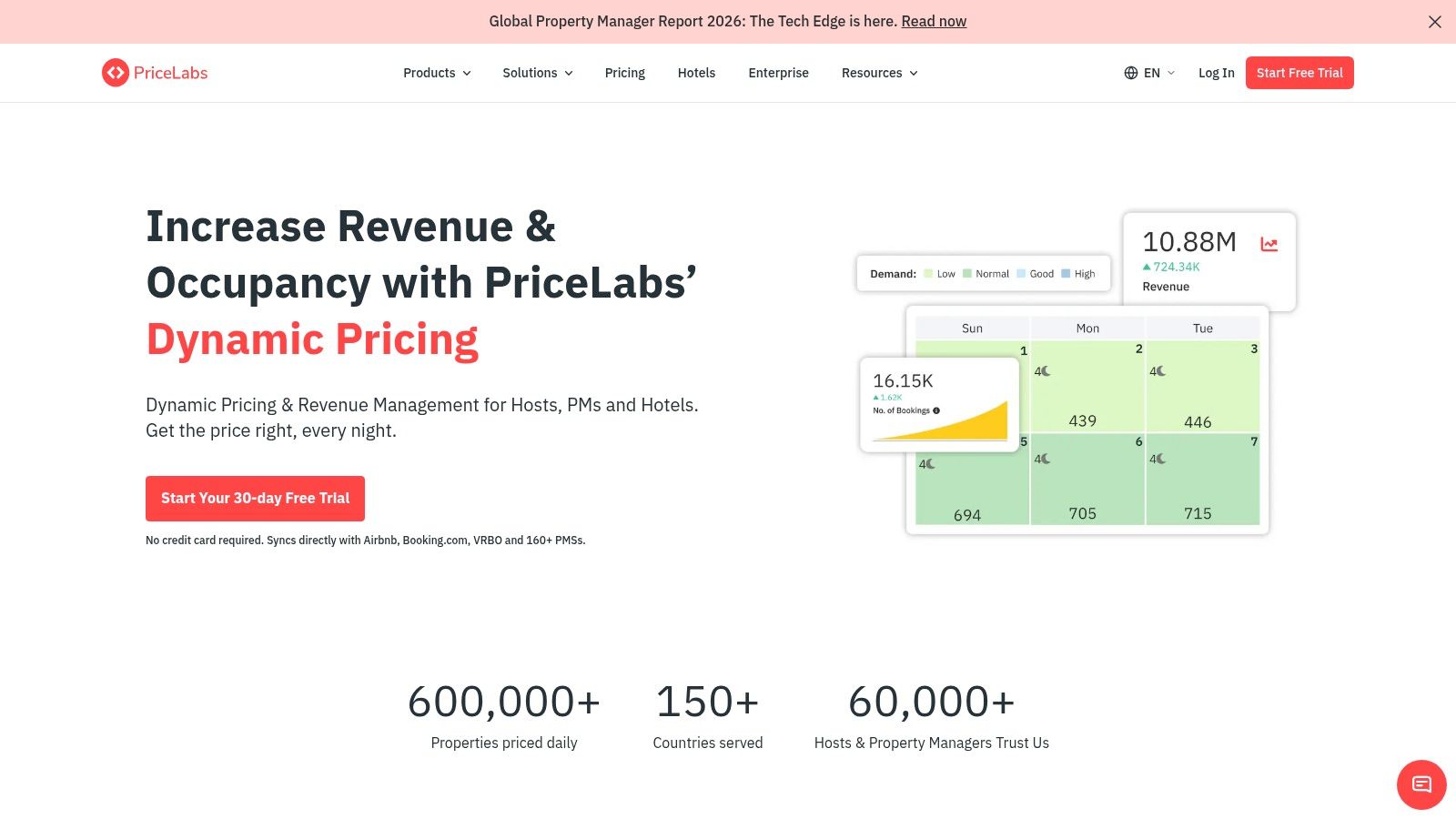
PriceLabs is a strong choice for short-term and mid-term rental operators who want a dedicated pricing engine rather than a full property-management suite. It updates rates daily using market conditions and listing performance, then gives the operator detailed control over how those recommendations behave.
That flexibility is useful for room-by-room rentals with varied stay patterns. An operator might want different minimum stays for a room with high demand, a softer floor for a vacancy that has lingered, or length-of-stay adjustments that make a longer booking more attractive. PriceLabs supports rules for last-minute pricing, seasonal changes, and length-of-stay strategy, including approaches relevant to weekly or 30-plus-day rentals.
Where it stands out
The platform overlays market and competitor information on the pricing workflow, while portfolio-level configuration lets operators standardize rules across multiple listings. It's a practical middle ground for hosts who have outgrown spreadsheets but don't want an enterprise revenue system.
PriceLabs also offers a 30-day free trial, which gives an operator time to test whether recommendations suit the local market and the portfolio's booking patterns. The subscription is priced per listing, and exact rates vary by region and listing count, so the total cost should be assessed against the number of rooms and the amount of manual work being replaced.
Its principal drawback is the learning curve. Granular controls create room for a better fit, but they also require setup, review, and tuning. New users should establish clear pricing floors, ceilings, minimum stays, and override rules before enabling broad automation. The guide to how dynamic pricing works provides useful plain-English context for that process.
PriceLabs makes the most sense when the operator wants control over the rules and is willing to spend time configuring them.
3. Wheelhouse
Wheelhouse suits short-term and mid-term rental operators who want pricing recommendations with visible methodology and flexible billing. Its appeal isn't only automation. It also gives portfolio operators tools for dynamic minimums, overrides, and multi-listing changes, which can reduce repetitive work once pricing policies are standardized.
The platform increasingly uses booking behavior alongside market information to shape recommendations. Its plans, including Pro Flex and Pro Flat, bundle market and comparable-set intelligence with a longer forward-looking planning window. The available plan structure supports operators who want to look beyond immediate occupancy and coordinate pricing across a broader calendar.
Good for transparent portfolio control
Wheelhouse's portfolio page is important for room-by-room operators because a shared-housing portfolio rarely behaves as one uniform asset. Rooms may differ by size, furnishing, bathroom access, location within the home, or demand profile. Centralized controls can help an operator apply a consistent baseline while preserving room-level overrides.
The platform also documents how recommendations are built. That transparency helps operators explain why a rate moved, investigate an unexpected recommendation, and decide whether to accept or override it. An explainable workflow is especially valuable when a manager must justify pricing decisions to an owner or team member.
The trade-off is complexity. Advanced controls can feel overwhelming before the operator establishes repeatable workflows. Billing also depends on the selected plan and portfolio size, so buyers should compare the pricing model with the number of listings, the desired look-ahead period, and the amount of oversight required. The discussion of fixed pricing versus dynamic pricing offers a useful starting point for deciding whether that flexibility is necessary.
4. Beyond
Beyond, formerly Beyond Pricing, is a mature dynamic pricing suite for short-term rentals. Its strongest use case is nightly and weekly pricing across connected channels, particularly for operators who want rates to respond to booking activity without repeatedly adjusting calendars by hand.
The platform provides daily rate recommendations, a calendar view, and explanations of the factors behind each suggested price. Its Dynamic Syncing capability reacts to real booking activity across channels, which can help keep pricing aligned as availability changes. That distinction matters in active short-term rental markets, where a new reservation can alter the value of the remaining inventory.
Validate longer stays before buying
Beyond can support length-of-stay pricing through certain PMS integrations, and monthly pricing is available for some integrations, including Escapia and Track. That doesn't mean every channel or PMS will handle 28- or 30-plus-day bookings in the same way. A room-by-room operator should test the exact booking path, rate publication behavior, minimum-stay logic, and calendar synchronization before committing.
Beyond differs from a PadSplit-native platform. It's built around short-term rental distribution and channel behavior, while a co-living operator may care more about member turnover, room-level occupancy, messaging, access control, and longer stays. Beyond can still be useful when the inventory is nightly or weekly, but its fit weakens when the operating model depends on residential-style occupancy.
Plan types and billing models vary, and current details should be confirmed with the vendor. The main advantage is strong automation and channel syncing. The main risk is assuming that short-term rental functionality automatically covers room-by-room leasing requirements.
5. RealPage AI Revenue Management
RealPage AI Revenue Management, or AIRM, is aimed at enterprise multifamily operators rather than individual hosts. It's relevant to large co-living organizations that need centralized rent-setting workflows across properties, asset classes, and market cycles.
AIRM evolved from YieldStar and is designed to support new leases and renewals. That makes it structurally different from tools focused on nightly bookings. A multifamily revenue system must help teams coordinate asking rents, renewal decisions, occupancy objectives, rent growth, and leasing priorities across a substantial operating platform.
Scale comes with governance requirements
RealPage connects revenue management with its broader analytics and property-management ecosystem. For operators already using that environment, integration can be more valuable than a standalone pricing tool. Portfolio-level strategy controls can also help balance occupancy, rent growth, and marketing or leasing focus instead of optimizing one room in isolation.
However, AIRM is enterprise, quote-based software and is typically implemented as part of the RealPage ecosystem. That brings implementation and change-management requirements that would be disproportionate for a small PadSplit host.
Legal and policy scrutiny also belongs in the buying conversation. Coverage of algorithmic pricing has focused on systems that use personal data and on whether pricing decisions can be explained and audited. New York's Algorithmic Pricing Disclosure Act took effect in 2025, while California's AB 325 restricts common pricing algorithms and Maryland moved to prohibit personalized pricing in grocery retail, as summarized by Loeb's regulatory analysis. Buyers should ask how AIRM records inputs, approvals, overrides, and price changes.
6. Yardi Revenue IQ
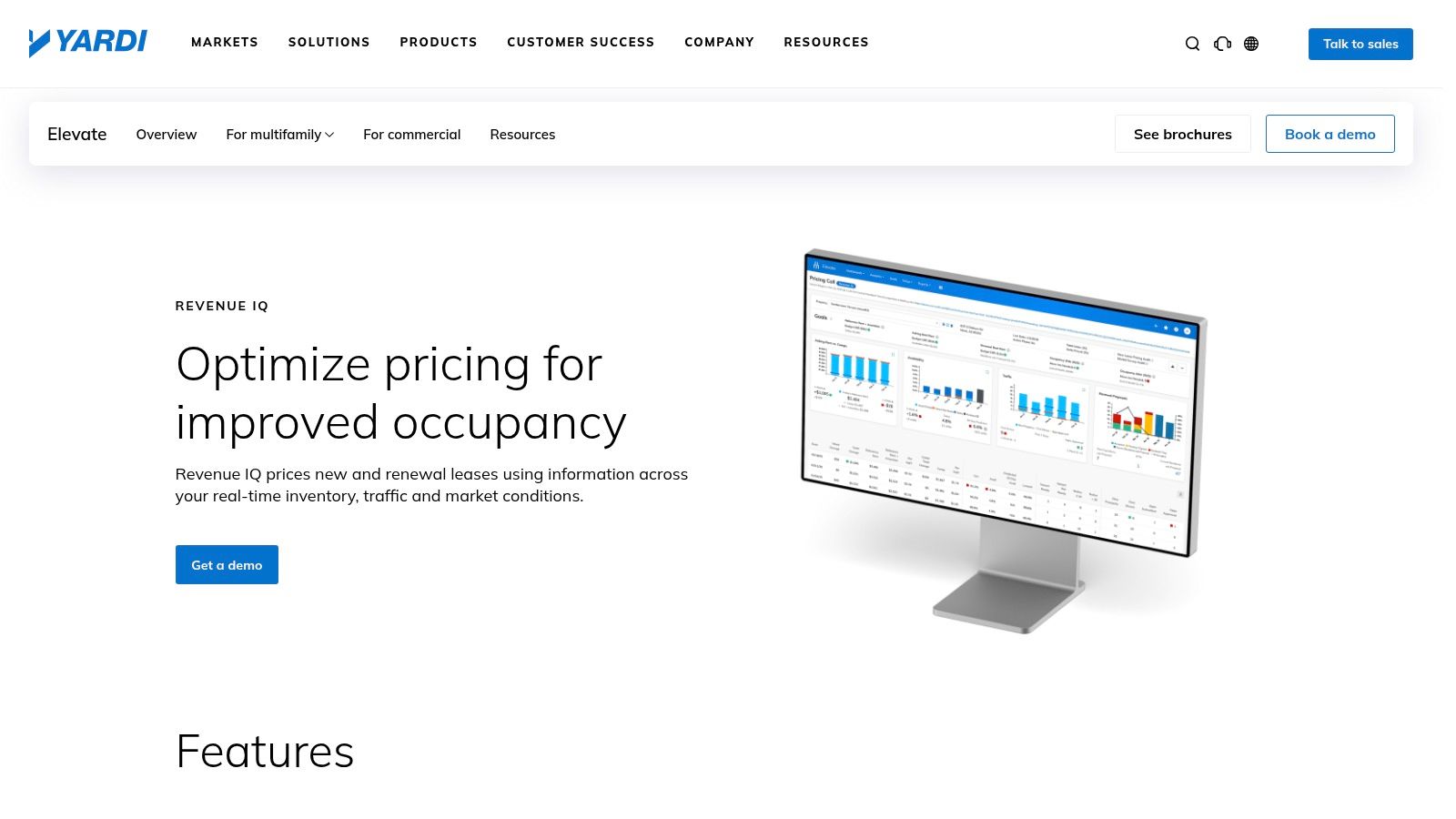
Yardi Revenue IQ is a logical candidate for professional multifamily operators already standardized on Yardi Voyager or RentCafe. Its value comes from vendor consolidation. Instead of adding a separate pricing platform and building another integration layer, a Yardi customer can keep revenue workflows within the broader property-management, marketing, and resident ecosystem.
The module supports centralized pricing strategies, analytics, and guardrails aligned with occupancy and revenue goals. That structure is more suitable for organizations with formal revenue-management processes than for a landlord managing a few shared homes.
Best for a Yardi-centered operation
Revenue IQ's strongest advantage is native alignment with the rest of the Yardi stack. Centralized strategies can help an organization establish consistent guardrails while allowing teams to manage differences between properties, unit types, and leasing conditions. Vendor-supported documentation and best practices can also reduce the burden of designing a revenue workflow from scratch.
The cost is implementation overhead. Enterprise software usually requires data mapping, role definition, training, testing, and change management. Public user discussion has also described some rollouts as bumpy, so buyers should vet implementation timelines, support ownership, escalation procedures, and reporting before signing.
For room-by-room housing, the key question is whether the system models individual rooms and stay-length behavior in the required way, rather than treating the property as a conventional apartment community. A Yardi-standardized co-living company may accept that complexity for portfolio scale. A smaller PadSplit operator probably won't.
Audit question: Ask to see how the system records the reason for each price change, the applicable guardrail, and the person or workflow that approved an override.
7. RentVision Revenue Management
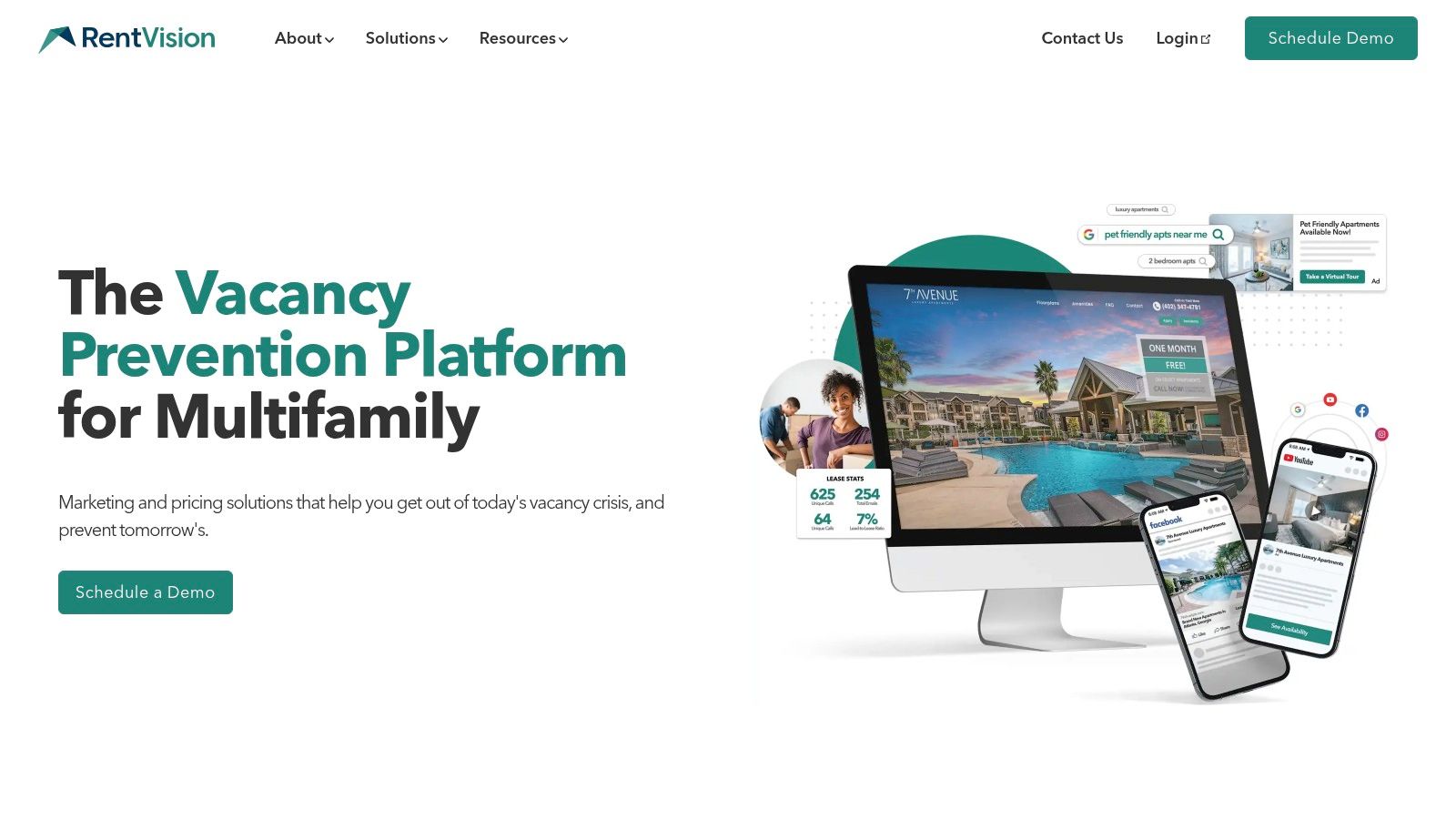
RentVision Revenue Management takes a different approach from systems that rely mainly on competitor supply. Its pricing engine uses demand signals such as web traffic to help set asking rents, making it potentially useful for operators who want to detect changes in leasing interest before those changes appear in competitor data.
That focus can help during lease-ups or occupancy dips. RentVision combines marketing and pricing capabilities, so the operator can connect digital demand activity with unit-level pricing decisions rather than treating marketing and revenue management as separate functions.
A lighter alternative for multifamily teams
The system breaks pricing down at the unit level, including base rent, amenity pricing, stale-unit discounts, and term-length adjustments. That level of detail can be useful for communities with differentiated units and leasing teams that need to understand which component is driving the asking rent.
RentVision is less ubiquitous than the largest multifamily incumbents, so integration depth deserves close attention. Buyers should test connections to the PMS, marketing platforms, reporting tools, and approval workflows they already use. Pricing is demo- and quote-based, and implementation varies by portfolio scope.
It may be a better fit than a large legacy platform for an operator seeking a focused demand-based system. It may be a worse fit for a room-by-room owner who needs PadSplit synchronization, member messaging, smart locks, and property-level P&L in the same workspace. The technology can be capable without matching the operating model.
Top 7 Dynamic Pricing Software Comparison
| Product | 🔄 Implementation complexity | ⚡ Resource requirements & speed | 📊 Expected outcomes | 💡 Ideal use cases | ⭐ Key advantages |
|---|---|---|---|---|---|
| PadPulse | Medium, SaaS onboarding; PadSplit-native with staged feature rollout | Low–Medium resources; heavy automation and smart‑home add-ons; fast time-to-value ⚡ | 📊 Typical ~10% revenue lift; $250–$300 saved/booking (claims); up to ~80% less manual work | PadSplit hosts and rent‑by‑room co‑living operators scaling portfolios | Native PadSplit bi‑directional sync, end‑to‑end ops, AI messaging, smart‑home integrations |
| PriceLabs | Low–Medium, simple SaaS but requires tuning and rule setup 🔄 | Low ongoing resources; daily automated repricing speeds adjustments ⚡ | 📊 Better price alignment to local demand; time saved vs manual pricing | Short‑ and mid‑term rentals; hosts who want granular rules and portfolio configs | Granular controls, flexible rules, daily market data |
| Wheelhouse | Medium, configurable portfolio controls; initial setup and standardization needed 🔄 | Medium resources; supports longer look‑ahead windows; automated workflows ⚡ | 📊 Consistent revenue optimization; transparent recommendations over time | Operators wanting data transparency and multi‑listing controls | Flexible billing models, transparent methodology, long look‑ahead |
| Beyond (formerly Beyond Pricing) | Low, mature product with straightforward onboarding; verify long‑stay support per PMS 🔄 | Low resources; dynamic channel syncing reacts to bookings quickly ⚡ | 📊 Strong automation reduces manual oversight; clear price explanations | Nightly/weekly STVRs; hosts relying on channel sync and clarity | Dynamic Syncing, clear UX for recommendations, strong channel automation |
| RealPage AI Revenue Management (AIRM) | High, enterprise implementation, change management, integration with RealPage | High resources and IT involvement; built for centralized, large‑scale ops ⚡ | 📊 Portfolio-level rent/renewal optimization; integrated analytics for leasing strategy | Large multifamily or co‑living firms wanting centralized, data‑driven rent setting | Deep rental data platform, portfolio controls, RealPage ecosystem integration |
| Yardi Revenue IQ | High, enterprise rollout with Yardi integration and implementation overhead 🔄 | High resources; vendor-supported but rollouts can require heavy change management ⚡ | 📊 Optimizes revenue/occupancy with native Yardi workflows and guardrails | Operators standardized on Yardi seeking consolidated vendor stack | Seamless Yardi integration, supported revenue‑management best practices |
| RentVision Revenue Management | Medium, demo/quote onboarding; integration depth varies 🔄 | Medium resources; lighter‑weight than legacy systems; leverages digital demand signals ⚡ | 📊 Early detection of demand shifts; documented rent lifts and occupancy stability | Portfolios needing demand‑based pricing and marketing integration during lease‑ups | Demand‑based engine, unit‑level breakdowns, integrated marketing + pricing |
Choose the Engine That Matches Your Operations
The best dynamic pricing software isn't the platform with the longest feature list. It's the one that matches the way inventory is leased, the way data enters the business, and the amount of control an operator can realistically maintain.
For a PadSplit-focused operator, PadPulse is the most direct fit. Its planned combination of native synchronization, automated repricing, AI-assisted messaging, P&L visibility, portfolio analytics, and smart-home workflows addresses the full room-by-room operating cycle. That recommendation comes with an important qualification: PadPulse is in staged rollout through 2026, so buyers should confirm which features are available, which are in beta, and which are scheduled for later release.
PriceLabs, Wheelhouse, and Beyond are stronger starting points for short-term and mid-term rental pricing workflows. PriceLabs suits operators who want granular rules. Wheelhouse is attractive when recommendation transparency and flexible portfolio controls matter. Beyond is a good match for nightly and weekly inventory that needs strong channel syncing, but its long-stay support should be validated for the exact PMS and channel combination.
RealPage AIRM, Yardi Revenue IQ, and RentVision belong on the shortlist for larger multifamily or enterprise environments. They can support centralized strategy, formal leasing workflows, and broader PMS ecosystems, but they also bring more implementation effort, governance, and organizational change. A 100-room co-living organization may need that structure, while a small landlord may find it slows rather than improves operations.
Use this final buying checklist:
- Confirm stay-length support: Test nightly, weekly, monthly, and room-by-room booking behavior where relevant.
- Test integrations: Verify PMS, channel, PadSplit, messaging, payment, and smart-lock connections before signing.
- Define guardrails: Set occupancy, revenue, minimum-price, maximum-price, and override rules.
- Compare cost models: Evaluate per-listing or per-room pricing against quote-based enterprise contracts.
- Assess oversight: Determine how much manual tuning, approval, and monitoring the system requires.
- Validate reporting: Review P&L, portfolio, audit, and price-change reporting with real operating scenarios.
PadPulse's product overview is a natural next step for operators who want a PadSplit-native workflow, while specialized pricing tools remain sensible for channel-led short-term rental businesses. The best system is the one an operator can integrate, monitor, understand, and use consistently.
PadPulse brings planned dynamic repricing, PadSplit synchronization, messaging workflows, P&L visibility, portfolio analytics, and smart-home integrations into one platform for room-by-room operators. If that operating model matches your portfolio, visit PadPulse to review the platform and join the early-adopter interest list before launch.