Pest Control Management for Co-Living Properties
June 9, 2026
A tenant messages at 9:12 p.m. saying they saw a roach in the kitchen. By 9:30, two other residents are asking whether the whole house is infested. By morning, someone is questioning rent, someone else is threatening to leave, and your cleaner is saying the trash area was already overloaded before the weekend.
Pest control management in shared housing often faces this challenge. The pest itself is only part of the problem. The bigger issue is how fast fear, poor habits, maintenance gaps, and unclear responsibilities can turn one sighting into a house-wide disruption.
In co-living, reactive extermination usually fails because the property keeps changing. New residents move in, food storage habits vary, common areas get used heavily, and a small leak under one sink can undo a week of cleaning. If your system is just “call pest control when someone complains,” you're not managing pests. You're managing recurring emergencies.
Beyond Bug Spray A Pest Management System for Shared Housing
The most useful shift is to stop thinking about pests as a one-time treatment issue. In shared housing, it's an operating system issue.
The EPA's guidance for multi-family housing puts it plainly. Pest control requires teamwork, communication, and cooperation between residents and housing managers, which is exactly why room-by-room operators struggle when they treat pest control as a vendor-only problem. You can review that guidance in the EPA resource for housing managers.
Why co-living makes small pest issues spread fast
A single-family rental can hide bad habits longer. A co-living house usually can't.
Shared kitchens create more crumbs, more food containers, and more chances for one resident's habits to affect everyone else. Turnover raises risk because every move-in introduces new furniture, bags, routines, and cleaning standards. Private rooms add another complication. You don't always see the early warning signs until the pest has already moved into common space.
That's why good pest control management has to answer operational questions such as:
- Who reports what: Residents need one clear reporting path.
- Who inspects: Someone on your team has to own follow-up.
- Who fixes root causes: Leaks, gaps, damaged sweeps, and trash overflow need a maintenance response, not just spray.
- Who communicates next steps: Silence creates panic faster than pests do.
Practical rule: If your pest process depends on residents independently doing the right thing without reminders, documentation, or follow-up, it won't hold up in shared housing.
What works better than firefighting
The operators who handle this well run a repeatable system:
- Prevention standards for food, trash, moisture, and clutter
- Routine inspections instead of waiting for complaints
- Clear resident instructions at move-in and before treatment
- Documented vendor escalation when the problem is beyond in-house control
What doesn't work is over-focusing on chemicals. Sprays can help in the right situation, but they don't fix the reasons pests stay. If the drain is clogged, the trash lid is broken, and residents leave open food out overnight, treatment becomes a loop.
Shared housing rewards systems. The house with a simple reporting form, recurring checks, basic exclusion work, and consistent tenant messaging will usually outperform the house that spends all its energy on urgent calls.
Build Your Pest-Proof Foundation
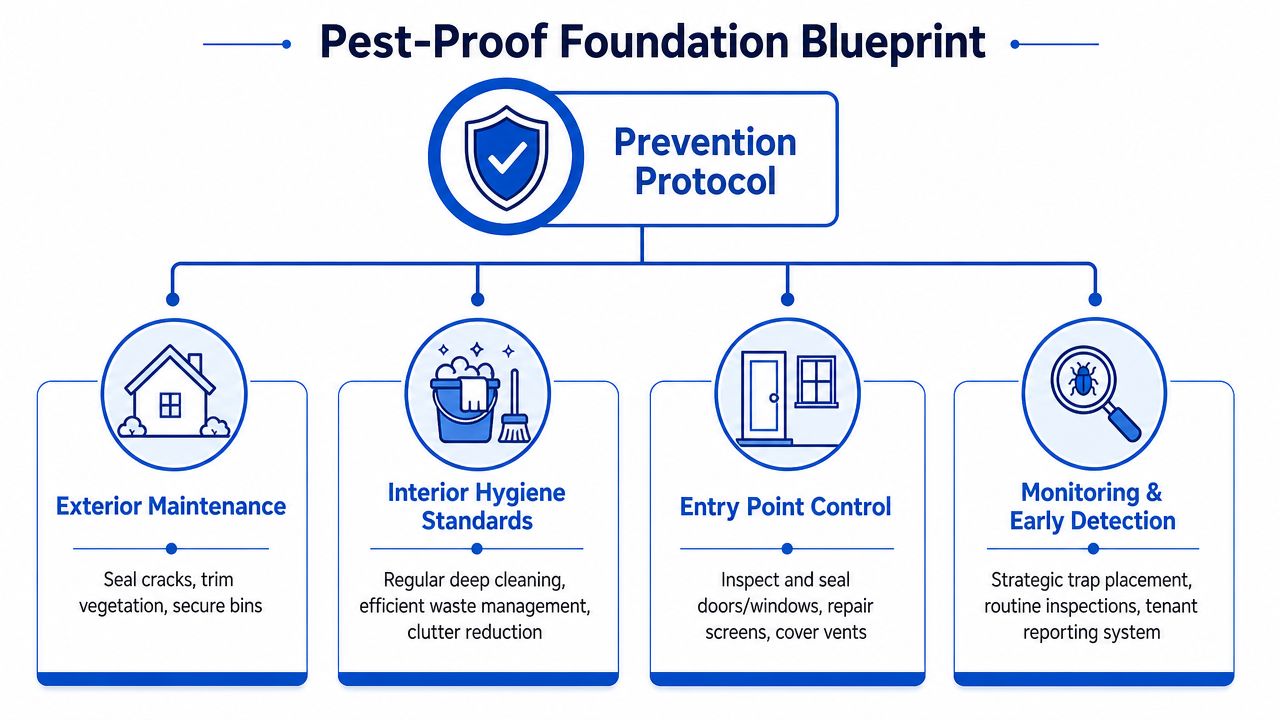
Most pest problems become expensive because the building and the rules allow them to persist. Prevention starts with property conditions and house standards that are easy to enforce.
Effective control is rooted in Integrated Pest Management, which prioritizes fixing the conditions that attract pests. Public guidance emphasizes repairing leaking pipes, clearing clogged drains, and improving food-residue cleanup before infestations expand, as outlined in the University of Nebraska-Lincoln IPM guidance.
Set house rules that remove food and shelter
“Keep it clean” is too vague. Residents need rules they can follow and staff can verify.
In shared kitchens, write standards that are visible and specific. Trash has to leave on schedule. Open food can't stay on counters. Dry goods should go into sealed containers. Sink strainers need to stay in place. Grease shouldn't go down drains. If your property uses cleaners, give them a written checklist so the standard doesn't drift between visits.
For private rooms, your lease and welcome packet should cover practical basics:
- Food storage inside rooms: Limit exposed snacks and require sealed containers where allowed.
- Trash handling: No overflowing cans and no bagged trash left in hallways.
- Clutter control: Stored items should stay off damp floors and away from walls where possible.
- Reporting leaks fast: Residents should report water under sinks, around toilets, or near windows immediately.
Seal the building before you spray the building
Exclusion work is unglamorous, but it's some of the highest-value maintenance you can do.
Use turnover walks and maintenance visits to check the obvious trouble spots:
- Doors: Add or replace door sweeps where light shows underneath.
- Pipe penetrations: Seal gaps around plumbing under sinks and behind appliances.
- Windows and screens: Repair torn screens and make sure windows close fully.
- Cabinet voids and baseboards: Close gaps where pests can hide or travel.
- Exterior edges: Check around utility entries, vents, and damaged siding.
A lot of operators miss the connection between punch-out work and pest control management. If your team is already turning rooms, that's the cheapest time to seal gaps, replace damaged caulk, and note moisture issues before a new resident moves in.
A broken sweep or an unsealed pipe gap is a standing invitation. Chemical treatment might reduce activity for a while, but the building still lets pests in.
Treat moisture like a pest source
Moisture control deserves its own lane because it's often the trigger no one sees.
Under-sink drips, AC condensation, slow drains, shower leaks, and wet mop closets all create the kind of environment pests like. In shared homes, these problems can sit for days because each resident assumes someone else already reported them.
A simple operating standard works well:
| Area | What to check | What to do |
|---|---|---|
| Kitchen | Under sink, behind fridge, drain odor, trash area | Fix leaks, clear buildup, clean residue |
| Bathrooms | Toilet base, vanity plumbing, tub edges, exhaust | Repair leaks, recaulk, improve drying |
| Laundry or utility | Hose connections, floor dampness, drain backup | Tighten connections, clear drains |
| Exterior | Gutters, downspouts, standing water near entry | Redirect water, clear blockage |
The point isn't perfection. It's removing the conditions that keep forcing repeat treatments.
Implement Your Inspection and Detection Routine
Prevention rules matter, but they don't replace scheduled eyes on the property. Good pest control management depends on catching weak signals early, before residents start escalating the issue for you.
Regular monitoring sits at the core of modern IPM. Extension guidance notes that many pests and diseases are sampled every 1–2 weeks during the main growing season, and the same prevention logic applies to housing. That discipline matters in a market where residential work accounts for about 70% of pest control revenue, as noted in Utah State University Extension's pest management guidance.
Build a realistic inspection rhythm
You don't need to inspect every room every week. You do need a schedule that matches risk.
For most shared homes, a practical routine looks like this:
- Common areas weekly or biweekly: Kitchens, trash zones, laundry areas, and utility spaces
- Turnover inspections every vacancy: This is when hidden issues show up
- Private room checks during scheduled maintenance or permitted inspections: Focus on visible risk factors, not intrusive searches
- Exterior walkarounds on a recurring calendar: Look for bin overflow, damaged screens, standing water, and access points
The key is consistency. If inspections only happen after a complaint, your records will always lag the problem.
If you already run recurring operational audits, it helps to fold pest checks into the same workflow. A strong set of property management checklists keeps pest tasks from becoming “someone should probably look at that.”
Know what early signs actually look like
Beginners often wait for a live pest sighting. That's too late.
Train staff and vendors to look for:
- Droppings: In cabinet corners, near appliances, along walls, behind bins
- Smears and rub marks: Especially near baseboards or repeated travel paths
- Gnawing or damaged packaging: Common in pantries and storage areas
- Egg cases, shed skins, or nesting material: Easy to miss during rushed cleaning
- Odor changes: Musty, oily, or foul smells in enclosed spaces
- Resident behavior clues: Repeated mention of “bugs near the sink” or “something in the wall” usually deserves a documented follow-up
A clean-looking kitchen can still have a problem behind the stove or under the lowest cabinet shelf. Pulling out appliances during deep checks often reveals what surface cleaning hides.
Document like you may need to prove it later
Memory is not a system. Notes are.
Use the same fields every time:
- Date and unit or area
- What was observed
- Photo evidence
- Likely contributing condition
- Action taken
- Who owns the next step
- Follow-up date
That record does two jobs. It helps you spot patterns across houses, and it shows due diligence if a resident disputes timing or responsibility.
The best inspection routine is boring. Boring means it's repeatable, logged, and not dependent on one staff member remembering everything.
Master Tenant Communication for Pest Control
Shared housing breaks down when residents feel blamed, uninformed, or ignored. Most pest control management failures I've seen weren't caused by a lack of treatment. They were caused by unclear communication.
Residents need to know what normal prevention looks like, how to report a problem, and what's expected before and after treatment. If you only communicate once the vendor is already on-site, you've waited too long.
Use the move-in moment to set the tone
The move-in packet should treat pest prevention as a house standard, not a fine-print warning.
A simple version works:
“Please store food in sealed containers, remove trash regularly, report leaks quickly, and report any pest sighting through the maintenance form. Early reporting helps us address issues faster and protects everyone in the home.”
That short message matters because it does three things at once. It defines expected behavior. It gives residents a reporting path. It makes early reporting feel responsible instead of embarrassing.
Add pest language to the house rules and resident handbook, especially around kitchens, room food storage, cleaning expectations, access for inspections, and treatment prep compliance.
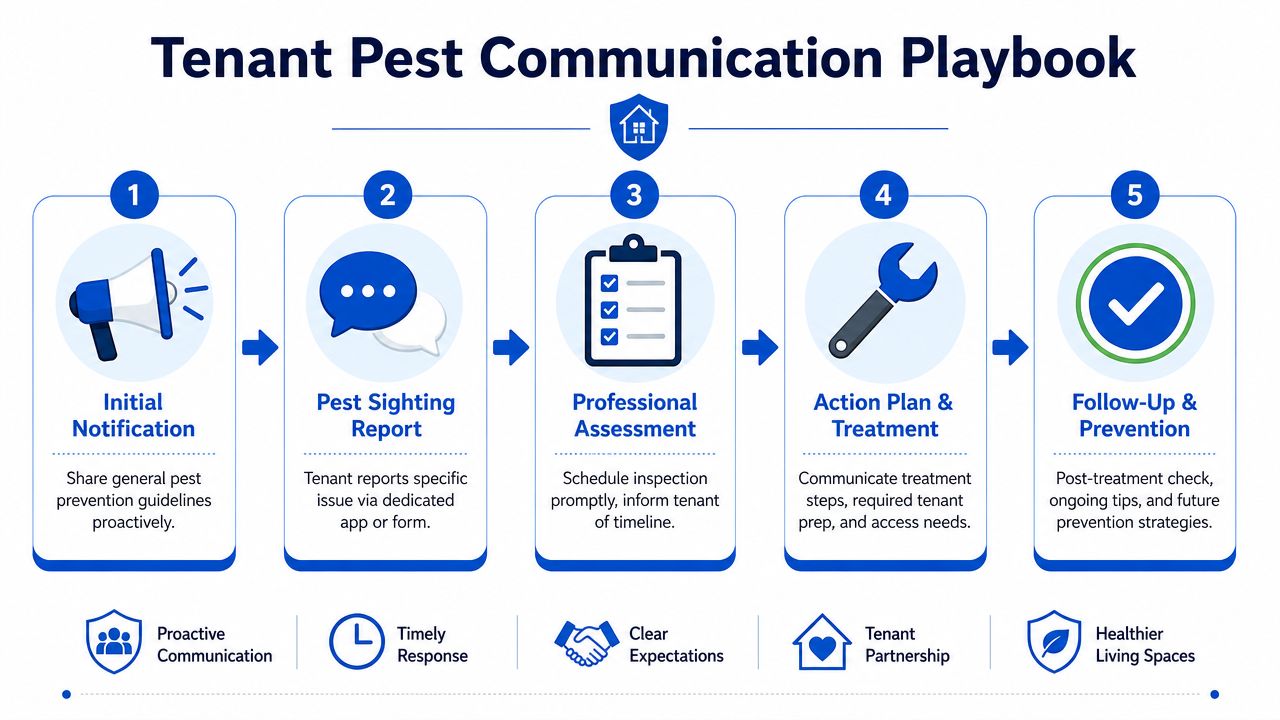
Send proactive notices before residents start guessing
A house manager should never assume tenants know what an inspection means. Silence creates rumors.
Use short announcements for recurring checks or seasonal reminders. For example:
- Inspection notice: “We'll be conducting a routine common-area pest inspection on Thursday. Please keep counters clear and remove any perishable food from shared shelves that's no longer in use.”
- Weather or season reminder: “Warmer weather usually increases pest activity. Please double-check food storage, take trash out on schedule, and report any moisture issues.”
- Maintenance-linked notice: “We're repairing a leak under the kitchen sink. Moisture control is part of our pest prevention process, so please keep that cabinet empty until maintenance closes the ticket.”
These messages work because they connect behavior to a clear reason. Residents cooperate more when they understand the purpose.
Make reporting easy and blame-free
If the reporting process feels confrontational, people delay it.
Don't ask residents to prove an infestation. Ask them to report what they noticed. A good resident form might request:
- Where the issue was seen
- When it was seen
- Whether it has happened more than once
- A photo if available
- Whether there are related issues such as leaks, overflowing trash, or damaged screens
Avoid language that sounds accusatory. “Report any signs of pests immediately” works better than “Tenants must avoid causing infestations.”
Residents report faster when they believe you'll respond with a plan, not with blame.
Give treatment instructions that leave little room for confusion
Treatment prep is where communication often falls apart. Residents get a vague notice, do half the prep, then the vendor can't treat properly.
Use a checklist format. Keep it plain. Specify deadlines.
For example:
| Scenario | Resident instruction |
|---|---|
| Kitchen treatment | Empty the cabinet under the sink, clear countertops, and store food in sealed containers before arrival |
| Room access needed | Make sure floors and baseboards are accessible and pets are secured if applicable |
| Follow-up visit | Don't remove monitoring devices or traps unless management instructs you to |
| Post-treatment sanitation | Follow the cleaning instructions provided after service, especially around treated areas |
After service, close the loop. Tell residents what happened, whether follow-up is scheduled, and what prevention step matters most now. That final message is what keeps one treatment from turning into ongoing house anxiety.
When and How to Call Pest Control Professionals
Some issues are management problems. Others are professional pest control problems. Knowing the difference saves time, protects residents, and prevents repeated half-measures.
The U.S. pest control industry is projected to reach $29.7 billion in 2026, with 34,076 businesses operating in the market, according to IBISWorld's pest control industry report. That large field gives operators plenty of options, but it also means vetting matters.
Escalate sooner for certain categories
A few pest scenarios shouldn't sit in a “let's watch it for a while” bucket.
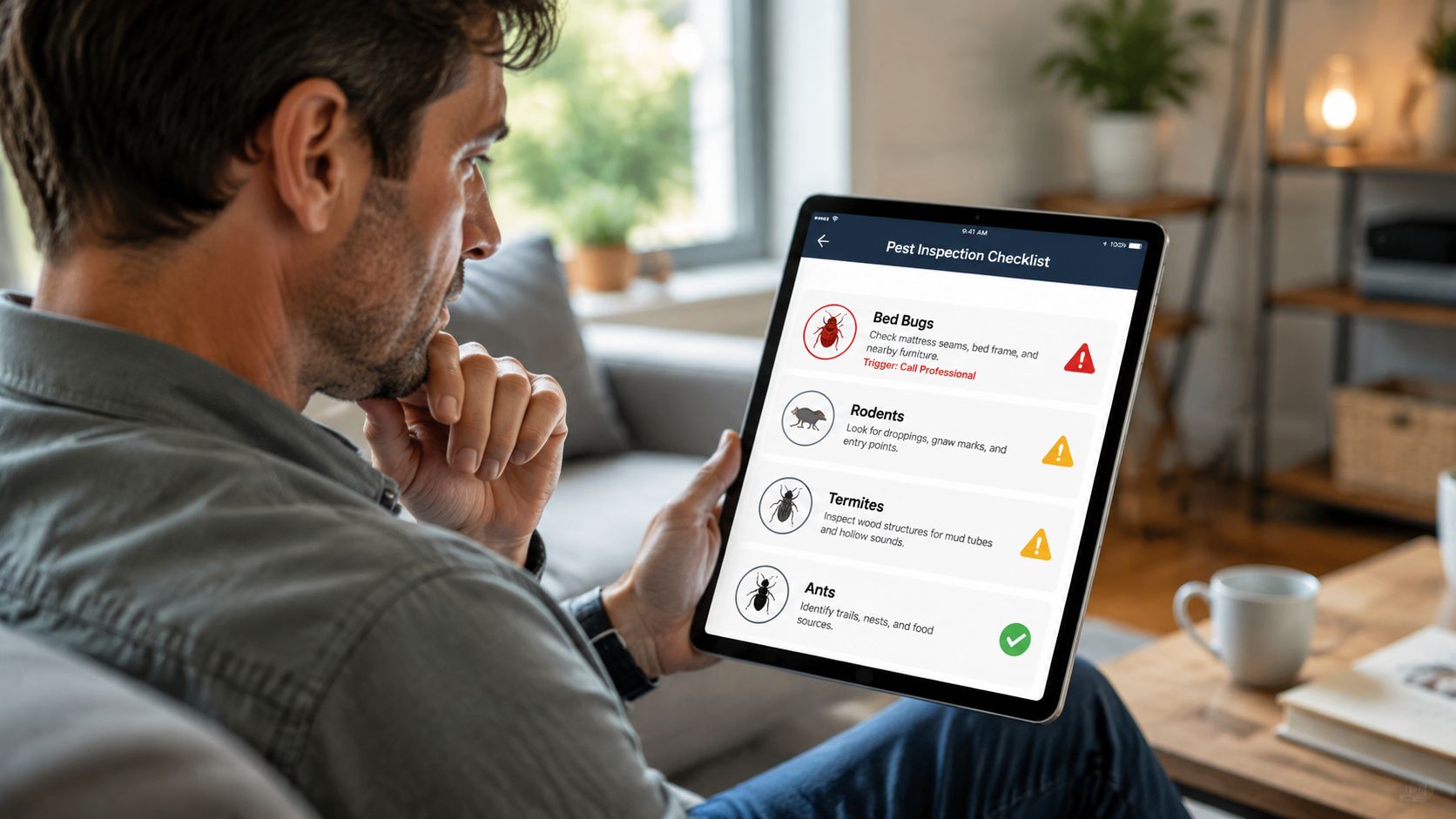
Call a licensed professional quickly when:
- You suspect bed bugs
- You suspect termites or other structural wood-damaging pests
- Rodent or roach activity keeps returning after your basic sanitation and exclusion response
- The problem appears in multiple rooms or both private and common areas
- Residents are reporting repeated sightings across a short window
- You need treatment records for compliance, owner reporting, or risk management
The costliest mistake is usually delay. By the time multiple residents are comparing notes, the problem has often outgrown DIY fixes.
Vet vendors like operating partners
Don't hire based on speed alone. Hire based on process.
Ask direct questions:
- Are you licensed and insured for this work in this market?
- Do you inspect for root causes, or do you only provide treatment?
- What prep will residents need to complete?
- How do you document findings and follow-up?
- Do you work from an IPM approach, including sanitation, exclusion, and monitoring?
- Can you handle multi-unit or room-by-room coordination?
If you manage multiple homes, it helps to keep approved providers in one place so staff aren't scrambling during an active issue. A centralized vendor marketplace for property operations makes that easier to standardize.
This walkthrough is useful if you're reviewing how inspection workflows typically fit into a professional service relationship:
One-off calls versus recurring service
A one-off service can solve a specific event. A recurring relationship usually works better when you run multiple shared homes, have frequent turnover, or need predictable inspection coverage.
The right choice depends on your portfolio, your staff capacity, and how often your buildings produce repeat risk factors. The important part is this: the vendor should fit your operating model, not force you into theirs.
Automate Your Workflow with Property Management Tools
A pest playbook only works if your team can run it the same way every time. That's where software changes the day-to-day reality.
Without a system, pest control management turns into scattered texts, resident screenshots, vendor voicemails, and maintenance notes in three different places. Important details get lost. Follow-ups slip. Residents receive inconsistent instructions depending on who answered first.

Turn repeat tasks into repeatable workflows
The strongest setup is simple. Every pest-related event should enter one workflow, not five side conversations.
That usually means:
- One intake channel: Residents submit pest reports through a maintenance request or resident portal
- One task owner: A staff member is assigned to inspect, respond, or escalate
- One record: Photos, notes, vendor updates, and resident communication live in the same thread
- One follow-up trigger: The system reminds staff to verify closure and recheck the area
Automation helps most with the boring work that people forget. Inspection reminders, move-in messages, prep notices, and follow-up checks are all easy to standardize once the process is clear.
Use software to support consistency, not complexity
A lot of operators overbuild this. They create complicated SOPs no one follows. Better to keep the workflow lean:
- Resident reports issue
- Staff triages and logs conditions
- Maintenance fixes root-cause items if present
- Vendor is assigned if escalation is needed
- Resident receives prep instructions
- Follow-up inspection closes the loop
If you're evaluating platforms, it helps to understand the broader role of property management software for operators. The best tools don't just store tickets. They help you standardize communication, create accountability, and keep recurring operational work from becoming reactive chaos.
A pest issue feels expensive when you manage it three times. It feels manageable when the first report automatically starts the right checklist, message, and follow-up sequence.
The biggest gain isn't flashy technology. It's operational discipline. When your inspection dates are scheduled, your resident notices are templated, your tickets are documented, and your vendors are tracked in one place, pest control becomes a routine process instead of a recurring disruption.
PadPulse is building tools for co-living operators who need that kind of operational control. If you want one place to manage room-by-room workflows, resident communication, and vendor coordination, join the interest list at PadPulse.