10 AI Property Management Tools for Co-Living in 2026
July 6, 2026
If you're running co-living homes or PadSplit rooms, you already know where the day goes. A lead comes in while you're checking a turn. A current member texts about a lock code. A cleaner needs approval. A vendor wants payment status. Then you open three spreadsheets just to figure out whether the house is performing the way it feels like it should.
That's why AI property management tools have become worth a serious look. In a room-by-room rental business, the pain isn't just leasing. It's constant communication, fragmented systems, pricing rooms correctly, coordinating access, and keeping each house operational without turning yourself into a round-the-clock dispatcher.
Most roundups lump co-living in with traditional multifamily. That's not how this business works. A shared home has more resident touchpoints, more frequent turns, more small operational handoffs, and more ways for profit to leak through missed follow-up or sloppy coordination.
The tools below are the ones I'd pay attention to if I were running a room-by-room portfolio today. Some are true all-in-one systems. Some are narrow but useful overlays. A few are better for larger multifamily teams than small operators, but they still matter because they show where AI property management tools are heading.
This guide gets to the point fast. It focuses on what helps most in a co-living environment, where the trade-offs are, and which tools are best suited for PadSplit hosts who need tighter control over pricing, messaging, and day-to-day operations.
1. PadPulse
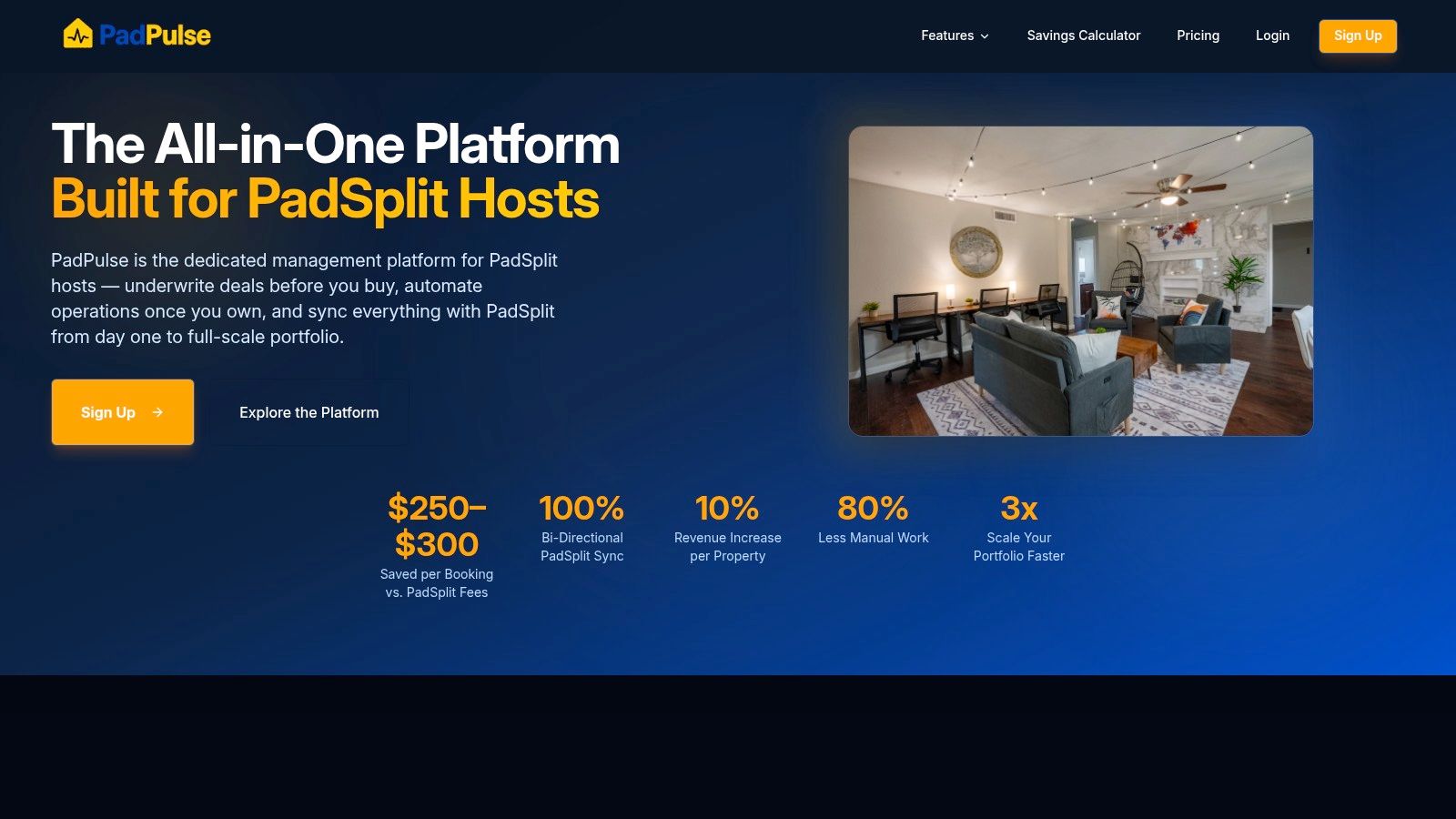
PadPulse stands out because it isn't trying to retrofit a generic apartment workflow onto co-living. It's being built specifically for PadSplit hosts and room-by-room operators, which matters more than most software buyers realize. A shared-housing operator needs room-level pricing, member messaging, turn coordination, vendor management, and access control to work together. That's different from managing one lease per unit.
The platform is designed to centralize underwriting, listings, messaging, vendor operations, smart-device control, and portfolio financials in one place. For PadSplit hosts, the biggest draw is native bi-directional PadSplit sync for rooms, rates, members, and messages. That solves one of the most annoying problems in this niche, which is re-entering the same information across separate systems.
If you want a broader view of how automation is changing this space, PadPulse also publishes a useful overview of artificial intelligence in property management.
Why it fits co-living better than generic PMS tools
Most multifamily platforms handle leasing and accounting well enough, but they start to feel clumsy in a room-by-room model. PadPulse is aimed at the workflows that actually eat your time:
- Room-level operations: It tracks the room, not just the property.
- Unified communication: It brings together SMS, PadSplit Messenger, and internal threads.
- Operational automation: It includes AI-powered messaging workflows, vendor coordination, and dynamic pricing.
- Smart-home control: It connects with keyless locks and smart thermostats, which is especially useful when multiple members share a home.
Practical rule: For PadSplit hosts, software only matters if it reduces re-keying, missed messages, and vacancy lag. Everything else is secondary.
PadPulse is also unusually transparent about who it's for. If you run PadSplit properties or rent-by-the-room homes and want one operating layer for deal analysis, revenue management, and daily execution, it's directly in the strike zone. If you manage conventional apartments with longer leases and simpler turnover patterns, it's probably more specialized than you need.
What to watch before you commit
The trade-off is that PadPulse is still in development, with a Winter 2026 launch window for the full platform. Early access is through an interest list and limited beta. That's appealing if you like getting in early and shaping product direction. It's less appealing if you need every promised feature live right now.
Its pricing structure is also clearly staged for growth, from a free Research tier to Host, Growth, Professional, and enterprise plans, plus add-ons for vendors, devices, and a managed option. That makes sense for operators moving from a few homes into a larger portfolio.
The short version is simple. If you're a PadSplit host, this is the most relevant product on the list because it was built around your operating model, not adapted to it later. If you're not in that niche, the specialization becomes less compelling.
2. AppFolio Property Manager
AppFolio is one of the better-known all-in-one property management platforms, and its AI direction follows that same model. Instead of asking operators to bolt on separate tools for lead handling and workflow automation, it brings AI features into the platform through products like AI Leasing Assistant and Realm-X.
That matters if you're tired of vendor sprawl. In practice, one of the biggest hidden costs in property operations isn't the subscription itself. It's the friction between disconnected systems. AppFolio's pitch is straightforward. Keep leasing, maintenance, accounting, CRM, and AI-assisted workflows inside one stack.
For teams struggling with inquiry response time, follow-up automation is often where the fastest operational gains show up, and AppFolio clearly leans into that side of the workflow.
Where AppFolio works well
AppFolio is strongest for operators who want broad coverage, not just one AI feature. Its stack includes online leasing, digital workflows, maintenance handling, accounting, analytics, and a marketplace of integrations. The mobile-first approach is also helpful for field teams that don't sit at desks all day.
For co-living operators, the upside is simplicity. If your portfolio includes a mix of room-by-room homes and more traditional rentals, AppFolio can act as a stable back-office layer while AI tools assist with lead response and routine communication.
- Best fit: Operators who want one primary system of record.
- Main benefit: Less context switching between separate tools.
- Watchout: The product isn't suited for PadSplit-style workflows the way a niche platform is.
The main trade-off
AppFolio is broad, but broad software usually comes with two trade-offs. First, pricing is quote-based and tiered, so you'll need to go through sales. Second, some of the more advanced AI capabilities may sit behind higher-tier packages.
AppFolio makes the most sense when your biggest problem is fragmentation. It makes less sense when your biggest problem is room-level complexity.
If you're a beginner, AppFolio is easier to trust than many newer AI products because it's already an established platform. But if you're a small PadSplit host, it may feel like more system than you need, while still not solving every co-living-specific headache.
3. Yardi RentCafe Chat IQ
Yardi RentCafe Chat IQ is a native AI leasing assistant built into the Yardi ecosystem. If your operation already runs on Yardi, that native connection is the whole point. Chat, text, email, and voice interactions stay tied to property data instead of floating around in a separate tool.
For leasing-heavy teams, this is useful because the handoff problem is real. A bot can answer inquiries all day, but if availability, unit details, or conversation history don't flow cleanly into your actual system, staff still end up cleaning up the mess.
What co-living operators should like, and what they won't
Chat IQ handles guided conversations, criteria matching, and prospect engagement across channels. In a more traditional multifamily setting, that's a clean fit. In co-living, it depends on how much of your funnel lives inside Yardi and whether your room inventory can be represented clearly enough for the assistant to avoid confusing prospects.
The good part is data continuity. The weak point is specialization.
- Strong point: Tight integration with Yardi Voyager, CRM, and reporting tools.
- Useful for: Operators already committed to the Yardi stack.
- Less useful for: Smaller room-by-room operators who need a more purpose-built workflow.
One thing I like about native AI inside a major platform is that audit trails and reporting usually get more attention than they do with standalone chatbot vendors. That's important when you need your team to review interactions, not just automate them.
The practical verdict
Yardi RentCafe Chat IQ isn't the first tool I'd choose for a pure PadSplit portfolio. It is a serious option for larger operators who already live in Yardi and want round-the-clock leasing coverage without creating another software silo.
If you're outside the Yardi ecosystem, this is probably too much lift for too little niche payoff. If you're already inside it, Chat IQ is one of the more sensible ways to add AI to leasing operations without rebuilding your stack.
4. Entrata
Entrata takes a platform-first approach similar to AppFolio, but its AI story extends beyond lead response. With ELI+ and capabilities from Colleen AI, Entrata is aiming at lead-to-lease, collections, renewals, and workflow orchestration inside a unified operating environment.
That wider scope matters. In co-living, a lot of avoidable stress doesn't start at the top of the funnel. It starts later, when collections, renewals, and recurring resident communication become inconsistent across homes.
Where Entrata feels stronger
If your team already uses Entrata for CRM, payments, maintenance, and marketing, adding AI inside the same platform is cleaner than piecing together standalone apps. Operators with centralized teams will especially appreciate that the system is designed to support cross-channel automation from one core platform.
From a practical standpoint, I see Entrata as more of an operational scale tool than a scrappy host tool. It can cover a lot of ground, and that's useful when your process has gotten too big for manual coordination.
The more properties you add, the less you can afford separate systems for leasing, collections, and renewals that don't talk to each other.
Where smaller operators may hit friction
There are two obvious catches. Migration and integration can take real effort, and enterprise-grade capability can become overhead if you're only managing a small handful of room-by-room houses.
For a beginner, that's easy to underestimate. Good software doesn't just need features. It needs to match the complexity of your current business.
- Best for: Mid-sized to large operators who want broad automation in one platform.
- Good sign: You already use Entrata or are standardizing on it.
- Warning sign: You only need better messaging and simpler room-level coordination.
Entrata is a credible AI property management tool, but it isn't niche-built for PadSplit hosts. That's the lens I'd keep in mind.
5. EliseAI
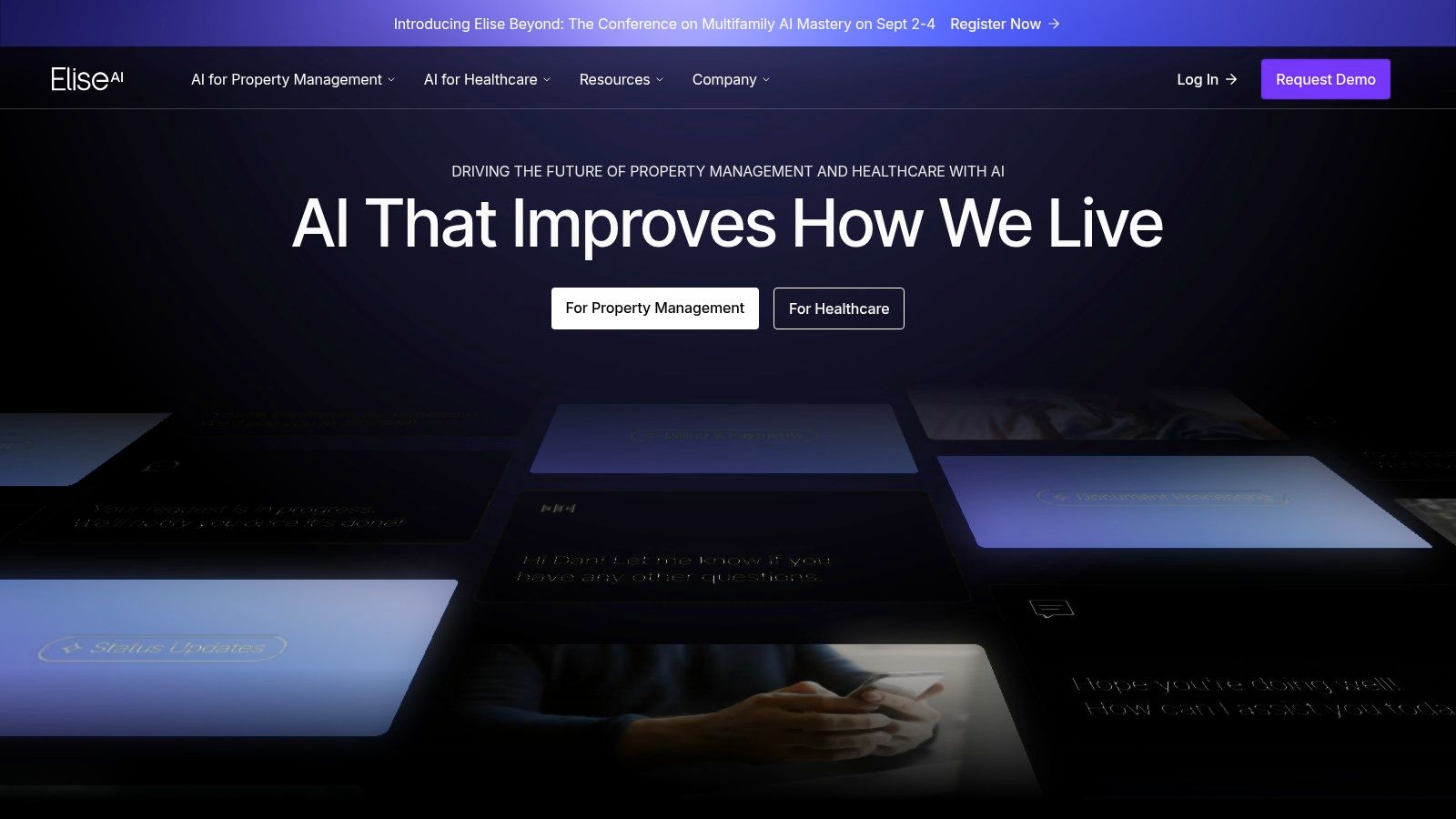
EliseAI is one of the clearer examples of a dedicated conversational AI layer for multifamily. It handles leasing conversations, tour scheduling, resident communication, delinquency workflows, renewals, and tasks like work orders and rent reminders.
That breadth is why operators keep evaluating it. If your phones go quiet after office hours and your inbox fills up overnight, a conversational AI system can absorb a lot of that load without forcing prospects and residents to wait for human office hours.
The real advantage isn't just speed
The strongest practical use case for EliseAI is consistency. Humans get busy, forget follow-ups, and answer similar questions in slightly different ways. A good conversational layer doesn't replace staff. It handles the repetitive parts predictably so your team can focus on exceptions, escalations, and relationship-heavy issues.
EliseAI also has its own CRM layer, which is a plus for operators who want leasing and resident interactions centralized rather than scattered across call logs, inboxes, and text threads.
- Useful for: Tour booking, routine resident questions, rent reminders, and maintenance intake.
- Better for: Teams with enough inquiry volume to justify a dedicated AI communications layer.
- Less ideal for: Operators who want all functionality inside one existing PMS and don't want another system to train.
Where implementation matters most
This category of software lives or dies on tone. If the assistant sounds robotic, overconfident, or slightly off-brand, residents notice. Prospects do too. That's not always a product failure. Sometimes it's an implementation failure.
A leasing bot should answer fast, but it also has to know when to stop talking and hand the conversation to a human.
Pricing isn't publicly listed, so this is usually a sales-led decision. For co-living operators, I'd think of EliseAI as a strong communication engine, especially if your bottleneck is responsiveness. I wouldn't think of it as a full answer to room-level revenue, access control, or shared-home operations.
6. Funnel Leasing
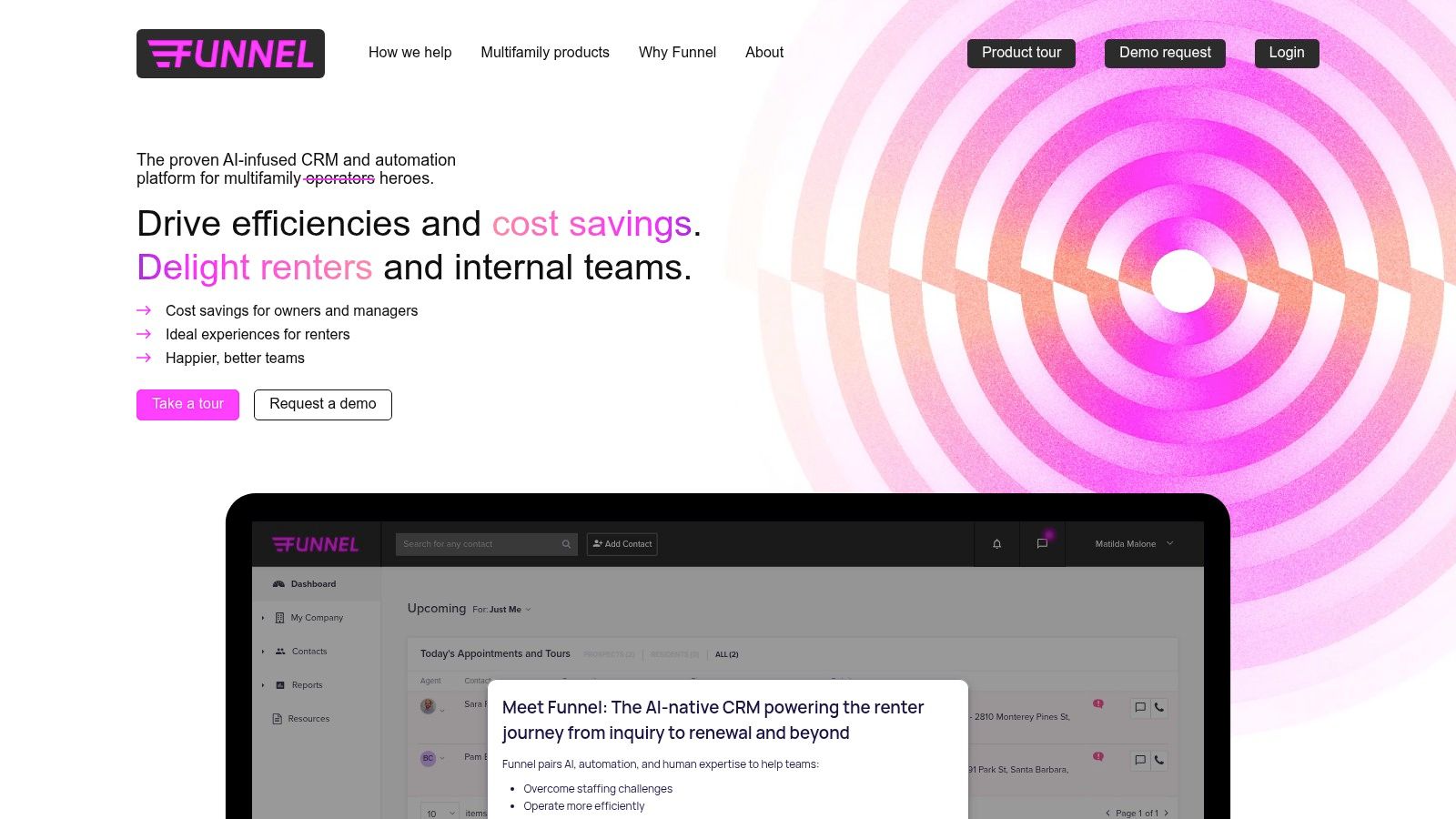
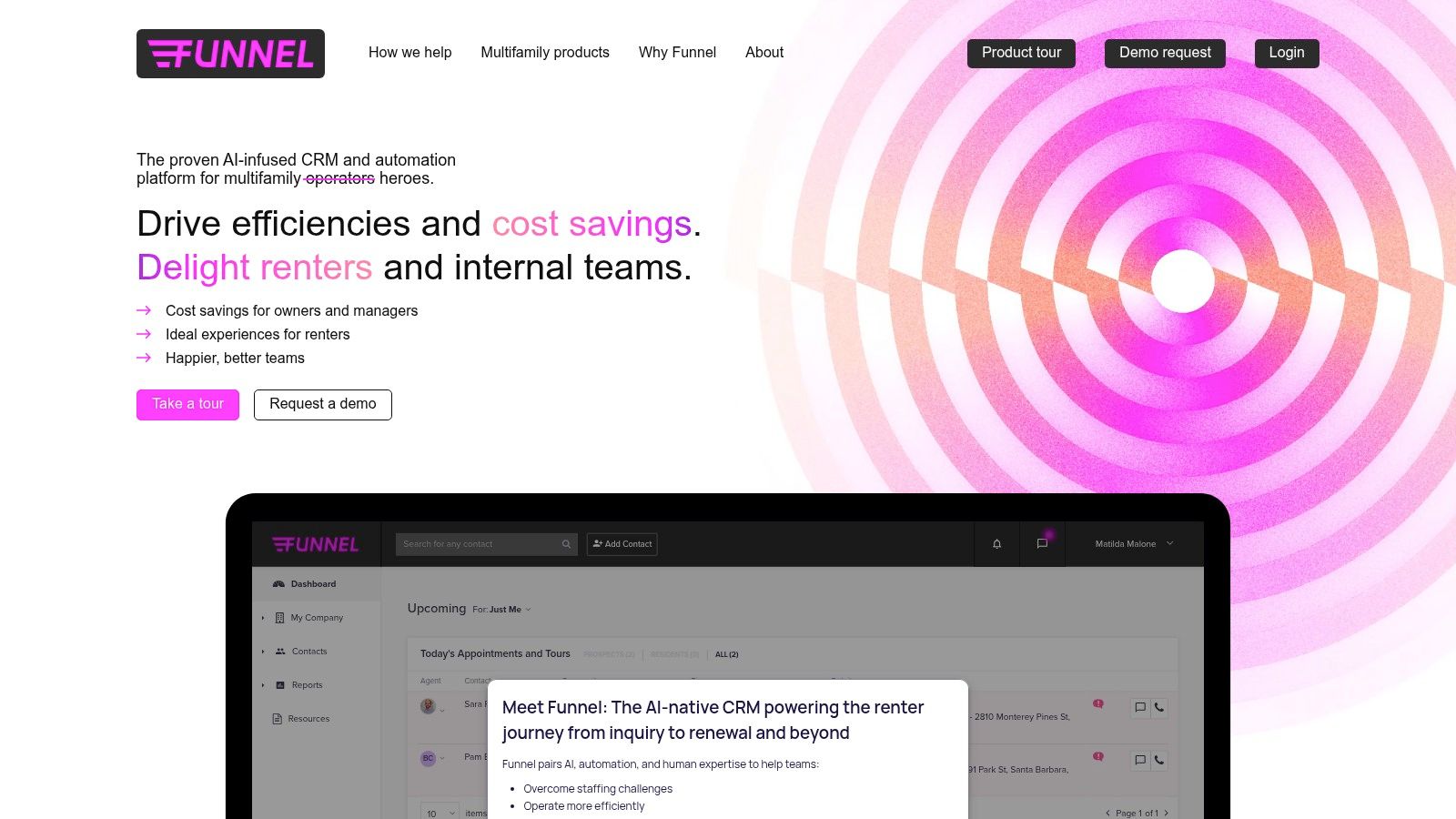
Funnel Leasing combines renter management software with a Virtual Leasing Agent that works across chat, SMS, email, and voice. The platform is clearly built around centralized leasing teams that need to capture, qualify, and move large volumes of inquiries without relying on onsite staff to do every step manually.
That makes it interesting for larger co-living operators, especially those managing many homes across a market. Once inquiry volume reaches a certain level, centralized response becomes more efficient than trying to let each property handle itself.
What stands out operationally
Funnel's strength is orchestration. It centralizes renter data, automates follow-up, and supports tour scheduling in a way that fits multi-site workflows. The voice piece also matters more than many people think. Missed calls are still missed opportunities, even in a text-heavy leasing environment.
If your team is already leaning toward centralization, Funnel fits that direction well.
- Good fit: Operators with a central leasing desk or shared leasing team.
- Useful feature: Voice support without building a full internal call center.
- Limitation: It works best when Funnel CRM is part of the stack.
Where room-by-room operators should pause
For a small PadSplit host, Funnel is probably too enterprise-shaped. It's built to support process scale, and that's great when you have enough demand flow and staff structure to use it properly. It can feel heavy if you're still owner-operating a handful of homes.
I like Funnel more as a portfolio growth tool than a starter tool. If you're moving from hands-on landlord mode into a more centralized operating model, it's worth attention. If you're still solving lockouts, turn scheduling, and house-level messaging manually, a more niche co-living system will usually produce faster day-to-day relief.
7. BetterBot
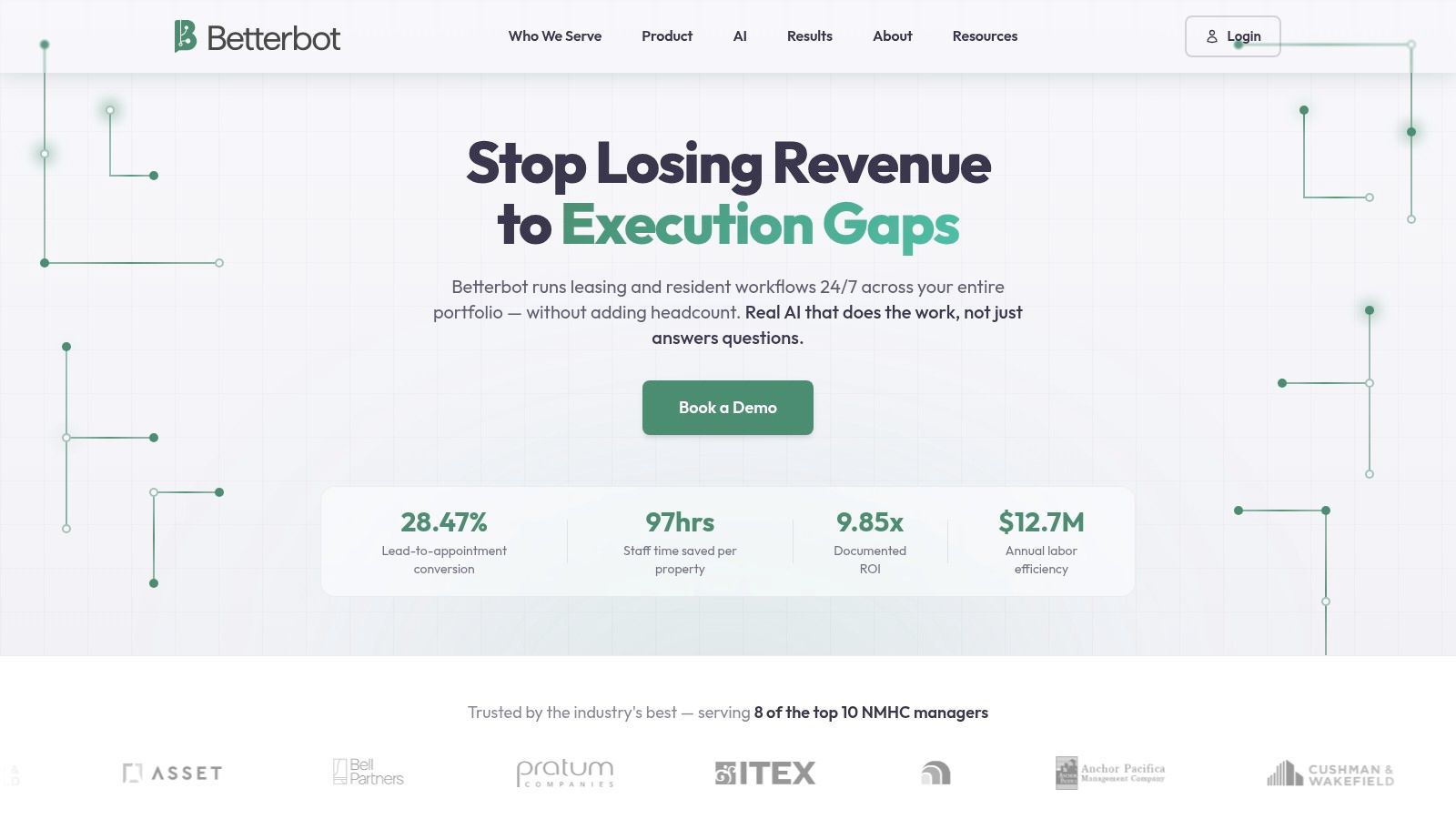
BetterBot sits in a useful middle ground. It isn't trying to replace your entire property management system, and it isn't limited to a basic website chatbot. It offers agentic AI for leasing and resident communication, including renewals, maintenance triage, tour booking, and automated follow-up.
That overlay model can be attractive if your existing stack is mostly fine but your responsiveness isn't. A lot of operators don't need a full rip-and-replace project. They need fewer dropped conversations.
Why some teams prefer an overlay
BetterBot integrates with common PMS and ILS systems so it can surface real-time pricing and availability while handling prospect or resident conversations across channels. In practice, that means you can add AI communication coverage without moving all your core operations to a new platform.
That's the appeal. The downside is obvious too. Another vendor means another relationship, another implementation, and another point of failure.
- Best use case: You like your current PMS but need stronger after-hours and follow-up coverage.
- Operational benefit: Better continuity for leasing and resident FAQs.
- Trade-off: More software to manage rather than one unified stack.
My take for co-living
For room-by-room portfolios, BetterBot can help with the communication side of the house, especially if inquiries come in across many channels and your team struggles to keep pace. But communication alone doesn't solve vendor ops, access control, or room-level repricing.
That's why I see BetterBot as a good patch for a specific pain point, not a complete operating system. If your issue is missed leads and delayed responses, it may help a lot. If your issue is that the whole business feels stitched together with texts and spreadsheets, you'll outgrow the overlay approach.
8. LeaseHawk ACE
LeaseHawk ACE is a virtual leasing assistant focused on voice, chat, and SMS. If your properties miss calls after hours, during tours, or while staff are busy, ACE addresses a problem that still costs operators real business. People call when they want quick answers. If nobody picks up, many don't wait around.
For that reason alone, voice-capable AI tools deserve more attention than they usually get.
Where ACE is practical
LeaseHawk lets operators configure branding, responses, and persona, which is more important than it sounds. A leasing assistant that sounds generic can undercut trust. One that reflects your property voice and routes complex situations well can feel like a solid front desk layer.
The tool is especially practical for teams that don't need a full PMS replacement but do need better lead capture and tour scheduling.
If calls are going unanswered, fix that before you chase more advanced automation. Lost demand at the front door is the easiest revenue leak to miss.
What it doesn't do
ACE is mainly a leasing front-end. That's not a criticism. It's just the category. You still need your PMS or CRM to hold core data and run the business. That means integrations matter, and implementation quality matters even more.
For co-living operators, ACE is useful if call handling is the pain point. It is less useful if your real bottleneck is shared-home operations, resident coordination, or room pricing. Think of it as a specialized lead-capture and leasing-response tool, not a broader co-living command center.
9. Zillow Rentals AI Assist
Zillow Rentals AI Assist is different from most tools on this list because it lives inside a demand channel rather than acting as your main operating system. If you advertise through Zillow's Rentals Network, this feature helps engage leads, qualify prospects, and book tours within Zillow's flow.
That's valuable because speed matters most where the inquiry starts. If a prospect is already browsing on Zillow, every extra handoff creates friction.
Why channel-native AI can work well
A lot of leasing automation struggles because it begins after the lead has already gone cold. Zillow's advantage is that the assistant can operate close to the initial inquiry. That can make the first interaction feel faster and simpler for renters.
For co-living operators, this can be useful if Zillow is already part of your marketing mix. It won't replace your core software, but it can make that channel work harder for you.
- Good fit: Operators already sourcing leads through Zillow.
- Useful outcome: Faster qualification and tour coordination in-channel.
- Limit: It doesn't solve wider operational issues outside the Zillow ecosystem.
The catch
This isn't a full property management solution, and it shouldn't be evaluated like one. Zillow Rentals AI Assist is a demand-side enhancement. Feature depth and integrations will depend on how your systems connect to Zillow and how much of your leasing process starts there.
I see it as a tactical add-on. If Zillow drives meaningful lead volume for your rooms, this can sharpen response quality. If most of your business comes through PadSplit or direct referrals, it moves lower on the priority list.
10. RealPage AI Revenue Management
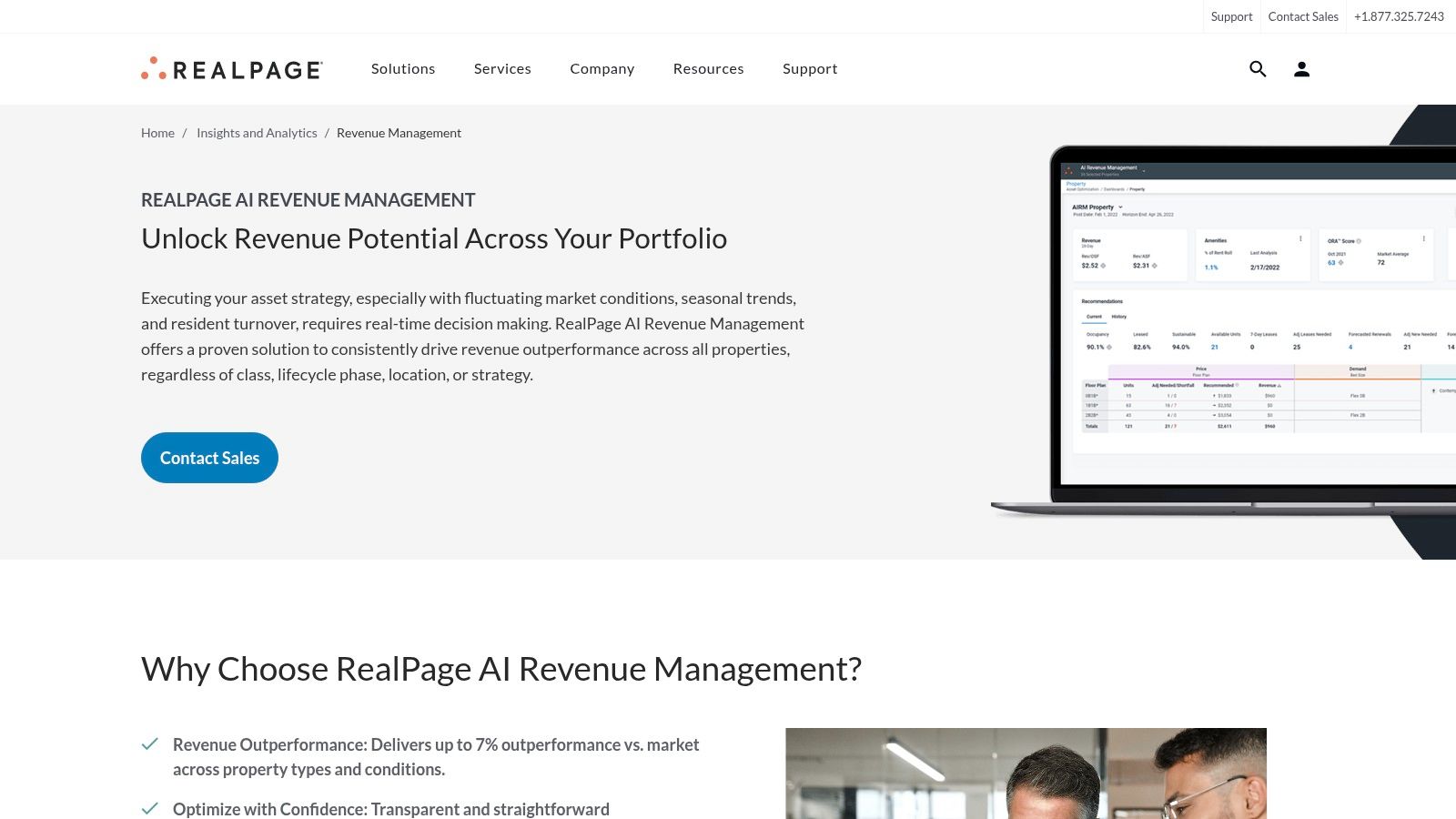
RealPage AI Revenue Management focuses on one of the hardest parts of rental operations to do well consistently. Pricing. It analyzes demand and other operating signals to recommend rents and renewal pricing, with portfolio analytics and scenario testing layered in.
If you've ever priced rooms based on gut feel, copied nearby listings, and then wondered whether vacancy or underpricing was costing you more, you already understand the appeal. A dedicated pricing engine brings discipline to a process that many operators handle manually for too long.
A practical companion read is this guide on using a dynamic pricing tool to boost revenue, especially if you're trying to think beyond flat-rate pricing habits.
Why pricing tools matter more in co-living
In room-by-room rentals, pricing isn't just about one lease expiration every year or so. Rooms turn more often. Demand can vary by house, room type, furnishing quality, and season. Small pricing mistakes compound because you repeat them across many smaller leasing decisions.
That said, RealPage is built for broad portfolio pricing strategy, not specifically for co-living. It can be powerful, but specialization matters here too.
- Best for: Multi-market or larger portfolios that want disciplined revenue management.
- Core strength: Pricing strategy and portfolio analytics.
- Key caution: It's not an operations platform.
Governance matters here
RealPage's pricing products have faced legal and policy scrutiny in some U.S. jurisdictions around algorithmic rent-setting. That doesn't automatically make the tool unusable, but it does mean operators should review compliance implications, local rules, and internal approval processes before adopting it.
For co-living operators, I'd be especially careful about applying enterprise pricing logic without room-level context. Dynamic pricing can be useful. Blind pricing automation isn't.
Top 10 AI Property Management Tools Comparison
| Product | Core features (✨) | UX Quality (★) | Value & Pricing (💰) | Target Audience (👥) |
|---|---|---|---|---|
| PadPulse 🏆 | ✨ Native PadSplit bi‑dir sync, dynamic repricing, AI messaging, unified inbox, smart‑lock & HVAC integrations | ★★★★☆ (beta; host‑built & ops‑tested) | 💰 Free Research tier; Host $49/mo; Growth $10/room; Pro $15/room; device/add‑ons & enterprise | 👥 PadSplit hosts & room‑by‑room co‑living operators |
| AppFolio Property Manager | ✨ AI Leasing Assistant + Realm‑X, full PMS/CRM, maintenance, accounting, mobile tools | ★★★★★ (mature, mobile‑first) | 💰 Quote‑based; per‑unit fees & minimums | 👥 Multifamily, SFR, affordable & student housing |
| Yardi RentCafe Chat IQ | ✨ Omnichannel chat/SMS/voice, unit matching, native Yardi CRM & audit trails | ★★★★★ (enterprise, secure) | 💰 Sold via Yardi (enterprise pricing) | 👥 Yardi customers & large multifamily operators |
| Entrata (ELI+ / Colleen) | ✨ AI agents for lead‑to‑lease, collections, renewals; unified CRM/PMS & analytics | ★★★★☆ (broad AI coverage) | 💰 Contract/enterprise pricing; migration effort | 👥 Multifamily operators seeking unified platform |
| EliseAI | ✨ Conversational leasing/resident AI, tour booking, EliseCRM, 24/7 memory | ★★★★☆ (strong tour & after‑hours performance) | 💰 Contract pricing (not public) | 👥 Multifamily teams focused on leasing & resident ops |
| Funnel Leasing (VLA) | ✨ Virtual Leasing Agent (chat/voice/email), CRM/RMS, tour scheduling & reporting | ★★★★☆ (enterprise centralization) | 💰 Custom enterprise pricing | 👥 Central leasing teams & multi‑site operators |
| BetterBot | ✨ Agentic AI overlay, omnichannel follow‑ups, PMS integrations, analytics | ★★★★☆ (fast deploy; overlay) | 💰 Contract/usage pricing | 👥 Operators wanting AI overlay to existing stacks |
| LeaseHawk ACE | ✨ Voice/chat/SMS assistant with persona/branding, tour scheduling, admin controls | ★★★★☆ (strong voice capabilities) | 💰 Mid‑market pricing; positioned cheaper than call center | 👥 Leasing teams seeking voice & branded assistant |
| Zillow Rentals AI Assist | ✨ AI lead qualification & tour booking inside Zillow lead flow; performance reports | ★★★★☆ (leverages Zillow demand) | 💰 Included with Zillow Rentals Network / tied to ad spend | 👥 Advertisers on Zillow / high‑demand listings |
| RealPage AI Revenue Management (AIRM) | ✨ AI rent & renewal recommendations, portfolio analytics, scenario testing | ★★★★★ (proven at scale) | 💰 Enterprise pricing; governance & compliance review needed | 👥 Asset teams & large portfolios focused on revenue optimization |
The Future of Your Portfolio is Automated
The days of managing a co-living portfolio with spreadsheets and a prayer are fading fast. That's good news for operators who want to grow without turning every new home into another source of chaos. The best AI property management tools don't just save time. They create tighter operating discipline across lead handling, messaging, pricing, access, and vendor coordination.
For room-by-room rentals, that matters even more than it does in conventional multifamily. A co-living portfolio has more moving parts. More inquiries. More member touchpoints. More turns. More lock and thermostat issues. More vendor handoffs. If your tools don't fit that reality, your team ends up building workarounds, and workarounds are where time and profit disappear.
What works is simpler than the marketing makes it sound. Start with the bottleneck that's causing the most operational drag.
If leads are going cold, prioritize leasing response and follow-up automation. If your team is overwhelmed by repetitive resident questions, look at conversational AI with strong escalation logic. If pricing is inconsistent, add a revenue management layer. If the whole business feels fragmented, move toward a system that brings messaging, financial visibility, and house-level operations into one place.
For PadSplit hosts, the biggest opportunity isn't just adding AI for the sake of it. It's choosing software that understands the rent-by-the-room model from the start. Generic multifamily systems can help with pieces of the puzzle, especially for larger portfolios that already run on platforms like AppFolio, Yardi, or Entrata. But they often leave co-living operators stitching together room pricing, member communication, smart locks, and vendor execution with separate tools.
That's where a purpose-built platform has the edge. PadPulse is the clearest example on this list for operators who live inside the PadSplit and co-living world. It is being built around the workflows that matter most in shared housing, including underwriting, room-level sync, AI messaging, portfolio analytics, vendor coordination, and smart-device control. That combination is hard to find in one product because most software companies still think in units, not rooms.
Beginners don't need to automate everything at once. They need a clean operating path. In practice, that usually means one core system, one messaging workflow, one pricing approach, and one clear view of house performance. Once those basics are in place, adding more automation becomes much easier and much less risky.
If you're serious about scaling co-living without scaling your stress, now is the time to modernize the back end of the business. The operators who adopt the right systems early will have a real advantage in speed, consistency, and NOI. For PadSplit hosts in particular, joining the PadPulse interest list is a practical next step if you want early access to a platform being designed specifically for this operating model.
If you run PadSplit homes or room-by-room rentals, PadPulse is worth a close look. It's being built as an all-in-one platform for co-living operators who need underwriting, room-level sync, AI messaging, vendor coordination, smart-device control, and portfolio reporting in one place. If that sounds like the missing operating layer in your business, join the interest list and keep an eye on the beta.