Pay Rent in Installments: A Landlord's Guide to Boosting Profit
July 26, 2026
Paying rent in one large lump sum each month is becoming outdated. As a modern landlord or co-living operator, you can get ahead by offering to break that single payment into smaller, more frequent installments. This simple shift helps you attract a wider pool of great tenants, keep your rooms filled, and smooth out your own cash flow.
This guide is about moving away from a rigid, one-size-fits-all model. Instead, you'll learn to adopt a flexible system that fits how people actually earn and manage their money today.
Why Flexible Rent Payments Are Your New Superpower

Imagine filling your vacancies faster with better tenants, all by making one simple change to how you collect rent. Offering the option to pay rent in installments isn't just a perk for your tenants; it's a smart business move. For room-by-room operators and hosts on platforms like PadSplit, this flexibility is a serious competitive advantage.
Let's be realistic: the 9-to-5, once-a-month paycheck is no longer the norm for a huge part of the workforce. With the rise of the gig economy, freelance contracts, and hourly service jobs, many of your best potential tenants get paid weekly or bi-weekly. Aligning their rent payments with their pay schedule just makes sense.
Broaden Your Applicant Pool
The moment you advertise flexible payment options, you instantly connect with a larger group of applicants. Think about all the responsible people with steady, non-traditional incomes who are automatically filtered out by landlords demanding a single, large payment on the first of the month.
When you offer installments, you’re sending a clear signal that you understand their financial reality. This makes your property far more attractive and accessible. This small adjustment can lead to big results:
- Fewer Vacancies: A bigger applicant pool means you spend less time and money trying to fill an empty room.
- Higher-Quality Residents: You’ll attract proactive, financially savvy individuals who appreciate a system that helps them stay on top of their bills.
- Better Retention: Tenants value this flexibility, which makes them happier and more likely to stay long-term.
From Perceived Risk to Strategic Advantage
A common concern from other operators is: "Doesn't this create more work and risk?" Some landlords worry that smaller, more frequent payments are a hassle to track and increase the odds of missed payments.
In reality, with modern payment platforms, the opposite is true. Automating weekly or bi-weekly collections actually stabilizes your income. It’s a simple cash flow reality: a tenant is far more likely to have $300 available every Friday than $1,200 saved up on the first of the month.
This shift in perspective is key. Instead of seeing installments as a risk, view them as a tool to boost your net operating income (NOI) and build a more resilient business. It’s about adapting to the market, not just doing a favor for a tenant.
Before we dive deeper, let’s look at a head-to-head comparison. This table breaks down the key differences between weekly collection and the old-school monthly approach.
Weekly vs. Monthly Rent Collection: A Strategic Comparison
| Metric | Weekly/Bi-Weekly Installments | Traditional Monthly Rent |
|---|---|---|
| Cash Flow | More frequent, consistent deposits. Smoother cash flow for your operations. | Large, infrequent deposits. Can create "feast or famine" cash flow cycles. |
| Tenant Affordability | Matches modern pay cycles (gig work, hourly jobs). Easier for tenants to budget. | Can be a major financial hurdle, especially for those without a monthly salary. |
| Risk of Default | Lower. Smaller payment amounts are easier to cover, reducing late or missed payments. | Higher. A single unexpected expense can cause a tenant to miss the entire month's rent. |
| Vacancy Impact | Faster to identify payment issues (within a week). Quicker turnaround to resolve or re-rent. | Can take 30+ days to identify a non-paying tenant, leading to longer vacancy loss. |
| Applicant Pool | Wider appeal to a larger group of responsible tenants with varied income streams. | Narrows the pool, potentially excluding great tenants who are paid weekly or bi-weekly. |
| Admin Workload | Can be fully automated with modern payment software, requiring minimal effort. | Less frequent but manual tracking can be time-consuming and prone to error if not automated. |
As you can see, the benefits of smaller, more frequent payments stack up quickly, turning a potential administrative headache into a real strategic asset for your business.
The market data backs this up. The demand for digital and flexible rent options is exploding, with the global online rent payment market projected to grow from USD 2.15 billion in 2026 to USD 5.48 billion by 2033. This surge is driven by renters who need more adaptable solutions. You can read more on the online rent payment market's growth to see just how big this trend is.
With millions of households spending over 30% of their income on rent, "rent now, pay later" services are becoming an essential part of the housing conversation. By offering this in-house, you’re not only meeting a critical need but also building a more stable and profitable operation.
Getting Your Rent Installment Policy Right
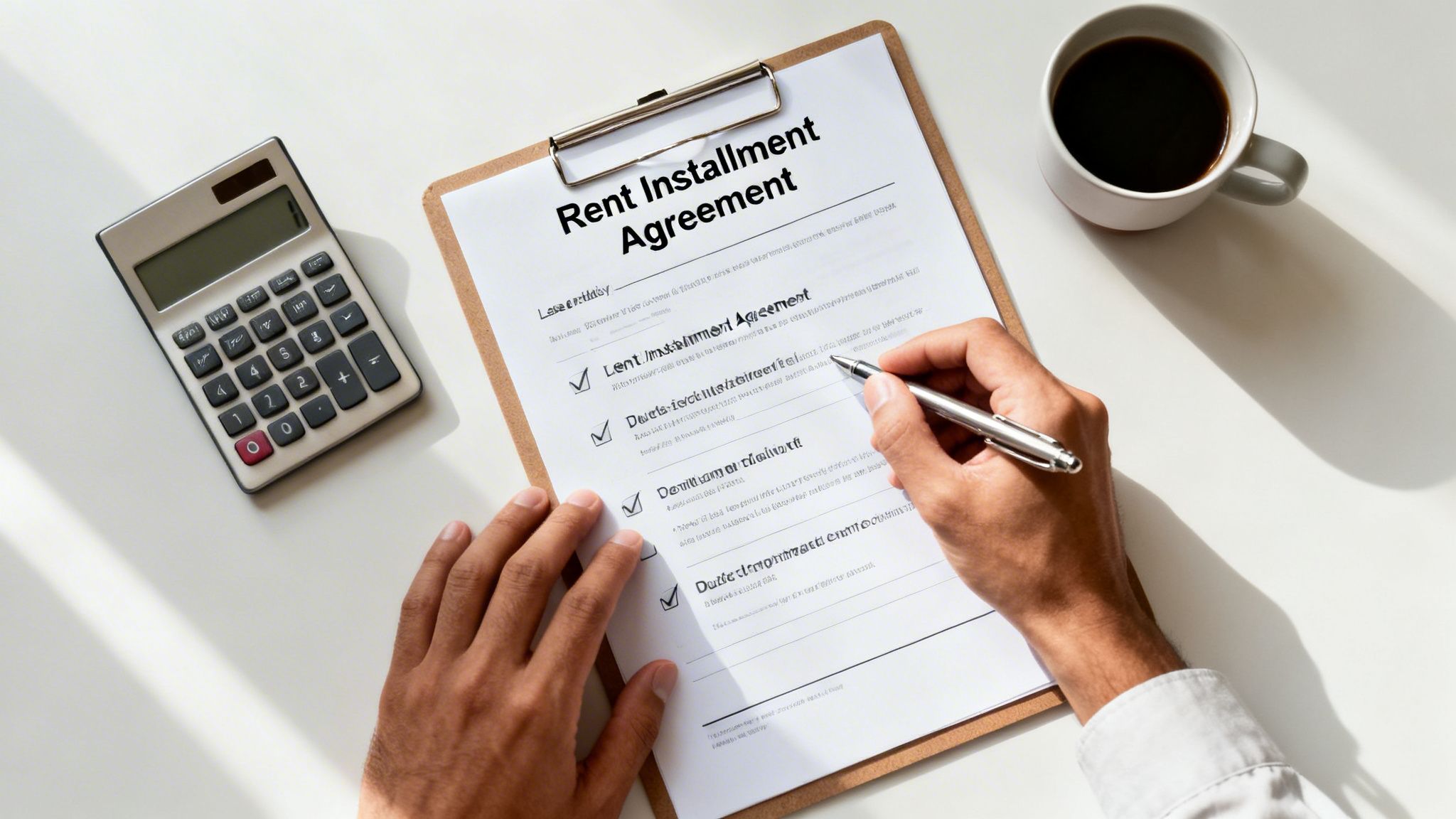
Before you offer your first installment plan, you need a clear, fair, and documented policy. Trying to manage this on the fly is a recipe for disaster, leading to confusion and disputes. Your policy is the foundation that protects both you and your tenants by setting firm, clear expectations from day one.
Think of it as the official rulebook for how your tenants will pay rent in installments. It needs to be simple enough for anyone to grasp quickly but detailed enough to cover the "what-ifs." Getting this right upfront saves you countless headaches and keeps your operation running smoothly.
Key Policy Decisions to Make
First things first, you need to make a few critical decisions that will become the backbone of your entire program. These choices define how your installment plan will function in the real world.
- Eligibility: Who can participate? Is this an option for all new tenants, or a privilege reserved for existing ones with a perfect payment history? Making it a standard option for everyone dramatically widens your applicant pool and shows you’re committed to flexible housing.
- Payment Schedule: Should you collect payments weekly or bi-weekly? Weekly payments are a game-changer. They align perfectly with the pay schedules for most service, retail, and gig economy workers, which drastically cuts down on missed payments.
- Late Fees: How do you handle a late installment? This is crucial: the fee must be proportional to the small installment, not the entire month's rent. A simple, fixed fee of around $15 to $25 is fair, easy to understand, and encourages prompt payment without being overly harsh.
- Default Clause: When does a missed payment become a major problem? Define the trigger for a lease default. For example, you might state that three missed weekly payments within a six-month window constitutes a breach of the agreement, giving you grounds to take further action.
A smart policy doesn't just react to problems—it anticipates them. By clearly defining fair rules for late fees and defaults on smaller installments, you create a system that motivates on-time payments without punishing someone for a minor slip-up.
Building Your Rent Installment Addendum
With your core policies decided, it’s time to make them official with a lease addendum. Don't just grab a generic template online; this document needs to be tailored to your properties and, most importantly, comply with your local landlord-tenant laws.
The goal here is to eliminate any ambiguity. Your tenant should know exactly what's expected, and you should have a legally sound document to fall back on if things go sideways.
Essential Clauses for Your Addendum
This addendum is the legal spine of your installment plan, so it needs to be airtight. Here are the must-have clauses to include:
- Payment Schedule and Due Dates: Spell it out with zero room for interpretation. For instance, "$250 due every Friday by 5:00 PM." Be specific about the amount, day, and time.
- Payment Method: Dictate how payments must be made. This is the perfect opportunity to mandate payments through your online portal, like PadSplit, which completely automates collection and tracking for you.
- Late Fee Structure: Detail the exact fee for a late installment and any grace period. For example: "A late fee of $25 will be applied if the weekly installment is not received within 24 hours of its due date and time."
- Default and Remedies: Clearly explain what happens if a tenant repeatedly fails to pay. This clause gives you the right to terminate the installment plan and demand the full remaining rent for the month, or to begin eviction proceedings as permitted by your local laws.
Putting in the effort to create a strong policy and addendum is your single best defense against future conflicts. It sets a professional, transparent tone from the moment a new tenant moves in.
Managing Cash Flow with Smarter Payment Tools
When you start offering your tenants the option to pay rent in installments, it can feel like you're suddenly juggling dozens of small income streams. It’s easy to get overwhelmed without the right system. Fortunately, modern technology can turn this potential chaos into a predictable, profitable operation.
The trick is to use payment tools built for recurring collections. These aren't just simple processors; they're complete management systems designed to automate the entire workflow. Instead of manually chasing down who paid what and when, the right software handles it all, freeing you up to focus on growing your business.
Choosing the Right Payment Processor
Switching to a weekly or bi-weekly payment schedule makes your choice of payment processor more important than ever. They aren't all created equal, and the wrong one can complicate your life instead of simplifying it.
Here are the must-have features you should look for:
- Automated Recurring Payments: The platform must be able to automatically charge tenants on a set schedule, like every Friday. This is the cornerstone of making installments work without drowning in admin tasks.
- Failed Payment Notifications: You need instant alerts the moment a payment fails. The sooner you know, the quicker you can connect with your tenant to resolve the issue.
- Integrated Communication: Look for tools that send automated reminders via text or email before a payment is due. A simple heads-up prevents most late payments before they even happen.
- Clear Financial Reporting: A good processor gives you a real-time dashboard view of your income. At a glance, you should be able to see who has paid and who is outstanding.
A key piece of advice: the goal of technology is to reduce your workload. If a tool requires you to constantly step in and manually manage your installment plan, it's the wrong tool for the job.
Aligning Your Income and Expenses
Getting paid in smaller, more frequent chunks requires a slight shift in how you manage your own finances. Your mortgage, insurance, and utility bills are still due monthly, but your income now arrives weekly. If you plan for it, this is actually a massive advantage for your cash flow.
Recent market data shows just how vital that consistent income is. For example, one recent rental performance report showed that on-time payments for independently operated units hit 83.3% in January 2026. While that’s an improvement, it still means a significant portion of rent can be delayed, putting a squeeze on landlords who rely on a single monthly check.
With weekly installments, you smooth out those financial bumps. Instead of one big payday, you have a steady stream of revenue to cover your ongoing operational costs. This makes it far easier to build a healthy reserve fund and forecast your income with real accuracy. For more tips on this, check out our guide on performing a rental property cash flow analysis. By using smart financial tools, you can turn payment flexibility into a highly predictable and profitable system.
Mastering Tenant Communication and Legal Safeguards
Even the most perfectly designed rent installment plan is useless if your tenants don't understand it. When you start letting tenants pay rent in installments, you're doing more than just adjusting a payment schedule. You're building a new kind of relationship, and that requires clear, consistent communication to work.
Talking to your tenants the right way prevents small misunderstandings from becoming big problems. Don't wait for a payment to go late to start the conversation. Your communication should begin the moment a prospective tenant sees your listing and continue throughout their tenancy, making the whole process feel predictable and fair for everyone.
Building Trust Through Clear Communication
The way you communicate sets the tone for everything. Your goal should be to come across as helpful and professional, using automation to make sure nothing slips through the cracks. Think of it as a three-part system: how you market the flexibility, how you remind tenants about due dates, and how you document everything in the lease.
Here are a few practical examples you can adapt:
- Marketing Materials (Listing Description): Don't just list the monthly rent. Frame it around their cash flow. "Tired of that big rent payment? Pay your rent weekly! Our flexible plans match how you get paid, making budgeting a breeze. Just $225 a week covers your room, all utilities, and Wi-Fi."
- Automated SMS Reminders: These are essential. Set them up in your payment software. A simple, friendly text like, "Hi [Tenant Name], just a friendly heads-up that your weekly rent installment of $225 is due this Friday. Thanks!" can prevent the vast majority of late payments.
- Missed Payment Notification: The key here is to stay helpful, not confrontational. "Hi [Tenant Name], we noticed your weekly payment hasn't come through yet. Please log in to your portal to complete it. A late fee of $25 will apply if it isn't paid within 24 hours. If you're running into an issue, just let us know."
The trick is to be consistently helpful, not adversarial. Proactive reminders show you’re on their team, but firm, clear messages about the consequences ensure your policies are taken seriously. Getting that balance right is everything.
Your Lease Addendum Legal Checklist
Good communication builds trust, but your lease addendum provides your legal backbone. This document needs to be airtight, leaving zero room for interpretation. Think of it as the official rulebook that protects both you and your tenants by spelling out every detail of the installment agreement.
Before anyone signs, run through this checklist to save yourself major headaches down the road.
Your Essential Addendum Checklist:
- Explicit Payment Schedule: Does it state the exact amount and due date for each payment (e.g., "$225 due every Friday by 5:00 PM EST")? Ambiguity is your enemy.
- Mandatory Payment Method: Does the addendum require all payments to be made through your specific online portal? This prevents "the check is in the mail" scenarios.
- Proportional Late Fee Clause: Is the late fee for a missed installment clearly defined? It should be proportional to the installment amount, not the full month's rent.
- Grace Period Details: How long do they have before a fee kicks in? Spell out the exact grace period (e.g., 24 hours) clearly.
- Definition of Default: When is a tenant officially in default? Define it precisely (e.g., three missed payments in a 90-day period).
- Consequences of Default: What happens if they default? The addendum must explain your remedies, like terminating the installment plan or starting eviction proceedings as allowed by local laws.
A strong addendum, combined with a solid communication strategy, creates a system that's both transparent and legally sound. This foundation not only helps your tenants succeed with their payments but also works hand-in-hand with a great screening process. You can use a complete tenant screening checklist to help you find reliable residents from day one.
Automating Your Workflow for Effortless Management
Offering flexible payments is a great idea, but managing it can quickly turn into a logistical nightmare if you're not careful. This is where you need to let technology do the heavy lifting. By building your installment plan into a smart management system, you can create a hands-off workflow that scales with your business, saving you time and improving your bottom line.
The goal isn't just to collect rent; it's to build a system that manages all the little details for you. Think automated payment reminders, real-time tracking for every single installment, and a clear, instant picture of your property's financial health.
This simple communication flow is what you're aiming to automate.
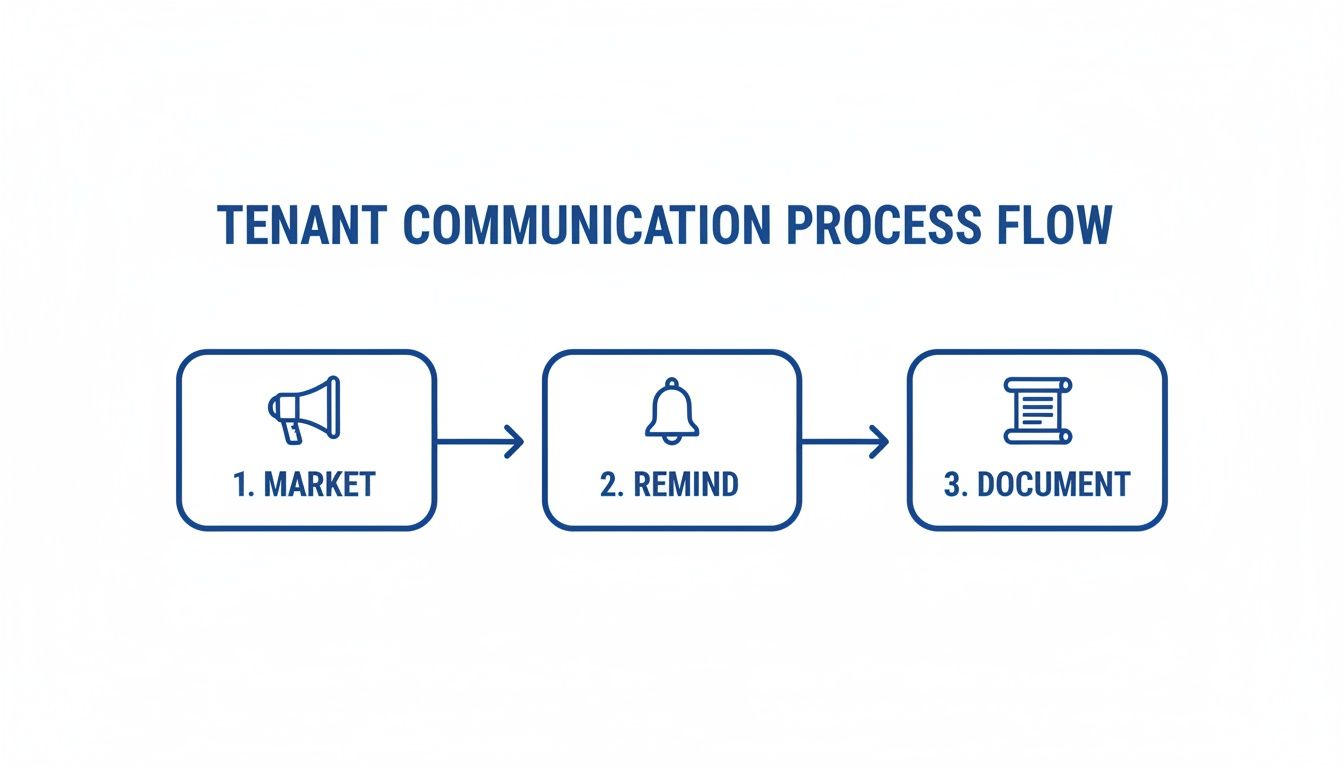
It boils down to three key actions: marketing your flexible payment option, automatically reminding tenants when a payment is due, and documenting every step to keep things professional and legally sound.
Using Technology for Financial Visibility
One of the biggest wins from automation is the clarity it brings to your finances. Forget juggling spreadsheets. A good centralized dashboard gives you a complete, bird's-eye view of your operation. You can see in seconds who has paid, who is late, and how your cash flow is shaping up for the week or month.
This kind of visibility helps you spot trends you’d otherwise miss. You can finally measure the real impact of offering installments on the metrics that matter most:
- Occupancy Rate: Are you filling rooms faster now that you let tenants pay rent in installments?
- Net Operating Income (NOI): Has your income become more stable and predictable month-over-month?
- Tenant Retention: Are good tenants choosing to stay longer because you offer this flexibility?
By automating payment tracking, you’re no longer just collecting rent—you're gathering data to make smarter, more strategic decisions about your portfolio. It turns a simple admin task into a powerful tool for growth.
A Win-Win Credit-Building Opportunity
On top of the operational perks, offering flexible payments creates a massive opportunity for your tenants that also protects you as the landlord. Rent reporting has become a true game-changer, allowing tenants to turn their regular payments into a credit-building tool.
When your tenants pay their installments on time, they can actively build their credit history. Some studies have shown that renters can see their credit score jump by an average of 53 points in just six months—a life-changing boost. You can see the latest data on how rent reporting is reshaping the market and how it benefits both renters and landlords.
This creates a powerful, positive cycle. You help your tenants achieve greater financial stability, which in turn makes them more reliable and reduces your risk of default. It’s one of the best ways to attract and keep high-quality residents. Understanding the right technology in property management is the first step toward putting smart strategies like this into action.
Common Questions About Rent Installment Plans
Whenever you change how you handle something as fundamental as rent, questions are bound to come up. When talking to other landlords about letting tenants pay rent in installments, the same few concerns always surface.
Let's walk through those "what-ifs" together. This isn't just theory—this is based on what actually works in practice.
What Happens If a Tenant Misses One Installment Payment?
This is the big one, right? The key is to have your response already written down in your policy. A missed weekly or bi-weekly payment isn't the same catastrophe as a full month's rent going unpaid, and your reaction shouldn't be the same either.
Your lease addendum should spell this out clearly. A missed payment triggers a smaller, proportional late fee. For instance, a $25 fee for a missed $250 weekly payment feels fair and gets the point across. The best part is, a good payment system automates this. It alerts both you and the tenant the moment a payment fails. You’re not the bad guy chasing them down; the system just does its job.
Your policy should also define what constitutes a serious breach. For example, you might state that three missed payments within a 90-day period is a major lease violation that kicks off a more serious process.
The goal is to solve small problems while they're still small. You want to avoid going straight to eviction threats over a single stumble. A clear policy gives you a playbook for every scenario.
Does Offering Rent Installments Increase My Administrative Work?
Honestly, if you try to do it manually with a spreadsheet, it will absolutely bury you in admin work. But you don't have to do it that way. With the right software, it actually becomes less work than chasing down monthly checks.
Modern rent payment platforms are built for this. Once you set them up, they run on autopilot.
- Recurring Payments: The system automatically drafts the payment from the tenant's account on the scheduled day. No more "I forgot."
- Automated Reminders: It sends out texts or emails a day or two before the due date, which prevents most late payments from ever happening.
- Late Fee Application: If a payment is missed, the platform automatically adds the pre-set late fee to the tenant's balance.
- Clear Reporting: You get a simple dashboard. In five seconds, you can see who has paid and who hasn't.
There's a little bit of work upfront to get everything configured, but the time you save every single month is a game-changer. You get to focus on growing your business instead of being a bill collector.
How Do I Market Rent Installments to Attract Good Tenants?
You don't just mention it in the fine print—you make it a highlight! This is a massive competitive advantage. In your listings on Zillow or Facebook Marketplace, make it part of the headline: "Pay Rent Weekly—Budgeting Made Easy!" or "Flexible Rent Payments Available."
Think about who this appeals to. You're not just attracting tenants; you're attracting responsible people who have variable income—freelancers, restaurant staff, gig economy workers. They are actively looking for ways to manage their cash flow better.
When you frame this as a modern amenity that respects their financial reality, you stand out. You’ll widen your pool of applicants and attract proactive, financially savvy tenants who appreciate a landlord that gets it.
Takeaway
Switching to a rent installment model is more than just a tenant-friendly perk; it's a strategic business decision. By aligning rent payments with modern income schedules and using technology to automate the process, you can reduce vacancies, stabilize your cash flow, and attract a wider pool of responsible tenants. A clear policy, a solid lease addendum, and consistent communication are the keys to making this system work for you and your renters.
Ready to streamline your co-living operations and maximize your returns? PadPulse is building the all-in-one platform to automate pricing, messaging, and access control. Join our interest list for early beta access and exclusive updates. Sign up today at PadPulse.io.