A Guide to Affordable Housing Property Management Software
July 26, 2026
If you've ever managed room-by-room rentals with a spreadsheet, you know it feels like trying to direct rush-hour traffic with a handheld stop sign. It’s chaotic, overwhelming, and inefficient. For affordable housing operators, sticking to these manual methods creates constant bottlenecks, opens the door to costly mistakes, and simply doesn't scale.
This is where affordable housing property management software comes in—it’s the specialized tool built for the job, making your life easier and your business more profitable.
Why Spreadsheets Are Failing Affordable Housing Operators
Managing affordable or co-living properties involves a mountain of administrative work, which is completely different from traditional rentals. You’re not just tracking one lease per apartment; you're juggling individual agreements, separate rent payments, and a steady stream of tenant turnover for every single room.
Trying to manage that complexity in a spreadsheet is a recipe for disaster. One misplaced formula or a simple typo can derail your monthly financial reports. Keeping track of compliance paperwork for dozens of tenants across just a few properties becomes a nightmare of scattered files and confusing notes.
The Hidden Costs of Manual Management
The problems with manual systems run deeper than just day-to-day frustration. They carry real financial and operational risks that directly hit your bottom line and stunt your growth.
Think about it: every hour your team spends manually chasing rent, updating a vacancy list, or digging through folders for compliance documents is an hour they aren't spending on high-value tasks. That's time that could be used for marketing, tenant relations, or property improvements. This lost productivity is a massive hidden cost.
Then there's the ever-present risk of human error. Misplacing one critical document or making a mistake on an income verification form could lead to a compliance breach, resulting in hefty fines or the loss of crucial subsidies. Manual processes are full of these vulnerabilities—the very things specialized software is designed to patch.
You can learn more about how to fix these operational gaps in our guide to property management workflow automation.
Let's look at a quick comparison to see how stark the difference really is.
Manual Methods vs. Automated Software in Affordable Housing
| Task | Manual Method (e.g., Spreadsheets) | Automated Software Solution |
|---|---|---|
| Rent Collection | Manually tracking payments, sending reminders, and chasing arrears. High chance of errors. | Automated rent collection, late fee calculation, and reminders. Tenants can pay online. |
| Compliance Tracking | A chaotic mess of paper files or scattered digital documents. No alerts for deadlines. | Centralized digital document storage with automated alerts for recertifications and expirations. |
| Vacancy Management | Manually updating listings across multiple sites. Slow communication with leads. | Automated listing syndication. Real-time availability updates and integrated lead management. |
| Financial Reporting | Labor-intensive data entry. Reports are prone to errors and are rarely real-time. | Instantly generated, accurate reports on rent roll, occupancy, and expenses. |
The table makes it clear: clinging to outdated methods means leaving money, time, and peace of mind on the table.
The Shift to Smarter Solutions
The good news is that the industry is catching on. Property managers are rapidly moving away from these limiting tools and toward more sophisticated solutions. In the ever-expanding affordable housing sector, the right software has become a genuine game-changer.
The numbers back this up. The global market for this software was valued at USD 0.75 billion in 2024 and is expected to more than double, reaching USD 1.66 billion by 2032. This incredible growth highlights a massive shift away from obsolete spreadsheets and toward modern, efficient systems.
The fundamental problem with spreadsheets is that they're passive. They hold data, but they can't actively manage your workflows, enforce compliance rules, or give you the real-time insights you need to run a successful affordable housing portfolio.
Ultimately, this isn't just about convenience. It’s about building an operation that is scalable, profitable, and, most importantly, compliant.
What to Look for in Your Management Platform
When you're managing co-living spaces or room-by-room rentals, your toolkit needs to be sharp. Generic software just doesn't cut it. Your platform has to solve the very specific headaches that come with affordable and shared housing.
Let's break down the four most critical areas where the right software can make or break your operation:
- Automated Rent Collection for per-room or per-bed tracking
- Compliance Management Tools for income verification and subsidy reporting
- Streamlined Tenant Communication for maintenance and community updates
- Vacancy Management and Leasing Tools to fill rooms faster
Think of these features less like a checklist and more like a well-coordinated crew. They work together, sharing data and handling the repetitive tasks that bog you down. The goal is to free up your team's time and mental energy to focus on what really matters: growing the business and serving your residents.
Automated Rent Collection
In a shared home, collecting rent can feel like herding cats. You're not just chasing one payment per unit; you're tracking dozens of individual payments, each with its own due date, prorated amount, or late fee. It's a logistical nightmare for a spreadsheet.
This is where automated rent collection becomes your best friend. It’s built to handle per-bed charges, complex proration, and custom late fee rules without you lifting a finger. Instead of spending hours cross-referencing bank statements and sending "gentle reminder" emails, the software does it for you. Tenants get automatic reminders and can pay online in a few clicks.
Key benefits you'll feel immediately:
- An online portal where tenants can easily pay their share.
- Automatic calculation of prorated rent for move-ins and move-outs.
- Scheduled payment reminders that go out like clockwork.
- Instant bank reconciliation, so you always know who has paid.
This simple shift turns a weekly scramble into a predictable, set-it-and-forget-it process, bringing clarity for both you and your tenants.
“Automated collection frees up 5+ hours weekly that managers can reinvest into tenant relations or growth.”
Compliance Management Tools
Managing affordable housing means navigating a maze of strict subsidy and income rules. Manually tracking everything is not just tedious; it's risky. A missed recertification deadline or a miscalculated rent can lead to serious fines and jeopardize your funding.
A solid platform takes this burden off your shoulders by baking compliance right into your workflow. It automates income verification and has built-in support for programs like Section 8, LIHTC, and other local subsidies. The system flags upcoming audits and can generate the reports you need with a single click, taking the stress out of compliance reviews.
Look for these compliance lifesavers:
- A secure digital vault for income documents.
- Automatic alerts for recertification deadlines and subsidy renewals.
- Built-in calculators that handle complex, layered rent formulas.
- Audit-ready reports you can export instantly.
By integrating compliance into your daily operations, your affordable housing property management software does the heavy lifting, making your workflows smooth, predictable, and—most importantly—error-free.
Streamlined Tenant Communication
In shared living spaces, clear and consistent communication is everything. It keeps residents happy, informed, and feeling like part of a community. But when you’re manually sending emails and texts for maintenance updates, policy changes, and community events, messages get lost and people get frustrated.
A dedicated communication hub centralizes everything—emails, texts, and portal messages—into one organized place. It creates a clear record of every request, response, and resolution, so nothing falls through the cracks.
Here’s what a streamlined system gives you:
- Automated message templates for rent reminders, policy updates, or welcome notes.
- A tenant portal where residents can submit and track their own work orders.
- Group announcement tools for community events or building-wide notices.
These tools build trust and drastically cut down on the back-and-forth. You can get ahead of potential issues before they ever have a chance to escalate.
Vacancy Management and Leasing Tools
Every day a room sits empty, it's costing you money. The key to maintaining high occupancy is a fast, efficient leasing process that gets your listings in front of the right people, right away.
Manually posting to different listing sites is a slow, repetitive drag. Modern leasing tools, however, automate the entire process. They syndicate your listings to all the major rental sites at once, update availability in real-time, and funnel all incoming leads into a single, manageable dashboard.
Key functions to look for:
- Real-time vacancy calendars that sync across all your listings.
- Online applications with automated screening filters to find qualified tenants.
- Customizable lease templates and secure e-signatures to close deals faster.
The best systems even provide data-driven insights, suggesting optimal pricing or promotions to help you fill rooms that are moving slowly. This proactive approach can boost occupancy by 10-15%. One operator we know saw a 30% reduction in vacancy days just by switching to a platform with integrated leasing tools. Faster leasing is the most direct path to healthier, more predictable cash flow.
Ready to see how this all connects? Learn more in our workflow automation guide.
Navigating Complex Compliance with Technology
Anyone who has managed affordable housing knows that compliance is a high-wire act. You're constantly juggling deadlines, intricate calculations, and ever-changing rules. A single misstep can mean catastrophic fines or losing the subsidies that keep your properties running. It’s a constant, low-grade stress that can make the job feel impossible.
This is exactly where the right technology steps in to change the game. Modern affordable housing property management software is built to take that chaotic, paper-heavy process and turn it into a clear, automated workflow. It’s designed specifically to speak the language of Section 8, LIHTC, and local housing authority regulations, letting you finally breathe a little easier.
Imagine this: you get an audit notification. If you're running on paper and spreadsheets, it’s all hands on deck, digging through file cabinets and hoping every 'i' was dotted and 't' was crossed. Now, imagine clicking a few buttons and instantly pulling a complete, audit-ready report. That’s not just about saving time; it's about fundamentally de-risking your entire operation.
The Power of Automated Compliance
The real magic of a purpose-built platform is its ability to automate the most tedious parts of the job. Instead of relying on sticky notes and calendar reminders, the software becomes your digital compliance officer.
This kind of automation hits the biggest pain points head-on:
- Income Verification: Tenants get a secure portal to upload their documents, and the system automatically flags them for you to review. No more chasing down pay stubs.
- Rent Calculation: Those complicated subsidy formulas? The software crunches the numbers for you, slashing the risk of human error that leads to incorrect rent charges.
- Deadline Management: You'll get automatic alerts for upcoming recertifications and inspections, so nothing critical ever slips through the cracks.
Think of it this way: the right software acts as your compliance department, working 24/7 in the background to safeguard your properties and your funding.
This workflow shows how these moving parts fit together in a unified system.
As you can see, a central platform connects rent collection, compliance tasks, and vacancy management, preventing the data silos and mistakes that happen when these functions are kept separate.
Staying Ahead of Regulatory Changes
Let's be honest—the rules are always changing. Government agencies are constantly updating their requirements. For instance, the U.S. HUD's 2026 budget proposal is leaning even more heavily on digital systems for verifying eligibility and conducting audits. According to The Business Research Company, this trend is only accelerating. A good cloud-based platform makes these shifts painless, allowing you to adapt on the fly without having to reinvent your whole process.
When you let technology handle the compliance burden, you get your time back. You can stop chasing paperwork and start focusing on what really matters: building strong tenant relationships, improving your properties, and growing your portfolio.
Ultimately, mastering compliance isn't just about avoiding penalties. It’s about creating a stable, predictable, and scalable operation. The right software is the foundation you build that stability on.
Advanced Tools That Maximize Your Profitability
Once you have the basics down and your core operations are running like a well-oiled machine, it's time to shift gears. You can move from just managing your properties to actively optimizing them. This is where the right tools separate a stagnant portfolio from one that’s built for serious growth.
For those of us in the co-living and affordable housing space, this means using technology designed for the unique challenges of the rent-by-the-room model. Let's look at a few game-changing features that can directly boost your Net Operating Income (NOI).
Dynamic Pricing Engines
Figuring out the right rent for each individual room is a constant tightrope walk. If you aim too high, you’re stuck with a vacant room bleeding money. Go too low, and you're leaving cash on the table every single month. A dynamic pricing engine takes the guesswork out of this critical task by using hard data to find the perfect price point.
It works a lot like how airlines price their seats. The software crunches real-time market data, local demand trends, seasonality, and even the specific amenities of each room to recommend the optimal rent. This makes sure you're always getting top dollar for your space without scaring away good tenants.
Think about it: a simple 5% rent optimization across a portfolio of just 10 rooms can add thousands of dollars in annual revenue. This isn't a small adjustment; it's a powerful lever for your bottom line.
Instead of spending hours digging through comps every time a lease is up for renewal, the system does the heavy lifting for you. It gives you a competitive edge and ensures no dollar is left behind.
AI-Powered Communication
How many times a day do you find yourself answering the same five leasing questions? Or manually sending out rent reminders? That kind of administrative drag adds up fast, pulling you away from the work that actually grows your business.
AI-powered messaging is like hiring a virtual assistant who works 24/7. It handles all those repetitive conversations for you, from initial inquiries and tour scheduling to personalized rent reminders, all without you having to lift a finger.
Here’s how it can completely change your workflow:
- Instant Lead Response: When a new lead comes in from Zillow or Facebook Marketplace, the AI can respond immediately, catching potential tenants when they're most interested.
- Automated Reminders: You can set up friendly, automated text or email reminders for rent payments. This cuts down on late payments and saves you from having those awkward follow-up conversations.
- Viewing Coordination: The system can sync with your calendar, show prospects your available tour times, and let them book a slot right then and there.
By handing off these communications, you're not just saving a ton of time. You're also creating a more professional and responsive experience for everyone. That can lead directly to shorter vacancy periods and happier, long-term tenants. For a closer look at these time-saving principles, check out our guide on automated invoice processing software.
Smart Home Integrations
The value of smart home tech in a co-living setup is huge, impacting everything from security and access to your monthly utility bills. When you integrate these devices directly into your affordable housing property management software, you get a single command center to run your entire portfolio.
Two of the most impactful integrations are keyless entry and smart thermostats.
- Keyless Entry: Smart locks get rid of physical keys, which are a nightmare in rentals with frequent turnover. You can grant or revoke access to a room with a click, create temporary codes for maintenance staff, and see an activity log of who's coming and going. It’s a massive upgrade for both security and operational efficiency.
- Smart Thermostats: Trying to manage utility costs in a shared house is tough. Smart thermostats let you set schedules and temperature limits, stopping energy waste before it starts while keeping everyone comfortable. Many systems even learn tenant habits to fine-tune heating and cooling, often leading to savings of 10-15% or more on your utility bills.
These advanced tools aren't just shiny objects; they're strategic investments that pay for themselves. By optimizing your pricing, automating your communication, and trimming your operational costs, they contribute directly to a healthier, more profitable portfolio.
How to Choose the Right Software for Your Portfolio
Picking the right property management software for an affordable housing portfolio can feel like a huge task. But it doesn't have to be. The secret is to figure out exactly what you need before you start looking at flashy feature lists.
A one-size-fits-all approach is a recipe for disaster. Think about it: an operator managing a handful of rooms in a single property has completely different challenges than a firm juggling multiple buildings with complex compliance rules.
It's a bit like buying a vehicle. You wouldn't get a sports car to haul lumber, and you wouldn't buy a massive truck for a simple city commute. Your software choice needs to be just as practical—a perfect fit for the job at hand. The goal is to find a tool that solves your biggest headaches today but can still keep up as you grow.
Before you even open a browser tab to compare options, grab a pen and paper. What are your biggest time-sinks right now? Is it chasing down rent payments? Drowning in compliance paperwork? Or maybe just trying to keep track of maintenance requests? Nailing down these pain points is the first step to finding a real solution.
Create Your Evaluation Checklist
Once you've got a clear picture of your problems, you can start evaluating software with a purpose. A structured checklist helps you cut through the marketing noise and focus on what actually matters for your business.
To get you started, here’s a simple checklist to guide you as you compare different platforms. Don't just look at features; think about how each one applies to your specific portfolio.
Software Evaluation Checklist for Housing Operators
| Evaluation Criterion | What to Look For | My Portfolio's Need (Low/Medium/High) |
|---|---|---|
| Scalability & Growth | Can the software handle more rooms, properties, and users without breaking? Look for tiered plans or add-on modules. | |
| Room-by-Room Functionality | Does it track individual leases, ledgers, and maintenance for each room, not just the entire unit? | |
| Compliance Management | Are there built-in tools for income verification, subsidy tracking (e.g., Section 8), and generating compliance reports? | |
| Ease of Use | Is the interface clean and intuitive? Can your team learn it quickly without needing weeks of training? | |
| Financial Reporting | Can you easily pull reports for P&L, rent roll, and expense tracking, especially for income-restricted properties? | |
| Tenant Communication | Does it offer a tenant portal for rent payments, maintenance requests, and announcements? | |
| Customer Support | Is support readily available via phone, email, or chat? What are their response times? Good support is a lifesaver. | |
| Pricing & Hidden Fees | Is the pricing model clear (per room, flat fee)? Are there extra costs for setup, data migration, or support? |
This checklist isn't about finding a tool that does everything; it's about finding the one that does what you need exceptionally well.
Understand the Pricing Models
Software pricing can be a bit of a minefield, so let's break it down. You'll typically see platforms charging a flat monthly fee or a fee based on the number of units or rooms you manage. Always be on the lookout for hidden costs—things like one-time setup fees, data migration charges, or paying extra for decent customer support.
Thankfully, the market is starting to cater more to operators of all sizes. While big enterprise solutions often have high minimums, other key players are offering more flexible plans. Some platforms are now perfect for mid-sized firms needing robust affordable housing compliance features, while others offer tiered pricing that finally makes powerful tech accessible to smaller operators. This shift is especially important for the co-living and affordable housing space, as highlighted by current property management software market trends.
Pro Tip: Never, ever commit to software without trying it first. A live demo is great, but a free trial is even better. There is no substitute for getting your hands dirty and testing the platform with your own real-world scenarios.
By taking a thoughtful, step-by-step approach, you can move past the sales pitches and choose a platform that will feel less like a monthly expense and more like a valuable partner in your success.
A Look Inside PadPulse for Modern Co-Living Hosts
We've spent this guide digging into the unique headaches of managing affordable and co-living properties. From the tightrope walk of manual compliance to the chaos of room-by-room leasing, it's pretty obvious that generic, off-the-shelf software doesn't work. This is the exact reason PadPulse is being built—not just for modern hosts, but with them.
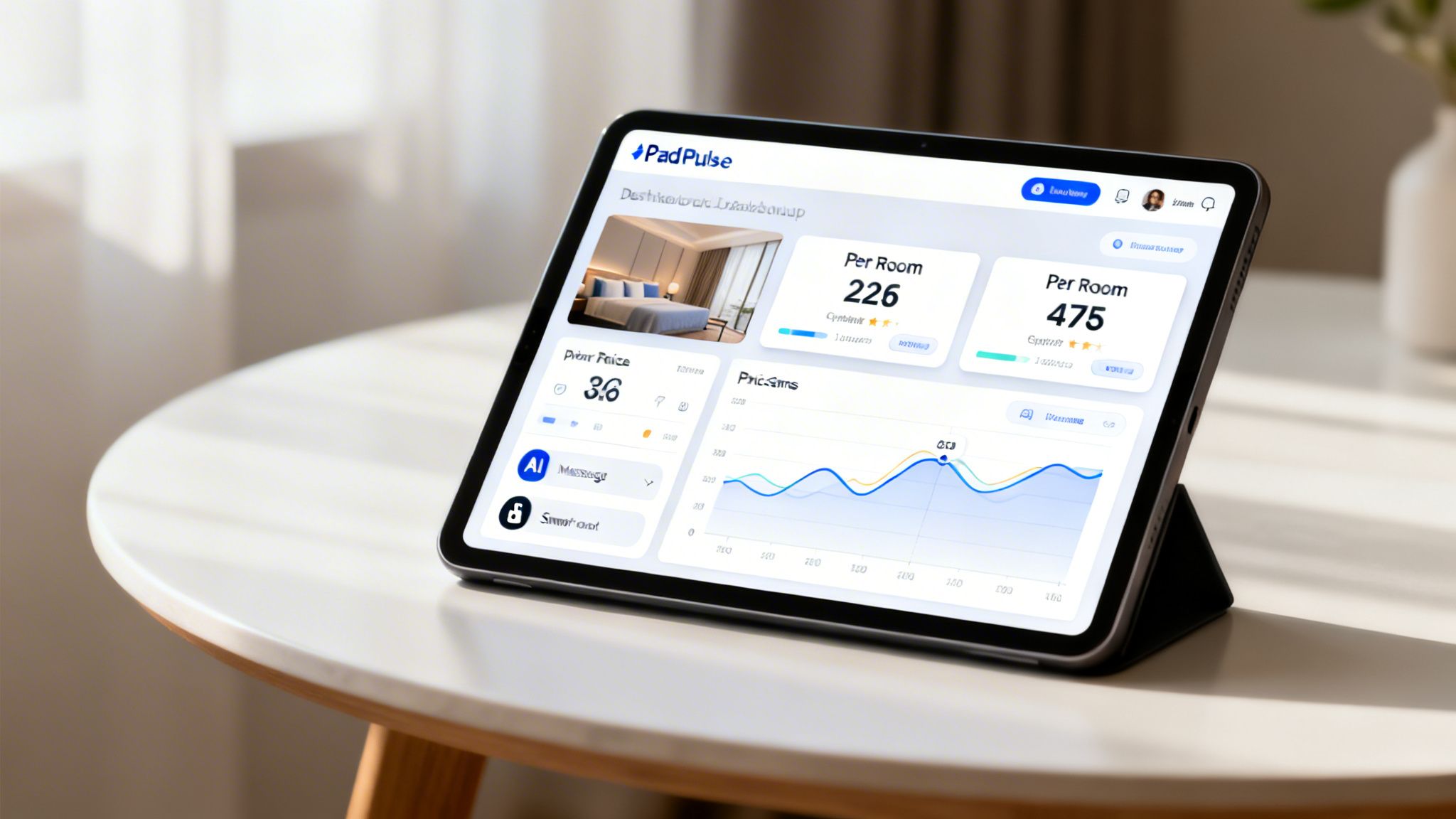
Think of PadPulse as the all-in-one toolkit designed to fix the specific operational snags we've been talking about. We're engineering it to connect the dots, bringing every critical piece of rent-by-the-room management into one simple, clean dashboard.
Built for the Co-Living Model
Most property management software is stuck in the past, built around a "one unit, one lease" mindset. PadPulse flips that script. We started with the individual room as the fundamental building block of your entire operation. It's this core focus that makes it a true affordable housing property management software for today's operators.
Instead of trying to force old tools to do new tricks, we're building from the ground up. Here’s a peek at some key features currently in development:
- Dynamic Room Pricing: A smart engine that crunches market data to suggest the sweet spot for each room's rent. It helps you hit that perfect balance between keeping rooms full and maximizing your income.
- AI-Powered Messaging: Imagine automated workflows that handle those first-touch leasing questions, schedule tours, and chase down late rent. This feature alone is designed to give you back hours every single week.
- Smart Home Integrations: We’re building seamless connections to things like keyless smart locks and thermostats. The goal? Better security, easier turnover between tenants, and lower utility bills.
These aren't just bullet points on a feature list. They are practical solutions to the real, day-to-day grind of managing shared housing.
Why Join the Early Adopter Community
Because PadPulse is still in active development, we're opening up an interest list for forward-thinking hosts and operators. This isn’t a sales pitch; it's a genuine invitation to help us shape the future of co-living management. When you join, you become part of a community working to build a smarter, less stressful way to run your business.
Joining our interest list is your chance to influence the very tools you'll use every day. Your real-world feedback will directly guide our development, making sure the final product solves the problems you actually have.
There’s no cost and zero commitment. It’s simply a way to get in on the ground floor and see what’s coming next before anyone else.
Benefits of Getting Involved Early
Signing up gets you more than just an occasional email. Our early adopters will be the first to get:
- Exclusive Beta Access: You’ll be at the front of the line to test-drive PadPulse before we launch it to the public, giving you a serious head start.
- A Voice in Development: Your opinions will matter. You can take part in feedback sessions and surveys that directly impact which features we build and how they work.
- Insider Updates: Get a behind-the-scenes look at our progress and the ever-changing world of property management tech.
This is your chance to help build the exact platform you’ve been looking for. If you're tired of wrestling with clunky software and messy spreadsheets, we invite you to join the PadPulse interest list today and help us create the ultimate toolkit for co-living success.
Frequently Asked Questions About Housing Management Software
Jumping into a new software system always comes with questions. It’s a big move for your operation, and you want to get it right. Let's walk through some of the common things operators ask when they're thinking about upgrading their tech.
Getting these answers straight will give you the confidence to find the right tool for your properties.
Is This Kind of Software Really Necessary for a Small Portfolio?
It’s a fair question. When you only have a handful of rooms, it feels like you can get by with spreadsheets. But here's the thing: the headaches of affordable housing—tricky compliance rules, room-by-room accounting—are there whether you have 5 rooms or 50.
In a small portfolio, one mistake can actually have a bigger financial impact. Starting with a real affordable housing property management software from day one builds good habits and solid processes. Most modern platforms have flexible pricing that grows with you, so you're not paying for features you don't need yet.
How Painful Is It to Switch to a New System?
This is probably the number one concern we hear, and for good reason. No one looks forward to moving years of tenant data, lease agreements, and payment histories. The thought alone is exhausting. But the good news is that modern software companies have made this process so much easier than it used to be.
Reputable providers know that a difficult migration is a deal-breaker. They now offer dedicated onboarding teams, clear guides, and simple data import tools to get you moved over with minimal disruption. It takes some effort upfront, but the time you save later pays for it ten times over.
When you're shopping around, make sure to grill them on their onboarding process. Ask what kind of support you'll get during the transition—a great support team is worth its weight in gold.
What’s the Real ROI on Software Like This?
The return on investment shows up in a few different, powerful ways. It's not just a line item on your expenses; it’s an investment that gives back in time, money, and peace of mind.
Think about it this way. Your ROI comes from:
- Time Savings: Imagine getting back all the hours you spend chasing rent, sending reminders, and manually reconciling accounts. That's dozens of hours a month, right there.
- Increased Revenue: Tools that automatically post your vacancies to multiple sites get them filled faster. Less downtime between tenants means more money in your pocket.
- Risk Mitigation: This is a big one. The cost of just one compliance violation or fair housing fine can easily be more than several years' worth of software fees.
The exact numbers will depend on your specific portfolio, but managers consistently report that the software pays for itself quickly through sheer efficiency, better occupancy, and avoiding costly mistakes.
Tired of fighting with tools that weren't built for the job? PadPulse is being designed from the ground up for the unique world of co-living and affordable housing. Join our interest list today to get early beta access and help us build the platform you actually need.